
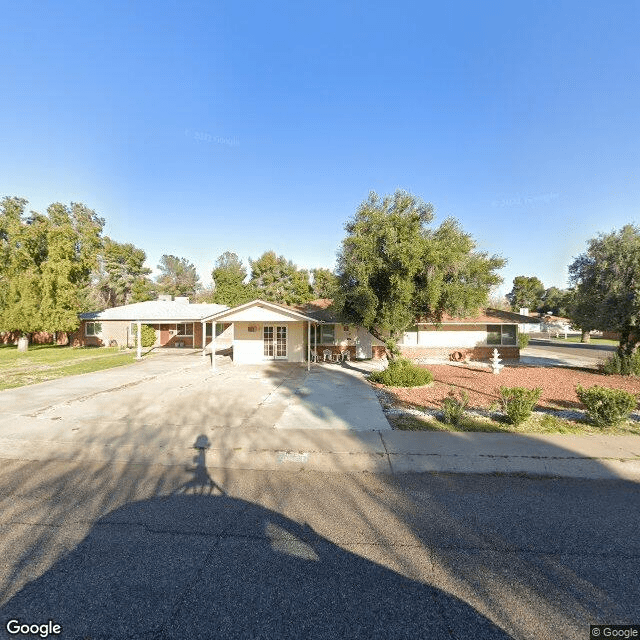
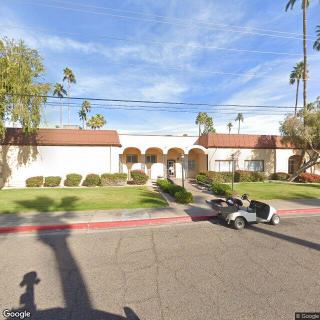
5629 N 7th Dr, Phoenix, AZ 85013
To contact a resident: (602) 317-3599
For more information about senior living options: (866) 208-4318
5Cs Assisted Living Costs & Pricing
5Cs Assisted Living offers competitive pricing in comparison to broader market rates within Maricopa County and the state of Arizona. For those seeking semi-private accommodations, residents will find a monthly cost of $2,000, significantly lower than the county average of $2,801 and the state average of $2,820. Private rooms at 5Cs are priced at $2,500, again presenting a favorable alternative to the higher costs of $3,318 in Maricopa County and $3,345 statewide. Even for one-bedroom units, 5Cs remains competitive at $4,000 compared to the county's average of $3,473 and the state average of $3,532. Overall, 5Cs Assisted Living positions itself as a financially attractive option for individuals seeking quality care without compromising on comfort.
| Floor plans | 5Cs Assisted Living | Maricopa County | Arizona |
|---|---|---|---|
| Semi-Private | $2,000 | $2,801 | $2,820 |
| Private | $2,500 | $3,318 | $3,345 |
| 1 Bedroom | $4,000 | $3,473 | $3,532 |
Memory care communities with a similar price nearby
-
About the same
Santo Nino Villas 2
$2,000 to $2,300 / month22.4 miles away -
About the same
Tatum Ranch Assisted Living
$2,000 to $3,000 / month17.7 miles away -
About the same
Angel's Adult Group Home
$2,000 to $3,000 / month15.9 miles away -
from +$255 / mo

Windsor Luxury Assisted Living, LLC
$2,255 to $5,950 / month6.7 miles away -
from +$225 / mo
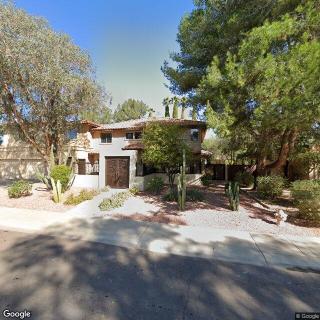
Harts Home - Exceptional Elder Care
$2,225 to $5,500 / month11.4 miles away
Overall Review of 5Cs Assisted Living
Pros
 The facility is described as a very nice place.
- The staff are described as very pleasant, with the 시설 being clean and offering a home-like atmosphere.
Cons
 They caution that no loved one should reside there due to severe neglect and unsanitary conditions, including an unbathed brother with days-old food and urine stains.
- They report the facility lacks basic needs like bottled water and contains empty alcohol and drug pipes, with horror stories from residents.
- They describe the room as trashed and missing a walker, leaving a barely mobile resident with no caregiver who helped after a fall.
- They allege possible Medicaid/Medicare fraud and say management refused to share owners’ or attorney information and would not meet for six days.
- They say the staff are rude, disrespectful, and neglectful of clients’ needs, with professionalism dismissed as a joke.
- They characterize the facility as failing, with help-wanted signs, poorly trained staff, and nonexistent health standards.
- They claim residents are treated like prisoners, with visitors barred and calls not returned, leaving families feeling abandoned.
- They note a history of license issues, having been shut down in 2000 for operating without a license.
- They mention a staff member named “Rose” who was belligerent and taunting toward clients.
Review
5Cs Assisted Living in Phoenix is best suited for families seeking a small, home‑like environment where privacy and a quiet, low‑key routine matter more than robust clinical oversight. It may appeal to families on a tighter budget who want a private‑room feel and less institutional ambiance, and who are prepared to accept a highly variable level of daily care. This is not a facility built for strong, reliable medical support, nor for residents who need frequent hands‑on assistance, complex nursing tasks, or intensive supervision.
Those who should seriously consider alternatives include anyone whose loved one requires consistent supervision, mobility or hygiene assistance, or clear accountability from staff. Families facing mobility challenges, cognitive decline, high fall risk, or chronic medical needs will likely encounter unacceptable gaps in care here. Additionally, potential residents whose families depend on steady communication, transparent leadership, and timely response to concerns should look at other options with proven staffing stability and stronger licensing histories.
On the upside, several accounts describe a clean, home‑like atmosphere and a setting that feels more intimate than a large campus. In some cases, reviewers praised genuinely caring staff and a calm, private environment that can be comforting for residents who do not require heavy medical intervention. A few families felt their loved ones were treated with kindness, and one or two stories highlight a sense of personal attention in a small‑scale, quiet living space. For those who prioritize a peaceful, self‑contained living arrangement over bright programming, these positives may carry some weight.
The most troubling disclosures, however, dominate the picture: repeat allegations of neglect, unsafe conditions, and mismanagement that undermine any perceived warmth. Reports describe unbathed residents, delayed or absent assistance with basic needs, and disarray such as missing mobility aids or unclean environments. Several families recounted unreturned calls from leadership, a lack of programming or social interaction, and concerns about how care plans were executed. Worries about licensing status and accountability further erode confidence, with some reviewers suggesting the facility operated without appropriate oversight in the past and others warning that management communication is inconsistent at best. These factors are not minor flaws; they represent real safety and trust risks.
When weighing the pros against the cons, the imbalance is meaningful. A clean, quiet, homey setting can be appealing, but it does not compensate for frequent care lapses, safety concerns, or leadership shortcomings that endanger residents. For families evaluating options, the key takeaway is that the perceived charm and comfort are conditional – they rely on staff functioning reliably, which, in this case, appears inconsistent. In practical terms, the potential short‑term comfort of a small, intimate space is overwhelmed by the long‑term risk of inadequate care and unaddressed health needs.
A disciplined due‑diligence approach is essential if considering 5Cs. Conduct unannounced visits, request to meet direct caregivers and supervisors, and review a current care plan with specifics on bathing, dressing, mobility support, medication management, and emergency procedures. Verify the facility’s licensing status and recent inspection reports, and ask for recent staffing levels and turnover numbers. Speak with multiple current residents and families to triangulate experiences, and demand transparent lines of communication about any concerns. If these assurances cannot be obtained, or if the facility cannot demonstrate consistent, responsive care, alternatives with stronger staffing, clearer accountability, and proven safety records should be pursued.
 Board and Care Home
 Memory Care
 Activities off-site
 Bath tubs
 Devotional services off-site
 Indoor common areas
 Outdoor common areas
 Private
 Private bathrooms
 Respite or short term stays offered
 Wheelchair accessible showers
 Phoenix Sky Harbor International (7 miles away)
 Diabetic care
 High acuity care
 Incontinence care
 Medication management
 Kosher




 8 Important Indicators That Memory Care May Be Necessary
 Delving into the Inner World of Dementia: Insights into Thoughts and Awareness
 Five Subtle Dementia Indicators to Observe: An In-Depth Guide to Understanding “Does My Mom Have Dementia?”