

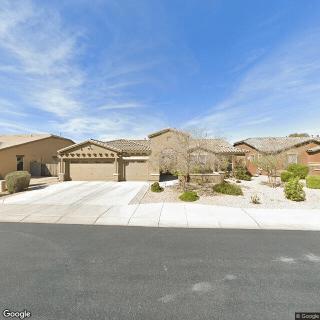
17176 W. Watkins, Goodyear, AZ 85338
To contact a resident: (623) 312-2798
For more information about senior living options: (866) 208-4318
Golden Age Assisted Living Home II LLC Costs & Pricing
Golden Age Assisted Living Home II LLC offers competitive pricing for its residents, with monthly costs significantly lower than both Maricopa County and the broader state of Arizona. For all room types - studios, one-bedroom units, and private rooms - the facility charges a flat rate of $2,500. In contrast, the average rates in Maricopa County range from approximately $3,318 to $3,960, while statewide averages fall between $3,345 and $3,829. This pricing strategy not only makes Golden Age an attractive option for prospective residents seeking quality care but also positions it as a cost-effective alternative within the local market.
| Floor plans | Golden Age Assisted Living Home II LLC | Maricopa County | Arizona |
|---|---|---|---|
| Studio | $2,500 | $3,960 | $3,829 |
| 1 Bedroom | $2,500 | $3,473 | $3,532 |
| Private | $2,500 | $3,318 | $3,345 |
Memory care communities with a similar price nearby
-
About the same

Anc Assisted Living Homes I
$2,500 to $3,500 / month13.8 miles away -
from +$200 / mo
Caring Hearts Senior Care
$2,700 to $3,500 / month15.2 miles away -
About the same

Northlands Assisted Living Home
$2,500 / month22.6 miles away -
from +$200 / mo

Surprise Farms Assisted Living
$2,700 to $3,500 / month13.9 miles away -
from +$225 / mo

The Groves by Senior Lifestyle
$2,725 to $5,585 / month5.8 miles away
Overall Review of Golden Age Assisted Living Home II LLC
Pros
 They go out of their way to accommodate her individual preferences during meals and daily activities.
- They treat him like family, providing exceptional care.
- The staff deliver amazing care and are described as like family by the families they serve.
- The owner danced with him, adding a joyful moment.
- The home is super clean and welcoming, with friendly staff.
- She has nothing but praise for the staff during weekly visits, noting efficient care systems.
Cons
 Care declined after the new owners took over.
- The grandmother was moved to another home.
- The home had only one client, unlike the prior 24-person facility.
- Residents typically sat around watching one another or visitors, leading to boredom.
Review
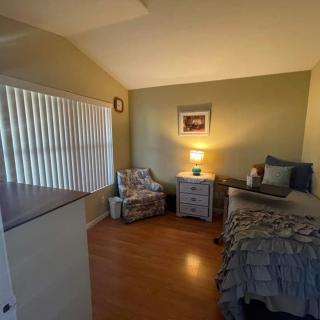
Golden Age Assisted Living Home II LLC in Goodyear, AZ is best suited for seniors who value an intimate, home-like setting where staff know residents well and tailor daily routines to individual preferences. This community shines when families seek highly personalized care delivered with warmth and immediacy, the kind of environment where meals, activities, and daily rhythms can be adjusted to fit personal tastes. It favors those who prioritize a quiet, low-key atmosphere over a larger, more bustling campus. Prospective residents should approach with comfort around small size and potential ownership shifts, understanding that the strongest selling point is the emphasis on personal connection and flexible routines rather than broad programming.
The strongest positives point to a caring, responsive staff that treats residents almost like family. Several reviews highlight staff who go out of their way to honor dietary preferences and daily habits, creating a sense that the resident’s choices drive the day. A standout note from hospice colleagues praises the staff’s compassionate approach and the owner’s willingness to engage warmly with patients. Cleanliness and a friendly, approachable environment also recur as clear strengths. When meals and daily activities can be customized, the quality of life can rise significantly for residents who thrive on predictability and individualized attention.
On the flip side, the most consequential caveat centers on governance and social dynamics. One 1-star account explicitly credits a decline in care after new owners took over, culminating in a move to another facility for a relative. This concern is not isolated to a single opinion but underscores a real risk: ownership transitions can disrupt continuity of care, especially in homes that rely heavily on the philosophy and routines established by a small leadership team. Another reviewer notes that the owner is not always available, which can complicate communication for families seeking status updates or rapid problem resolution. The tension between stability in leadership and the intimate size of the home creates a tension families should weigh carefully.
The small, almost boutique scale of the operation can be both a strength and a weakness. The same condition that enables highly individualized attention, one-on-one time, flexible scheduling, and a close-knit staff, also reduces opportunities for social interaction if the resident desires a bustling, activity-packed day. In fact, one reviewer observed that a resident moving from a 24-person environment might find the single-client setting less stimulating. For some, that intimacy is precisely what brings comfort and security; for others, it may lead to boredom or a sense of isolation unless staff actively orchestrate meaningful engagement. The staffing model appears capable, but the cadence and variety of programming will largely depend on ownership philosophy and day-to-day leadership.
Given these dynamics, this community makes sense for families who want assurance of individualized care and a house-quiet, respectful atmosphere, and who are prepared to monitor ownership stability and program breadth. Alternatives are worth considering for residents who require more structured group activities, more robust social opportunities, or more predictable ownership continuity. If a resident needs consistent, visible ownership oversight or a larger community with a full calendar of events, or if rapid, frequent updates to family members are essential, other options may offer greater alignment. The key will be asking pointed questions about how care is coordinated day-to-day during ownership transitions and what guarantees exist for ongoing personalization after leadership changes.
Bottom line: Golden Age Assisted Living Home II LLC offers a high-touch, compassionate alternative for seniors who prize a home atmosphere and highly personalized care, with clean facilities and staff that genuinely care. Its strengths, flexible meals, individualized routines, and a family-like approach, can offset the risks of smaller size and potential ownership turnover, but only if the resident and family remain vigilant about communication and continuity of care. For families valuing warmth and bespoke attention, this community deserves serious consideration in Goodyear. Those who need vibrant social programming, consistent daily structure, or ironclad continuity may prefer exploring alternatives that emphasize steady leadership and more expansive activity calendars.
 Board and Care Home
 Memory Care
 Activities on-site
 Beautician on-site
 Devotional services off-site
 Indoor common areas
 Outdoor common areas
 Private
 Respite or short term stays offered
 Wheelchair accessible showers
 Phoenix Sky Harbor International (24 miles away)
 Diabetic care
 Incontinence care
 Kosher



 Understanding Dementia Through Its Seven Stages: A Comprehensive Look at Progression and Expectations
 Safeguarding Your Memory Through the Golden Years: Eight Ways to Preserve Cognitive Health
 Comprehensive Insights into Activities of Daily Living (ADLs) and Their Assessment