
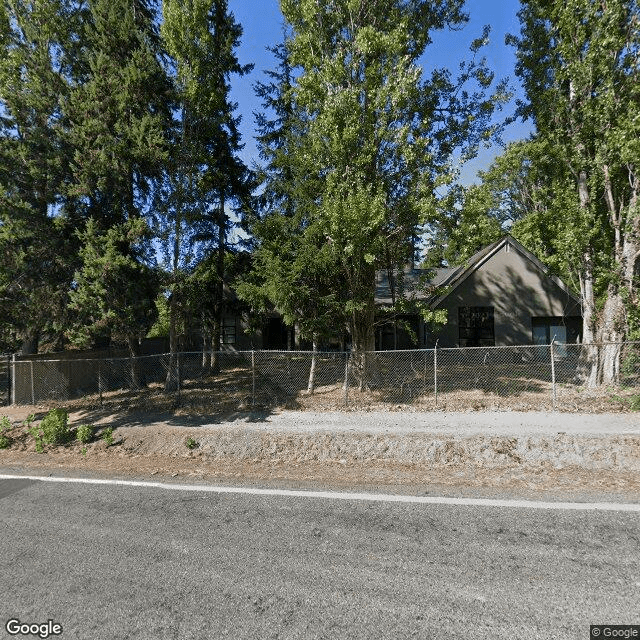
23660 Marine View Dr S **This is only an event & v, Des Moines, WA 98198
To contact a resident: (206) 878-8434
For more information about senior living options: (866) 208-4318
Landmark on the Sound Costs & Pricing
Landmark on the Sound offers competitive pricing for its accommodations, particularly when compared to the broader market in King County and the state of Washington. For instance, a studio at Landmark is priced at $3,100 per month, significantly lower than the county average of $4,464 and the state average of $4,126. Similarly, the 1-bedroom units are available for $3,260, which again is more affordable than both the King County average of $5,127 and the state's average of $4,632. This pricing strategy positions Landmark on the Sound as an attractive option for residents seeking quality living arrangements without straining their budgets in comparison to nearby alternatives.
| Floor plans | Landmark on the Sound | King County | Washington |
|---|---|---|---|
| Studio | $3,100 | $4,464 | $4,128 |
| 1 Bedroom | $3,260 | $5,127 | $4,634 |
Independent Living communities with a similar price nearby
-
from -$300 / mo
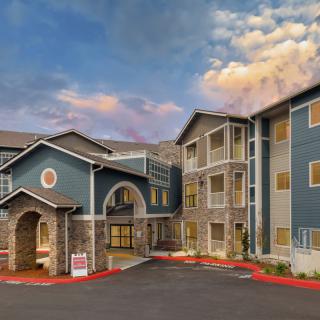
Cadence at Kent Meridian
$2,800 to $5,200 / month5.5 miles away -
from +$400 / mo
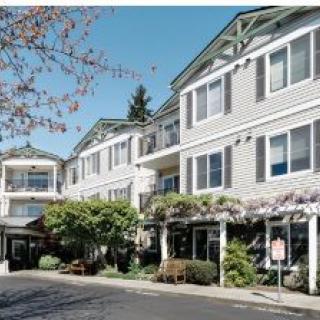
Wyatt House Retirement Center
$3,500 to $5,600 / month19.2 miles away -
from -$550 / mo
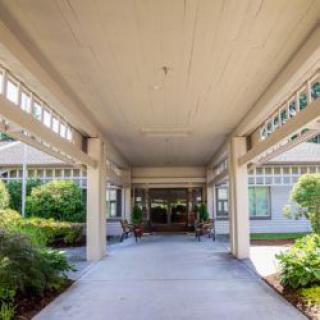
Sound Vista Village
$2,550 to $3,150 / month13.2 miles away -
from +$250 / mo

Merrill Gardens at The University
$3,350 to $5,800 / month19.4 miles away -
from +$350 / mo
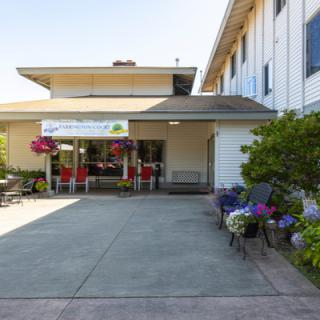
Farrington Court
$3,450 to $4,550 / month4.4 miles away
Overall Review of Landmark on the Sound
Pros
 They love driving by this historic place.
- They love old buildings.
- They like the expanse of the building.
- They take pictures of it from time to time.
- It still has a lot of life left in it.
- It overlooks the Puget Sound in Des Moines.
Cons
 They want to tear this place down.
- It’s really sad that it’s going to be torn down; what a shame.
- The building is described as abandoned and full of weird mason stuff.
- It is fenced off as private property.
- It’s slated to be torn down to make way for a large, personality-free building with high rents.
- No one has thought to renovate it or turn it into affordable housing or a community center.
- The place is closed.
Review
Landmark on the Sound in Des Moines, Washington is best suited for history lovers and long‑term planners who prize architectural character and waterfront ambiance over a turnkey senior‑living option. The property reads like a civic landmark more than a ready‑to‑occupy residence, and its appeal rests on provenance, scale, and a dramatic setting overlooking Puget Sound. For families evaluating senior living, this community is not about daily care, routines, or on‑site services; it is about a potential future project, a real estate story, or a preservation‑m-oriented investment. If the goal is immediate occupancy with licensed care, this is not the place to start.
Those seeking licensed assisted living or on‑site care should consider alternatives. The current reality is that the site is fenced, private, and described as “closed” by observers, with strong signals that demolition or redevelopment is on the horizon. There is no indication of active caregiving programs, meals, medication management, or staff‑driven support services that define traditional senior living communities. In practical terms, Landmark on the Sound serves as a historical anchor or redevelopment candidate rather than a functioning care facility, making it unsuitable for families needing dependable daily support or continuity of care.
The most compelling positives, historic grandeur, an expansive footprint, and a waterfront location, do carry meaningful weight for a particular kind of decision. The building’s aura and vantage points create a sense of place that can be invaluable for preserving local heritage or catalyzing community or affordable‑housing initiatives if a plan comes together. Those advantages, however, are contingent on a credible redevelopment path and supportive approvals. Without a clear commitment to operation as senior living, the aesthetic and location advantages do not translate into a reliable living option for elders.
Conversely, the cons are decisive. The prospect of demolition, coupled with private, fenced‑off status and an absence of current resident services, frames this site as a risk rather than a home. The narrative surrounding the building suggests competing visions: one that preserves the landmark and repurposes it for community uses or affordable housing, and another that unlocks prime real estate for a large, rent‑driven development. Such ambiguity erodes confidence for families seeking stability, predictable routines, and protections that come with licensed care environments. In short, the cons overwhelm for anyone whose needs include certainty and care planning.
The sentiment in the scattered reflections points to a tension between reverence for history and the practicalities of redevelopment. Locals describe a “beautiful piece of history” that is being contemplated for demolition, expressing sadness but also pragmatic possibilities, renovation into housing or a community‑center anchor are proposed as viable futures. Personal memories tied to events held at the site underscore its cultural significance, while the reality of fenced‑off status and private ownership highlights how fragile such a landmark can be. This duality matters for decision‑makers who weigh preservation value against real estate dynamics and policy direction.
The bottom line for families and planners is clear. Landmark on the Sound should be treated as a potential future project, not a ready‑to‑move‑in living option. For families needing immediate assisted living services, alternatives with established licensure, caregiver staffing, and on‑site amenities are the prudent choice. For preservationists, investors, or community advocates, the site offers a compelling case study in heritage value meeting market potential, provided a credible plan emerges. The rating hints at strong affection for the site, but the decisive factors are current operational status and a concrete redevelopment trajectory, not historical charm alone.
 Independent Living
 Seattle-Tacoma International (4 miles away)


 Home Health Care Demystified: A Comprehensive Guide for Families and Caregivers
 Seniors and Modern Transportation: Exploring Uber, Lyft, and Other Ride-Hailing Options
 Comprehensive Guide to Qualifying for Home Health Care Services