
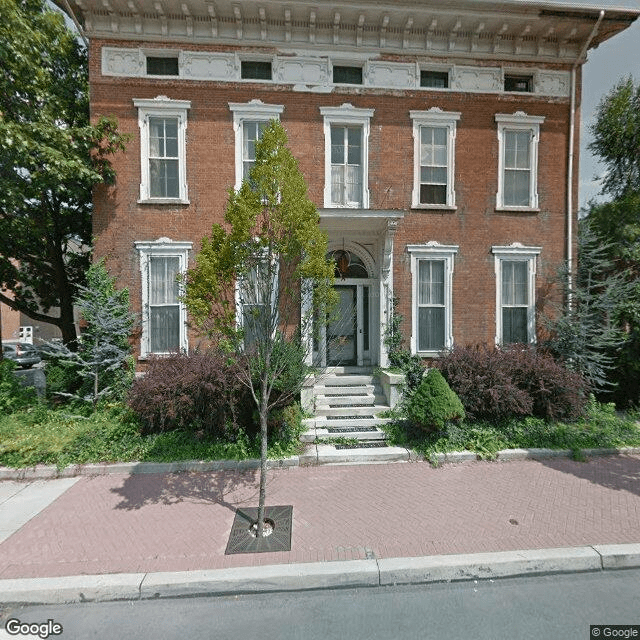
201 E Water St, Lock Haven, PA 17745
To contact a resident: (570) 748-0571
For more information about senior living options: (866) 208-4318
Overall Review of Heartland Retirement PCH
Pros
 The staff are always nice and helpful.
- It is always a pleasure to visit.
- Chrissy and her staff did a wonderful job.
- A very special bond was formed with her.
- This retirement home comes highly recommended.
Cons
 They hated to see her leave.
- It was very hard changing her living arrangements.
Review
Heartland Retirement PCH in Lock Haven is best suited for families seeking a warm, relationship-driven living option where staff warmth and personal connections are the centerpiece. This community excels for seniors who value a home-like atmosphere, where caregivers are consistently kind, approachable, and readily available to help. It is especially well-matched for residents who thrive on regular, friendly interactions with staff and who appreciate the comfort that comes from forming genuine bonds with caregivers over time. The labor of care feels personalized here, making routine visits and daily life feel less clinical and more like a supported, lived-in experience.
Those evaluating alternatives should note that Heartland’s strongest appeal rests on people, not on flashy programming or a vast campus. If the decision hinges on a facility with extensive medical services, highly specialized memory care, or a wide menu of high-intensity activities, this may not be the primary differentiator. Families that expect robust, on-site clinical oversight or a larger, more resource-rich environment might want to explore options with dedicated nursing staff on site around the clock or with a more formal care continuum. In short, a larger or more medically oriented setting could be a better fit for residents who require stronger clinical support.
The most compelling pros are the people who staff the community. Reviews consistently highlight nice, helpful employees and an atmosphere where visitors feel welcomed and comfortable. The presence of compassionate leaders like Chrissy and the team reinforces a sense of trust; staff members appear to form meaningful bonds with residents, which translates into attentive care and a reassuring daily rhythm. For families, these interactions reduce anxiety about supervision and underscore that a resident’s emotional well-being is prioritized alongside physical care. The warmth and approachability of the team become a practical asset when coordinating family visits, managing transitions, and negotiating daily routines.
Because the reviews lack explicit negatives, the main considerations fall into the realm of what is not described rather than what is stated. Potential families should recognize that there is limited public detail about the breadth of clinical services, specialized memory care options, or the size and scope of activity programming. Those gaps are not presented as faults, but they are meaningful for decision-makers who seek a facility with a pronounced medical emphasis or a more expansive activities calendar. In those cases, the solid interpersonal core here may be offset by a desire for broader clinical resources or deeper programming, depending on the resident’s evolving needs.
Despite the absence of documented drawbacks, the pros do the heavy lifting in this setting. The genuine, steady care demonstrated by staff counterbalances typical concerns about impersonal care found elsewhere. When a resident’s day-to-day experience hinges on the receptionist’s welcome, the aide’s patience, or the caregiver’s attentiveness, Heartland shows that companionship and reliability can outweigh more expansive amenities. Families evaluating this choice should weigh the emotional reassurance and continuity of care against any expectation for clinical breadth. For many, the conclusion will be that a small, people-centric operation with consistent, caring staff is the strongest predictor of a satisfying transition.
Practical decision steps align with the evidence: arrange a visit to observe interactions with residents, ask about the caregiver-to-resident ratio during peak hours, and discuss the care plan structure with leadership. Probe how staff handle transitions, how long a resident typically stays with a caregiver, and what happens if medical needs escalate. If a resident desires a setting where staff relationships drive daily life and where family visits are met with genuine warmth, Heartland strongly warrants consideration. On the other hand, if the priority centers on a comprehensive medical program or specialized memory care, a more medicalized option may be prudent. In the right circumstances, Heartland’s demonstrated strengths translate into an experience that feels less like care and more like a trusted, ongoing partnership.
 Independent Living

 Senior Move Management: Understanding the Role, Value, and Associated Costs
 Weight Training for Seniors: Building Strength and Vitality
 Understanding the Sandwich Generation: Stress and Responsibilities for Multigenerational Caregivers