
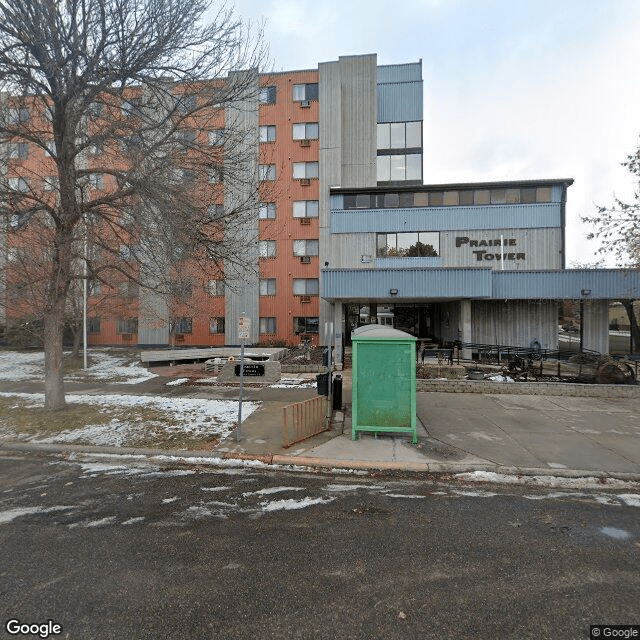
725 N 25th St, Billings, MT 59101
To contact a resident: (406) 248-3377
For more information about senior living options: (866) 208-4318
Overall Review of Prairie Tower
Pros
 They love wearing pretty dresses and being a girl.
- They believe it deserves more than zero.
- They view the kitchen as a compact setup with a sink and two electric burners.
Cons
 It is not a full kitchen.
- It lacks an oven.
Review
Prairie Tower in Billings is best suited for seniors who want an active, sociable assisted-living experience housed in an apartment-style setting, with dependable support and opportunities for engagement, rather than for those who insist on in-unit cooking or expansive medical care. The community signals a culture of personal expression and social vitality, where residents likely enjoy a lively environment and regular activities that reinforce connection and belonging. For families seeking a clear blend of independence with hands-on assistance, Prairie Tower offers a practical, community-forward option that prioritizes companionship, routine, and convenient services over self-contained living.
Those who should consider alternatives are residents who place a premium on in-room culinary autonomy or who require higher levels of medical support. A not-insignificant caveat is the in-unit kitchen situation: not a full kitchen, with only a single sink, two electric burners, and no oven. For anyone who cooks regularly, bakes, or relies on personalized meal prep, Prairie Tower may feel limiting. Families evaluating care for clients with specific dietary needs, advanced diabetes management, or particular kitchen workflows will want to compare other communities that provide full kitchens, more flexible dining arrangements, or different levels of service that better align with those expectations.
On balance, the pros register strongly enough to offset many concerns for a broad segment of buyers. The community earns a solid overall rating, underscored by multiple five-star reviews and a generally favorable sentiment. That pattern suggests consistent satisfaction with the core elements families care about: supportive staff, predictable routines, social programming, and a sense of security. For prospective residents who prize easy access to activities, a collegial atmosphere, and reliable assistance, Prairie Tower delivers on those fronts with a confident, no-nonsense approach that makes daily life smoother and more social.
The main con, the kitchen layout, deserves prominent attention in decision making. A non-full kitchen translates into reduced independence in meal preparation and greater reliance on the community for meals or shared culinary spaces. This matters most to residents who value culinary autonomy, enjoy cooking as a part of daily life, or want flexibility in meal timing and preparation. Families should weigh how often the resident would want to cook, versus how much they are comfortable with dining in a communal setting or adjusting to a more streamlined, meal-focused routine provided by the staff.
The best way Prairie Tower offsets these limitations is through its evident emphasis on community life and ongoing support. The strong rating and prevalence of high-star feedback imply that residents experience meaningful social connection, attentive care, and predictable daily rhythms. When care teams are responsive and activities are well-attended, the absence of a private kitchen becomes a manageable trade-off in exchange for safety, companionship, and structured enrichment. This dynamic is especially true for those who enter with a plan for engaging with dining options at the community level or for residents who prioritize social integration over individual culinary control.
Bottom line: Prairie Tower is a pragmatic, solid choice for seniors who want a capable, socially rich assisted-living environment and can live with in-unit cooking limitations. Families comfortable with centralized dining or shared kitchen options, and who donā€™t require extensive medical acuity, will find substantial value here. For those who insist on a full residential kitchen, or who need higher-acuity care, exploring alternatives with stronger in-unit culinary facilities or broader clinical offerings is advisable. In-person tours, conversations about dining arrangements, and confirmation of care levels will clarify how the kitchen constraint fits into the broader picture of safety, independence, and quality of life.
 Independent Living
 Billings Logan International (2 miles away)


 Understanding the Full Cost of 24/7 In-Home Care: A Detailed Overview
 Exploring the World of Home Health Nurses: Qualifications, Roles, and Hiring Tips
 Navigating Medicare Coverage for In-Home Care Services