
1350 West Hackley Avenue, Muskegon, MI 49441
To contact a resident: (231) 755-6560
For more information about senior living options: (866) 208-4318
The Village at Park Terrace Costs & Pricing
The Village at Park Terrace offers an attractive pricing structure for its residents, especially when compared to the broader costs in Muskegon County and throughout Michigan. For a one-bedroom unit, residents pay $820 per month, a significant savings compared to the county average of $2,336 and the state's average of $3,384. Similarly, the two-bedroom units are priced at $1,025 monthly, which is considerably lower than Muskegon County's average of $2,388 and Michigan's statewide average of $3,523. This makes The Village at Park Terrace not only a budget-friendly option but also an appealing choice for those seeking quality living without the hefty price tag typically associated with these areas.
| Floor plans | The Village at Park Terrace | Muskegon County | Michigan |
|---|---|---|---|
| 1 Bedroom | $820 | $2,336 | $3,384 |
| 2 Bedrooms | $1,025 | $2,388 | $3,523 |
Overall Review of The Village at Park Terrace
Pros
 The Village is lovely.
- The staff is pleasant.
- The activities are plentiful.
- Her mom loved her apartment and the complex within the first month.
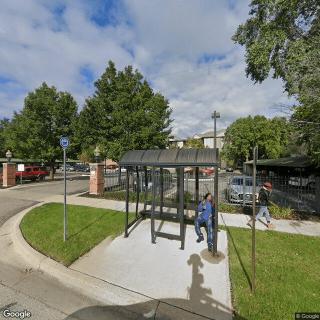
- The bus takes her shopping and to many community events, so she no longer misses her car.
- The food is good.
Cons
 It’s pretty upsetting that they DO NOT HAVE GENERATORS FOR THEIR 3 VERY LARGE APARTMENT BUILDINGS.
- The residents were without power from Tuesday to Thursday.
- This is the 2nd time I am aware of in the past two years this has happened.
- Something needs to change for the better!!!
Review
The Village at Park Terrace in Muskegon is best suited for active seniors who want a socially rich, maintenance-free lifestyle with easy access to shopping, salons, and a robust calendar of on-site activities. It rewards residents who prefer not to cook, enjoy regular group outings, and value a staff that keeps daily routines smooth and predictable. This setting works particularly well for those who want to downsize without sacrificing community connection, and who are comfortable leaning on staff for routine tasks. It is not the right fit for someone with significant medical fragility or a need for constant, reliable in-place nursing support.
Those who should consider alternatives are families with residents who require strong, uninterrupted power and emergency backup. The most consequential drawback noted is the lack of generators for three large apartment buildings, leaving residents without power for days during outages. For individuals who depend on medical devices, refrigeration for medications, or climate-controlled spaces, that vulnerability translates into real safety and comfort concerns. In short, the absence of a dependable backup plan makes this community less suitable for frail elders or care recipients who demand high reliability.
On the plus side, the Village earns credibility from a pleasant, responsive staff and a lively activities program that does not fade after move-in. The setting itself is appealing, with good food and convenient on-site conveniences that minimize daily chores. The ability to walk a short corridor to a hair appointment, avoid winter driving, and rely on a regularly scheduled bus for shopping and events creates tangible quality-of-life wins. Families recount that the move transformed a resident’s outlook within a month, validating the social engine at work here.
The primary liability is hard to ignore: the power-outage history exposes a fundamental risk in emergency preparedness. When the lights go out, residents with health issues are suddenly reliant on external help, and the absence of generators for sizable buildings compounds anxiety for families and caregivers. While the community’s social strengths and everyday amenities deliver real value, they cannot fully neutralize the potential hazards of prolonged outages. This is not a minor trade-off; it is a decisive factor in whether the facility can sustain high-quality care during disruptions.
The key takeaway is practical and clear: the pros, staff warmth, activity density, social connectivity, and everyday conveniences, make this a strong candidate for independent or lightly assisted seniors who prize engagement and convenience. The cons, especially the lack of backup power, cap the upside for anyone with medical fragility or a low tolerance for risk during outages. If safety and continuity of care during emergencies are non-negotiable, pursue other options or demand concrete backup assurances before committing. For those who can accommodate occasional reliability gaps and place a premium on community life, Park Terrace remains a compelling choice worth pursuing with careful due diligence.
 Independent Living
 Cats allowed
 Dogs allowed
 Activities off-site
 Beautician on-site
 Devotional services on-site
 Indoor common areas
 Muskegon County (4 miles away)





 Nurturing Our Loved Ones: A Daughter's Journey in Caring for Her Mother
 Nurturing Our Elders: Linda's Journey of Supporting Her Mother
 A Comprehensive Exploration of Common Misunderstandings about Powers of Attorney