
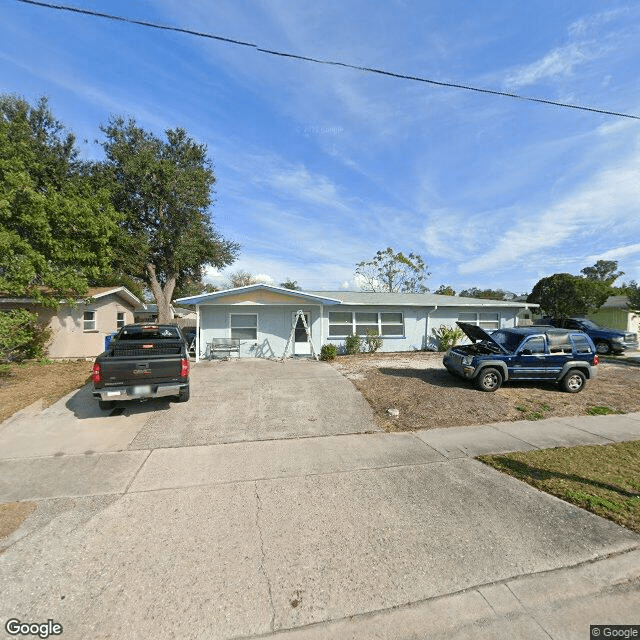
8721 113th St, Seminole, FL 33772
To contact a resident: (727) 320-9038
For more information about senior living options: (866) 208-4318
Overall Review of Crossroads of Pinellas
Pros
 Excellent ADT program.
- Staff take consumers into the community weekly.
- Staff are very committed and involved with consumers.
Cons
 The driver is rude and incompetent.
 - The driver blocks the sidewalk for pedestrians and bicycle riders.
- The driver blocks the entrance to the parking lot.
- The driver blocks the view for drivers exiting Orange Blossom Lane, creating a safety hazard.
- This behavior is unbelievably dangerous and a great safety hazard for pedestrians, bicyclists, and drivers.
- The management is terrible, with very low pay for what's expected and bad ownership/operations.
Review
Crossroads of Pinellas in Seminole is best suited for families seeking a practical, activity-rich day program for adults who benefit from steady supervision, social opportunities, and a clearly engaged staff. The standout feature is the excellent adult day training (ADT) program, with staff who routinely bring participants into the broader community. This level of involvement supports routine, purpose, and connection, which can be invaluable for someone who thrives on structured activities and ongoing social contact. The facility works best as a daytime option that anchors routine and engagement, rather than a full-time residence or a higher-acuity care setting. Families with a primary goal of meaningful daytime programming will find value here, even if other needs remain unmet.
Those weighing alternatives should consider any priority placed on safety, governance, and predictable operations. If a plan includes heavy medical oversight, memory-care–level supervision, or guaranteed consistency in transportation and day-to-day management, other communities may offer more transparent accountability and steadier service. For families that require a facility to function as the central hub of daily care, or for those sensitive to leadership philosophy and staff morale, it’s prudent to explore options with a longer track record of stable operations and clearer escalation processes. In short, this community stands apart for programming and people, and less so for the formality of administration or risk-free logistics.
The most compelling pro, an active, staff-led ADT program, appears repeatedly in reviews as the core value. Staff are described as highly committed and involved with participants, which translates into frequent outings and purposeful daytime plans. That level of engagement can materially improve quality of life for attendees who benefit from routine, social interaction, and reinforced skills. For families prioritizing socialization and structured activities over clinical intensity, these strengths can offset some daily friction and provide a predictable rhythm that supports caregivers’ peace of mind about daytime care.
Yet the cons call for sober consideration. A persistent concern centers on on-site safety and operations, highlighted by complaints about a driver who blocks sidewalks and entrances, creating hazards for pedestrians and drivers alike. This kind of logistical risk can erode trust quickly, because it directly affects everyday safety and the ability to leave or enter the facility without impediment. Concurrently voiced is dissatisfaction with management and operational practices, including remarks about low pay, “terrible” ownership/operations, and inconsistent administrative performance. Taken together, these elements paint a picture of strong programmatic potential shadowed by real-world flaws in oversight, staffing morale, and day-to-day execution.
The key question is whether the benefits of the ADT program and committed staff outweigh the glaring safety and governance concerns. For families prioritizing daytime activity and social engagement, the positives provide genuine value in the form of structured outings and attentive caregivers. However, the safety hazards, coupled with reports of subpar management and compensation, create a nontrivial risk that can undermine the overall experience. The uneven rating mix, half a dozen highly favorable anecdotes vs. several harsh one-star assessments, signals variability in how the program is delivered from day to day. In decision-making terms, the center offers meaningful strengths, but those strengths are not consistently translated into dependable, risk-controlled operations.
If choosing to proceed, a prudent plan is essential. Schedule an observation that includes a morning or afternoon ADT session to witness staff engagement and participant dynamics firsthand. Specifically assess transportation patterns, sidewalk access, and parking flow to verify safety practices in real-world conditions. Request a written description of safety protocols, driver training, and incident escalation, along with a clear staffing matrix for typical days. Speak with current participants’ families or guardians to gauge consistency and responsiveness from leadership. Finally, compare cost structures, what’s included in day rates, and any additional charges to ensure value aligns with risk. For families unconvinced by operational volatility or safety concerns, broader comparison with other communities offering similar programming but with stronger governance will be the wiser course.
 Independent Living
 St. Petersburg-Clearwater International (8 miles away)







 Nurturing Our Loved Ones: A Daughter's Journey in Caring for Her Mother
 Nurturing Our Elders: Linda's Journey of Supporting Her Mother
 A Comprehensive Exploration of Common Misunderstandings about Powers of Attorney