
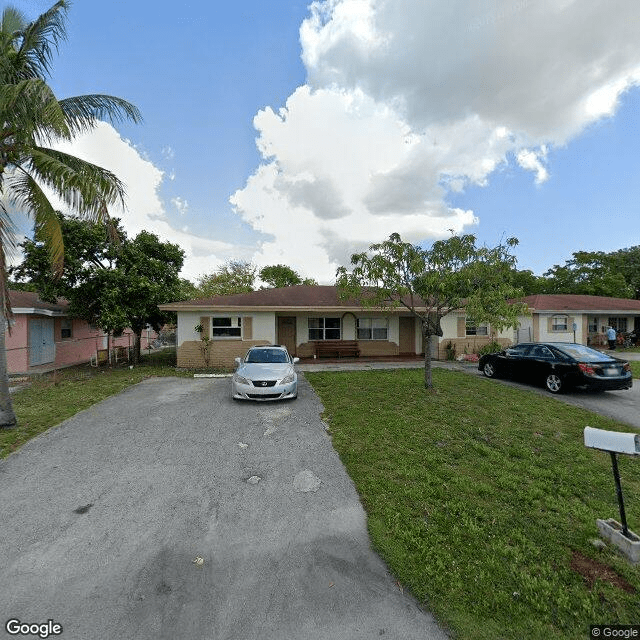
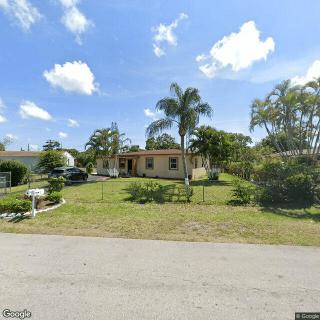
1451 NW 20th St, Fort Lauderdale, FL 33311
To contact a resident: (954) 524-2867
For more information about senior living options: (866) 208-4318
Deen's Retirement Home Inc Costs & Pricing
Deen's Retirement Home Inc presents a range of accommodation options that reflect a premium pricing structure compared to both Broward County and the state of Florida. The monthly cost for a studio room at Deen's stands at $4,900, significantly higher than the county average of $3,601 and the state average of $3,823. Similarly, semi-private rooms are offered at $5,400, which is considerably above the local and state benchmarks of $2,902 and $3,009 respectively. For those seeking private accommodations, Deen's charges $6,300 per month - again surpassing both Broward County's rate of $3,725 and Florida's average of $3,699. One-bedroom units at Deen's are priced at $7,100 while two-bedroom options reach up to $9,950; both figures exceed community averages by a wide margin. Overall, these costs indicate that Deen's Retirement Home Inc positions itself as a more upscale choice in the marketplace for assisted living.
| Floor plans | Deen's Retirement Home Inc | Broward County | Florida |
|---|---|---|---|
| Studio | $4,900 | $3,601 | $3,823 |
| Semi-Private | $5,400 | $2,902 | $3,009 |
| Private | $6,300 | $3,725 | $3,699 |
| 1 Bedroom | $7,100 | $3,651 | $3,864 |
| 2 Bedrooms | $9,950 | $4,474 | $4,711 |
Independent Living communities with a similar price nearby
-
from -$460 / mo

Vi at Aventura, a CCRC
$4,440 to $7,638 / month13.8 miles away -
from -$870 / mo

Allegro Parkland
$4,030 to $6,090 / month12.3 miles away -
from -$325 / mo

The Meridian At Boca Raton
$4,575 to $7,340 / month14.3 miles away -
from -$650 / mo
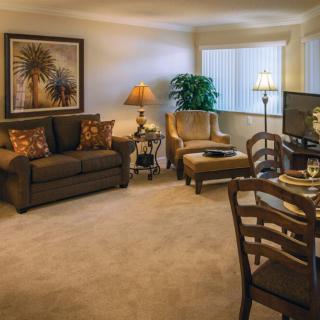
Five Star Premier Residences Of Boca Raton
$4,250 to $5,350 / month13.1 miles away -
from +$295 / mo

Belmont Village Senior Living Fort Lauderdale
$5,195 to $8,350 / month3.2 miles away
Overall Review of Deen's Retirement Home Inc
Pros
 The staff at Golden Sands are wonderful, attentive, and caring toward residents.
- The home environment is filled with love and happiness.
- Swaby and Natasha are the best administrators, continually providing the best possible care.
- The sister-in-law is truly happy and well cared for 24/7.
- The home is immaculate.
- The staff are angels at Golden Sands, offering love and care to every resident.
- Golden Sands ALF exceeds expectations and makes difficult decisions easier.
- The facility is home-from-home, meticulously kept, and staffed by qualified, caring, and humorous personnel.
Cons
 The reviewer would give zero stars if that option existed, describing the place as dark and gloomy.
- They criticized the care as not properly provided to residents, noting dim lighting and poor ventilation.
- They described the phone intake experience as a disaster, with staff who did not seem to know what was going on.
- They questioned whether anyone would trust their parents to a place that cannot get a simple phone call right.
Review
This Fort Lauderdale option is best suited for families seeking a small, intimate, caregiver-driven setting where residents are treated like family and staff know them by name. The reviews describe a converted-house atmosphere that feels like home more than hospital, with hands-on administrators and a tight-knit team that prioritizes daily warmth, personal conversations, and consistent attention to residents’ needs. For relatives who want visible commitment from the people caring for their loved ones and who value a setting where staff become familiar with routines, preferences, and quirks, this type of community delivers. The upside is a welcoming, low-pressured environment where meals, conversations, and routines often center on resident comfort and happiness rather than on impersonal efficiency.
That said, families should explicitly consider alternatives if a loved one requires more clinical oversight, greater structure, or modernity in amenities. Several reviews flag concerns that a smaller, home-like operation may not deliver the full spectrum of medical supervision or the level of facility-wide programming found in larger, more formal communities. For residents with complex healthcare needs, frequent changes in condition, or the need for robust emergency protocols, a larger campus with on-site specialists and a broader activity calendar could reduce stress for caregivers. Additionally, those who prioritize polished aesthetics, brighter common areas, and consistently high-tech safety features may find the trade-off of a cozier setting worth reconsidering.
The strongest pros, uncompromising warmth, devoted staff, and easy access to leadership, often offset the most common drawbacks. Families repeatedly praise administrators and caregivers who take ownership of residents’ well-being, provide consistent daily care, and maintain a genuinely attentive posture toward safety and comfort. The intimate scale supports rapid problem-solving, personalized meals, and flexible routines that adapt to individual preferences. A homey vibe, evidenced by a compact footprint, a cheerful dining rhythm, and a genuinely caring attitude, can soothe anxiety for residents who prefer not to navigate a clinical maze. Even when care plans are solid, the ability to pick up the phone and reach the person in charge without navigating a maze of departments offers a meaningful, practical advantage.
However, several recurring concerns temper the appeal. A few reviewers describe a dim, dark, or poorly ventilated environment, which can feel subtractive for residents with limited mobility or sensory sensitivity. Lighting and air quality aren’t mere niceties here; they touch daily comfort, safety, and mood. Another thread running through the critiques is inconsistent, at-times-frustrating communication, whether during intake or during ongoing updates, creating anxiety for families who want clear, proactive information about their loved one. A standout negative moment involves a phone interaction that suggested staff were hard to reach or unprepared, underscoring how even one thread of miscommunication can undermine overall confidence. These factors aren’t fatal, but they are legitimate deal-breakers for families prioritizing predictability and flawless responsiveness.
To separate the decision signal from the noise, prospective families should approach with a practical evaluation plan. First, arrange multi-hour, day-to-evening visits to observe how lighting feels in different rooms and at different times, and to note whether ventilation remains comfortable in common areas and resident rooms. Second, request candid conversations with the administrator and direct care staff about care protocols, escalation processes, and weekend coverage. Third, verify licensing, staffing ratios, and emergency response procedures, and ask for recent care plans or individualized routines to gauge whether residents’ preferences truly drive daily activities. Finally, insist on meeting current residents or families to hear firsthand about consistency of care, responsiveness, and whether the environment feels genuinely supportive or occasionally neglectful.
In the end, the decision hinges on values and risk tolerance. If prioritizing heartfelt, personalized care, continuity of relationships, and a home-like atmosphere, this Fort Lauderdale option stands out as a compelling fit. It rewards families seeking authentic connections, accessible leadership, and a setting where staff feel like extended family members rather than distant caregivers. For those who cannot compromise on clinical intensity, modern amenities, or flawless environmental conditions, it is prudent to identify alternatives with stronger medical infrastructure, more standardized safety features, and a more uniformly polished operation. A prudent course is a careful trial, ideally spanning several days or a short stay, to confirm that the pros align with the resident’s needs and that the cons do not erode day-to-day well-being.
 Independent Living
 Fort Lauderdale-Hollywood International (6 miles away)




 Understanding Home Health Care: A Comprehensive Guide
 Home Health Care Demystified: A Comprehensive Guide for Families and Caregivers
 Seniors and Modern Transportation: Exploring Uber, Lyft, and Other Ride-Hailing Options