
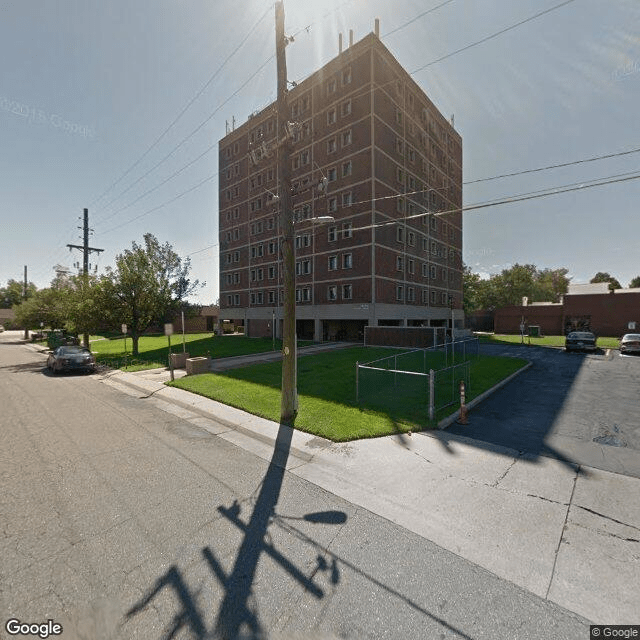
5150 E 34th Ave, Denver, CO 80207
To contact a resident: (303) 321-3891
For more information about senior living options: (866) 208-4318
Liggins Tower Costs & Pricing
Liggins Tower offers an attractive housing option with significantly lower monthly costs compared to both Denver County and the broader state of Colorado. For instance, the studio units at Liggins Tower are priced at $651, a stark contrast to the average studio rent of $3,646 in Denver County and $4,090 across Colorado. Similarly, one-bedroom apartments at Liggins Tower are available for $813, while counterparts in the county and state reach $3,768 and $4,119 respectively. This substantial difference underscores Liggins Tower's value proposition for individuals seeking affordable living arrangements without compromising on quality.
| Floor plans | Liggins Tower | Denver County | Colorado |
|---|---|---|---|
| Studio | $651 | $3,646 | $4,088 |
| 1 Bedroom | $813 | $3,768 | $4,118 |
Independent Living communities with a similar price nearby
-
from -$106 / mo
Kentucky Circle Village
$545 / month4.4 miles away -
from -$54 / mo
Sable Ridge Apartments
$597 to $720 / month6.2 miles away -
from -$51 / mo
Brentwood Tower
$600 to $850 / month7.2 miles away -
from -$126 / mo

Applewood
$525 / month11.3 miles away
Overall Review of Liggins Tower
Pros
 The building was well maintained and the hallways are clean.
- It is a very lovely senior housing complex.
- The residents seem happy and friendly.
- It is nice and quiet, with easy bus transportation in front of the building and easy access.
- The place looks clean and safe.
- It is a great place for seniors where they are cared for.
Cons
 They claim the new management overcharges residents and posts incorrect rent amounts.
- They allege Angelina withholds annual renewals and charges late fees.
- They state the previous two managers engaged in the same pattern and that HUD should investigate.
- They describe Liggins Tower as poorly maintained, with frequent elevator failures and dangerous conditions.
- They report pervasive bed bug infestations in every unit and residents suffering hundreds of bites.
- They say management is aggressive about enforcing minor rules, quick to threaten eviction, and difficult to contact.
- They recount a health scare where a resident was left without check-ins for days.
- They describe the neighborhood as dangerous, with gang activity and frequent theft.
- They claim the manager is rude, heartless, and intimidating, including an incident where a resident was pushed out of an office and police were called.
- They assert new management increased rents for elderly residents while family members live rent-free, and security at the front desk was removed, allowing drug dealers to roam.
- They state there are roaches and bed bugs, and that repeated complaints have been ignored, raising concerns about safety for patients and staff.
- They note a need for a maintenance person.
Review
Liggins Tower in Denver is best suited for budget-minded seniors who can act as their own advocates and tolerate variability in management. The community’s case rests on affordability, straightforward transit access, and a quiet, eventually manageable living environment for those who can navigate guardianship of their own care. It is not ideal for residents who depend on consistently responsive staff, reliable safety coverage, and a pest-free, well-maintained setting. Families seeking a hands-off experience or a building with steady, proactive administration should look elsewhere, because the experiences described here point to ongoing friction between residents and leadership that rarely resolves without persistent advocacy.
Alternatives should be strongly considered for anyone prioritizing predictable billing, pest control, and immediate problem resolution. If budget limits must be balanced with reliable management, there are other Denver-area options with fewer red flags around rent accuracy, front-desk security, and routine communications. Those who require consistent check-ins, a dependable maintenance tempo, and a transparent, resident-focused culture will likely find more reliable matches beyond Liggins Tower. For families with residents who have higher care needs or mobility challenges, a setting with steady staffing and clear accountability becomes a non-negotiable baseline.
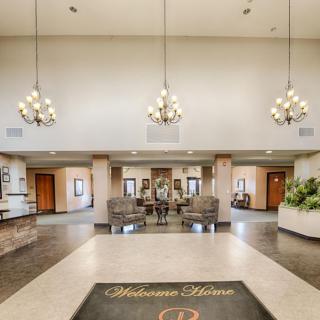
On the upside, certain practical positives do surface amid the cautionary notes. The property offers accessible bus service and a setting that can feel quiet and contained, which may suit residents who value a low-stimulus day-to-day. In some reviews the common areas present as clean and well-kept, and a few residents report a calm atmosphere and easy street access. Those strengths matter if the goal is to minimize daily friction or travel burdens. Yet these advantages are easily outweighed by the most persistent and disruptive problems reported by residents and their families.
The most troubling issues lie with management and operations. Reports center on allegations of new management engaging in aggressive rent practices, with claims of overcharging and late fees, coupled with alleged patterns of withheld renewals. The sense is that contact with leadership is inconsistent at best and hostile at worst, with residents and families left with little recourse when problems arise. The suggestion that rent increases are tied to personal arrangements (such as family members living rent-free) raises serious questions about fairness and governance. These concerns require immediate, transparent accounting and a formal mechanism for resident review to restore any sense of trust.
Health and safety concerns compound the management woes. A persistent bed bug and roach infestation in multiple units creates ongoing health and comfort risks for elderly residents, many of whom have limited ability to endure frequent disruptions. Maintenance responsiveness appears uneven, with critical systems like elevators breaking down and staff availability for urgent needs frequently questioned. A sense of security has deteriorated as some reviewers describe a front-desk lapse and a neighborhood dynamic that feels unsafe, with assertions that drugs or illicit activity float through common areas. Taken together, these conditions push many families toward considering higher-contact, more reliably supervised living environments.
In the end, this community rewards careful, deliberate decision-making rather than a quick choice. Prospective residents who can tolerate, and actively demand, transparent billing, prompt maintenance, and rigorous pest remediation may find a workable home here, provided they establish clear work plans, formal oversight, and a strong line of communication with management. For families weighing alternatives, the safer path is to prioritize elders’ safety, consistent staffing, and enforceable service standards. Before moving in, insist on a detailed, written remediation timetable for bed bugs, roaches, and elevator reliability; secure a formal, itemized rent accounting with a clear dispute process; meet multiple residents to gauge day-to-day experiences; and confirm a concrete plan for security and front-desk coverage. If those assurances cannot be obtained, the prudent move is to look elsewhere and keep Liggins Tower as a last-resort option, not a first choice.
 Independent Living
 Denver International (15 miles away)

 Navigating Medicare Coverage for In-Home Care Services
 In-Home Care Costs in 2025: A Detailed State-by-State Exploration
 Understanding Home Health Care: A Comprehensive Guide