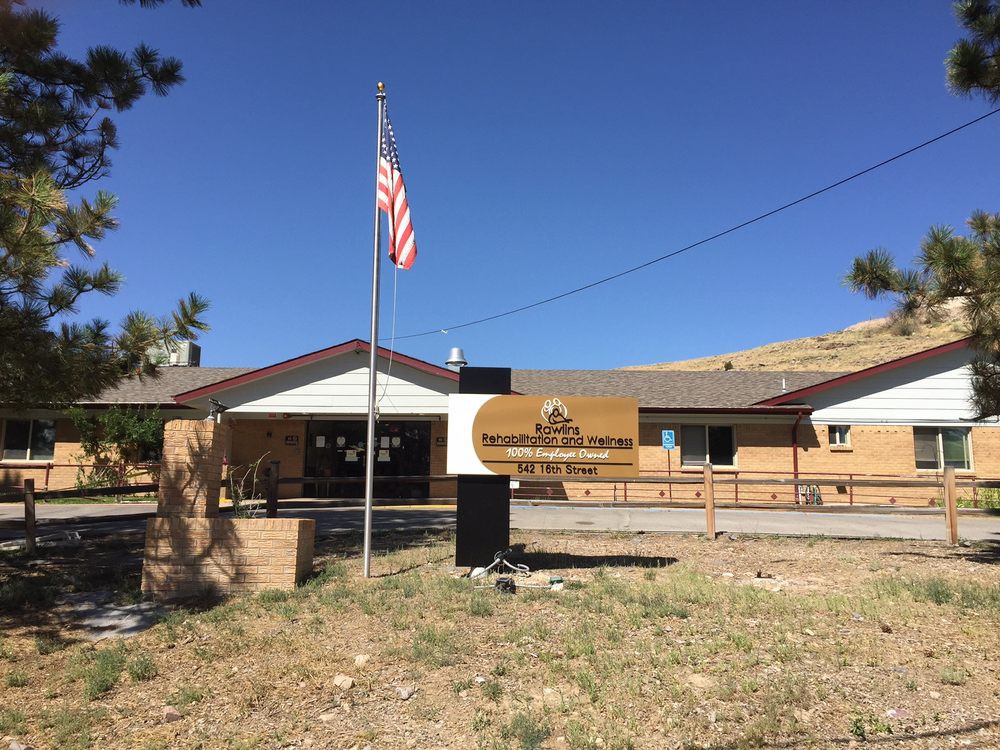



542 16Th Street, Rawlins, WY 82301
For more information about senior living options: (866) 208-4318
Overall Review of Rawlins Rehabilitation And Wellness
Pros
 The staff are compassionate and listen to family and residents' concerns.
- The facility is phenomenal, keeps families informed, and has the best staff.
- The staff are friendly and knowledgeable; residents are happy, clean, and well cared for.
- Rawlins Rehab feels like home to the residents.
- Residents enjoy engaging activities and have a wonderful time.
- Rawlins Rehab and Wellness goes above and beyond for its residents; the staff are professional and friendly.
- The facility became a home away from home for a family member; the staff were kind and accommodating, enabling recovery.
- The staff genuinely care for residents and their families; the team—from the director through—is amazing.
Cons
 The reviewer, a retired ICU nurse, says it is the worst place ever.
- Her mother died within a month of arriving there.
- There was no nurse of any kind during the first two weeks the mother was there.
- They were waiting for a recent LPN graduate.
- They made multiple medication errors by giving double doses and mixing drug names.
- During the night, the med aide gave her more morphine than needed while she was unresponsive.
Review
Rawlins Rehabilitation And Wellness is best suited for families seeking a warm, community-oriented rehab and wellness environment for seniors who need skilled help after a hospital stay or ongoing assistance with daily activities, all delivered with a clear emphasis on personal connection and transparent communication. The atmosphere described by families is notably home-like rather than clinical, with residents consistently portrayed as happy, clean, and well cared for. Care is attentive, and staff are praised for listening to concerns and keeping families in the loop about progress and daily happenings. For those who value a nurturing environment where teams go above and beyond to support recovery and everyday comfort, this community often becomes a trusted bridge between hospital and home.
Those weighing alternatives should consider what happens when medical acuity is higher or when long-term, dementia-focused care is needed. A single negative account from the past highlights concerns about nurse availability and medication handling during a transition period, underscoring the risk that leadership gaps can create real patient-level frustrations. Families prioritizing relentless medical oversight, strict privacy protections, and uninterrupted licensed nursing presence may favor options with more formalized clinical programs or hospital-affiliated resources. In short, for residents who require sustained long-term nursing care or specialized memory care, it may be prudent to compare facilities whose core strength is ongoing clinical governance rather than rehab-centric programming.
On the upside, the community earns high marks for compassionate, approachable staff who truly listen and respond to both residents and families. The consistent message is that staff members are knowledgeable, respectful, and deeply invested in residents’ well-being, creating a sense of trust that extends beyond routine updates. The home-like setting, where residents feel well cared for and looked after, reinforces a stable, reassuring atmosphere. Visible enthusiasm for activities and community engagement, plus a pattern of staff going the extra mile, helps families feel confident that their loved one is not just cared for, but truly valued. When care is anchored in daily warmth and practical support for rehabilitation milestones, outcomes such as improved mobility and the prospect of returning home become tangible realities rather than distant goals.
Service offerings center on rehab and wellness with a practical, hands-on approach to restoring function and independence. The environment supports therapy and restorative routines in a setting that feels less clinical and more like a supportive home, a dynamic that families consistently cite as a major strength. Recovery stories, such as residents reclaiming daily independence and achieving discharge goals, underscore the real-world impact of this focus. Families appreciate how the facility integrates updates, therapy progress, and discharge planning into the care plan, making the transition smoother for everyone involved. The social dimension, residents engaging with one another, local events, and a shared sense of community, adds a meaningful layer of quality that complements clinical care.
Rawlins is located in Rawlins, Wyoming, offering a regional option backed by strong qualitative feedback and a high overall rating. Families repeatedly praise the commitment of staff across roles, from leadership to frontline caregivers, as a major differentiator. Prospective residents should verify current staffing levels, the availability of licensed nurses, and the specific processes for medication management to ensure alignment with any resident’s medical needs. In addition, inquire about therapy schedules, progress tracking, and discharge planning to confirm that rehab timelines match expectations. Visiting at different times can reveal how the environment supports independence, privacy, and purposeful activity, helping families assess whether the home-like culture genuinely aligns with clinical requirements.
For families prioritizing a rehab-forward, nurturing home environment in a small-city setting, Rawlins Rehabilitation And Wellness stands out as a practical, reliable choice. Its strongest appeal rests in compassionate staff, open communication, and a community that treats residents like family, coupled with tangible progress toward recovery and return-to-home goals. Those requiring long-term nursing oversight, specialized memory care, or highly formalized medical governance should compare alternatives that foreground ongoing clinical services and dementia care programs. In the decision process, emphasize current care teams, individualized care plans, and the facility’s capacity to adapt to evolving needs. When these criteria align, this community offers a compelling path that preserves dignity and promotes independence through a meaningful rehabilitation journey.
 62 resident community capacity
 Assisted Living
 Skilled Nursing Facility
 Air-conditioning
 Beauty salon
 Cable or satellite TV
 Computer center
 Dining room
 Fitness room
 Fully furnished
 Gaming room
 Garden
 Housekeeping services
 Kitchenette
 Move-in coordination
 Outdoor space
 Private bathrooms
 Restaurant-style dining
 Small library
 Telephone
 Wellness center
 Wi-Fi/high-speed internet available
 Community operated transportation
 24-hour call system
 Activities of daily living assistance
 Assistance with bathing
 Assistance with dressing
 Assistance with transfers
 Diabetes diet
 Medication management
 Special dietary restrictions
 Concierge services
 Planned day trips


 When to Transition from Assisted Living to Memory Care: Key Indicators, Steps, and Finding the Right Community
 Assisted Living and Memory Care: Understanding Their Core Differences
 Beyond the Bingo Hall: 50+ Enriching Activities for Seniors in Assisted Living