

4525 Gunderson Road, Waterford, WI 53185
For more information about senior living options: (866) 208-4318
Personally Yours Elder Care Costs & Pricing
Personally Yours Elder Care offers competitive pricing for its services compared to the broader market in Waukesha County and the state of Wisconsin. For a private room, the monthly cost is set at $4,000, which is slightly more affordable than the county average of $4,205 and significantly less than the state average of $4,339. Similarly, their semi-private room option is priced at $4,000, providing a cost-effective alternative when compared to both Waukesha County's average of $4,369 and Wisconsin's statewide figure of $3,977. However, for those seeking a studio apartment within the facility, the price stands at $5,000 - higher than both the county's average of $4,225 and the state's average rate of $3,999. Overall, Personally Yours Elder Care positions itself as an attractive option for individuals seeking quality elder care at reasonable prices while still catering to various preferences in room types.
| Floor plans | Personally Yours Elder Care | Waukesha County | Wisconsin |
|---|---|---|---|
| Private | $4,000 | $4,205 | $4,339 |
| Semi-Private | $4,000 | $4,369 | $3,977 |
| Studio | $5,000 | $4,225 | $3,999 |
Memory care communities with a similar price nearby
-
from -$500 / mo

Dolphin Manor
$3,500 / month4.3 miles away -
from -$200 / mo

Geneva Crossing
$3,800 / month19.5 miles away -
About the same
Waterford Senior Living
$4,050 to $5,450 / month3.2 miles away -
from -$705 / mo

Harbour Village
$3,295 to $7,012 / month14.2 miles away -
from -$430 / mo

Villa St Francis
$3,570 to $4,880 / month17.7 miles away
Overall Review of Personally Yours Elder Care
Pros
 They describe it as a great place where the staff truly cares and provides excellent care.
- The resident is always well kept and looks well cared for by attentive staff.
- They feel the facility is awesome and even see it as a gift from God, with prayers answered.
- It is described as a very nice facility with a real home-like atmosphere.
- Residents are active in common areas, and the environment fosters interaction rather than isolation.
- The three connected homes layout makes visits easy for families.
Cons
 The website is deceitful and the owner is not trustworthy.
- The home is run like a prison and is very controlling.
- There is no activity director and residents are kept in common areas all day.
- They restrict outside food and require permission to bring in food not listed in the handbook.
- The dietary rules are created and enforced by the owner, with no legitimate medical basis, and meals are high in sodium and nutritionally poor.
- The staff are unprofessional and unkind, sometimes ignoring questions or failing to apologize.
- The facility is driven by dollars rather than care, showing a lack of empathy for residents.
- The address information is incorrect, leading to confusion and distrust.
Review
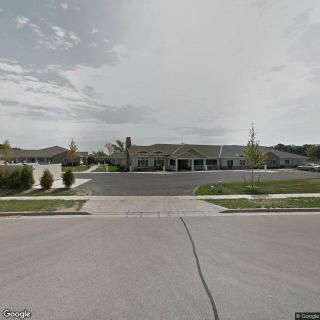
Personally Yours Elder Care in Waterford, WI is best suited for families seeking a very intimate, home-like setting where residents are visible, cared for in a small- footprint environment, and where staff are perceived as personally invested by some families. The facility operates with three connected homes arranged in a compact footprint, which can create a family-like, neighborly atmosphere and simplify in-person visits. For seniors who thrive on a housebound, almost homelike routine rather than a high-traffic, program-driven campus, this place can feel comfortable and approachable. The strongest appeal lies in the perceived warmth of the caregivers and the easy accessibility for relatives who want frequent, informal contact.
That said, serious considerations push many families to look at alternatives. A recurring thread across reviews is a governance style that feels controlling and opaque, led by an owner who appears to set and enforce rules with little apparent documentation or staff alignment. Prospective residents and families should be wary of claims that do not align with every-day experience, including questions about dietary plans, meal variability, and the rationale behind policies. If transparency, predictable staffing, and open, frequent communication are nonnegotiables, this community requires a careful second look. Potential residents who place high emphasis on robust activity programming, consistent caregiver assignments, and truly open visitation may find better fit elsewhere.
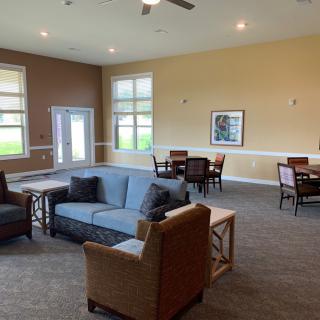
The positives that do surface can be meaningful offsets to some concerns, particularly for families prioritizing a home atmosphere and staff accessibility. Several residents’ families describe a warm, genuine care from caregivers, with staff who seem to know residents well and keep personal needs attended to. The three-home setup can foster informal social interaction and make visits convenient from multiple points on the campus. When the environment behaves as a true “home,” visitors report that residents appear well-kept, engaged, and comfortable in common areas rather than isolated in private rooms. These elements, perceived attentiveness, a reassuringly small scale, and the ease of drop-ins, are important for families who value soulful, day-to-day connection over polished, hospital-like routines.
However, the most troubling themes in the reviews center on trust, autonomy, and governance. Multiple accounts allege that the owner exercises a heavy hand, restricting outside communication, controlling dietary choices with unclear medical rationale, and enforcing rules that feel punitive or punitive-adjacent rather than supportive. There are claims of food policies that conflict with doctors’ directives or with residents’ preferences, and of nutritional standards that seem inconsistent with stated menus. Families also report abrupt or adversarial meetings, limited avenues for input, and a culture described by some as “dollars before caregiving.” When a facility signals such rigidity, even strong caregiving moments cannot erase the underlying concern: can the resident, who may be vulnerable, trust the care plan and the administrator in charge?
On the practical side, other consistent threads involve visiting privileges and daily rhythms. Several reviewers report restrictive visitation policies, requiring formal notice for drop-ins and limiting private room access, along with a perceived lack of an activities director and structured programming. For a family wanting flexibility to integrate meaningful activities, outings, or family time into the week, these elements can be a real constraint. Add in reports of maintenance or odor concerns in certain spaces and questions about the consistency of room sizes and privacy, and the overall experience can feel uneven. Prospective residents should weigh whether a strong emphasis on homey feel and caregiver warmth can compensate for a less predictable schedule and a more guarded residential culture.
The practical verdict for families is clear. If a loved one prizes intimate contact, easy family engagement, and a truly domestic setting, and is willing to navigate questions about governance, communication, and policy clarity, this community can offer a comforting, low-key option. But if the priority is transparent operations, consistent staffing, prompt responsiveness, and a consistently holistic policy framework, it is prudent to explore other options. The memorable testimonials praise care and warmth, yet the cautionary ones highlight management style and policy rigidity that can undermine day-to-day peace of mind. To move forward intelligently, verify the facility’s address (4525 Gunderson is the correct site) and insist on meeting with the owner in a structured setting, request current menus and meal plans, review the latest state inspection or complaint history, and talk directly with several current families about visitation, activities, and how emergencies are handled.
In selecting a senior living option, the key is alignment between the resident’s needs and the governance, programming, and daily lived reality of the home. Personally Yours Elder Care can deliver a genuine, home-like environment with accessible staff, but it carries significant caveats around autonomy, transparency, and consistency. Families should enter with clear questions about diet approvals, meal variety, activity offerings, and visitation rights, and should insist on concrete, written policies that govern day-to-day care. If those assurances can be obtained and sustained, the choice makes sense; if not, the search should continue with a more transparent operator that can promise steady, verifiable caregiving in a truly supportive environment.
 4 resident community capacity
 Assisted Living
 Board and Care Home
 Memory Care
 Activities off-site
 Cable or satellite TV
 Dining room
 Fully furnished
 Garden
 Housekeeping services
 Indoor common areas
 Move-in coordination
 Outdoor common areas
 Private
 Respite or short term stays offered
 Telephone
 Wi-Fi/high-speed internet available
 General Mitchell International (17 miles away)
 24-hour supervision
 Ambulatory care
 Assistance with bathing
 Assistance with dressing
 Assistance with transfers
 Diabetes diet
 Diabetic care
 Hospice waiver
 Incontinence care
 Meal preparation and service
 Medication management
 Mental wellness program
 Special dietary restrictions
 Transportation arrangement (medical)
 Transportation to doctors appointments

 Dementia, Paranoia, and Caregiver Guidance: Understanding the Connection
 Engaging Memory Care Activities That Enhance Quality of Life
 When to Transition from Assisted Living to Memory Care: Key Indicators, Steps, and Finding the Right Community