
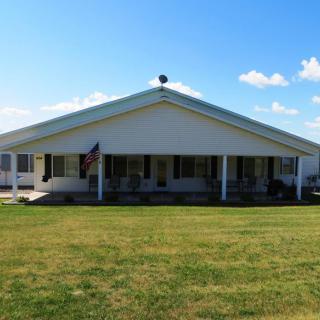
13231 Cty Highway H, Stanley, WI 54768
For more information about senior living options: (866) 208-4318
Overall Review of Wolf River Country Adult Home
Cons
 It was a mistake to place their mom in this facility.
- Staff didn’t watch their mom, who walked out numerous times and fell, even though she had a walker.
- Staff had a habit of embellishing how she was adapting.
- This place was a nightmare.
- After moving her to a facility in Eau Claire, she had a huge bruise covering her entire cheek.
- They do not recommend placing loved ones here.
Review
Wolf River Country Adult Home in Stanley, Wisconsin is best suited for families needing a very small, home-like setting that can be overseen by relatives or a trusted caregiver on a hands-on basis. The reviews imply a place where a resident’s daily routine could be managed more informally, but only if there is relentless supervision available. For seniors who require only minimal assistance and whose wandering risk is controlled by constant oversight, this community could offer a simple, intimate atmosphere. Without that level of active involvement, the safety gaps observed in the accounts render the setting problematic for most care plans.
Those considering alternatives should note that safety and transparent supervision are non-negotiables for many families. The negative accounts highlight a risk profile that makes this community appealing to only a narrow slice of residents. Families should actively compare with facilities known for stronger staffing, consistent check-ins, and documented safety practices. One reviewer’s experience involved moving a loved one to an Eau Claire facility after injuries, underscoring that a change to a more regulated environment is not just possible but prudent when safety questions arise. In short, this is not a default choice; it demands rigorous vetting.
Two five-star reviews imply there are redeeming qualities in play, likely portions of a homey setting or moments of attentive care, but those positives do not erase the core concerns. The strongest notes across the accounts center on real safety failures: residents wandering, injuries from falls, and the perception that staff report outcomes more favorably than reality. The absence of details about daily operations beyond these episodes makes it impossible to credit the facility with reliable consistency. In decision terms, the potential warmth of a small-adjacent home cannot compensate for the risk a resident faces when supervision is inconsistent.
Concrete red flags focus on supervision gaps: a resident who repeatedly walked out and fell despite using a walker; claims of staff embellishing how a resident was adapting; and a bruising incident after relocating to Eau Claire. These patterns point to fragile risk management and questionable communication. Any family weighing this option should demand a thorough, written safety protocol: guardrails for wandering, fall-prevention measures, clear incident reporting, and guaranteed staffing coverage across shifts. Without those guardrails in place, the environment quickly shifts from potentially comfortable to dangerously unreliable.
From a risk-management perspective, the handful of seemingly positive ratings cannot offset the heavy safety liabilities. The pros are only meaningful if paired with steady, verifiable safeguards, which the reviews indicate may be lacking. If the resident is highly independent with limited wandering risk and if family oversight is feasible, the setting could work as a low-key, affordable option. Otherwise, this community should be crossed off the short list in favor of facilities with transparent staffing patterns, stronger protection against wandering, and verifiable care plans. The burden of proof lies with the administrator, not with incoming families.
In final judgment, Wolf River Country Adult Home requires cautious, do-not-make-few assumptions. For families prioritizing safety, transparency, and dependable staffing, alternatives that demonstrate consistent supervision are strongly recommended. Before deciding, arrange a candid tour focused on safety protocols, speak with current residents and families about incident handling, and request access to logs covering falls, wandering events, and staff responses. If proceeding, insist on a robust care plan, predictable shifts, and immediate steps to mitigate wandering. If those assurances cannot be secured, the prudent choice is to pursue other options that deliver verifiable protection and steadier daily routines.
 4 resident community capacity
 Assisted Living
 Board and Care Home
 Cable or satellite TV
 Dining room
 Fully furnished
 Garden
 Housekeeping services
 Move-in coordination
 Outdoor space
 Telephone
 Wi-Fi/high-speed internet available
 24-hour supervision
 Activities of daily living assistance
 Assistance with bathing
 Assistance with dressing
 Assistance with transfers
 Diabetes diet
 Meal preparation and service
 Medication management
 Special dietary restrictions
 Transportation arrangement (medical)
 Transportation to doctors appointments
 Fully furnished rooms with meals, ADL support, medication management, and transportation for medical visits.

 An Extensive Exploration of the VA Aid and Attendance Benefit
 Senior Transition Services: Understanding Their Role, Cost, and Importance
 Exploring the Path to Senior Living: A Comprehensive Look at Independent Living and Assisted Living