Residents describe a strong safety focus and support for daily movement through the building.
Several residents and family members say they feel confident about resident safety, including help navigating within the community. A reviewer also points to safe conditions for residents, and another describes staff being aware of where their loved one is in the building. This lines up with the community providing 24-hour supervision.
common19 reviews mention this
Staff are consistently described
The most consistent praise is for caring, compassionate staff and attentive day-to-day support.
Across the reviews, families describe staff as kind, patient, and compassionate with residents and visitors. Multiple comments connect that warmth to the way residents respond—mentioning respect, clean and well-cared-for routines, and staff who treat people like family. Residents also describe staff patience even with difficult situations and ongoing support for physical needs and hygiene.
common7 reviews mention this
Communication is called responsive
Residents’ families emphasize responsive communication when they have questions or concerns.
Several reviewers say it is easy to reach leadership and that staff follow up quickly when concerns come up. Communication is mentioned in both day-to-day updates and in how changes in a resident’s health are shared. A few families also highlight staff members by name for being helpful and keeping conversations open through the process.
common6 reviews mention this
Cleanliness and room upkeep matter
Families repeatedly note a clean environment and consistently maintained rooms and clothing.
Reviews frequently mention a clean facility, including clean rooms and good hygiene practices. One family member specifically describes neatly kept rooms and clothes, while another says their loved one is always clean and well cared for. A reviewer also credits the facility’s cleanliness while pointing out the manager’s friendliness and care-oriented approach.
common3 reviews mention this
Food and dining get compliments
Residents and families mention food quality as a positive part of daily life.
A few reviewers single out the meals as enjoyable, including statements that the food is great and excellent. One family member also connects good food to their loved one’s overall routine. These comments are paired with mentions of clean living spaces and well-supported daily needs.
differentiator7 reviews mention this
Memory care support is emphasized
Many reviews focus on memory care for dementia or Alzheimer’s needs.
Several families describe choosing this community specifically for memory care, mentioning dementia and Alzheimer’s. Reviewers describe personalized support based on a resident’s personality, as well as staff members who work with residents’ changing physical and cognitive needs. A reviewer also mentions extended memory care support over multiple years, including a period on hospice.
common3 reviews mention this
Activities help residents pass time
Residents describe activities that help keep the day structured and engaging.
More than one review mentions activities as part of daily life, including programs and ways to help residents pass the day. One reviewer also highlights frequent musical programs as something their loved one enjoyed. Another review mentions structured, engaging activities used with residents.
How we summarize
Counts show how many written reviews mention each theme; a review can touch several themes, and only frequently mentioned themes are displayed.
Features
Housing
4 resident community capacity
Types of Care
Assisted Living
Amenities
Cable or satellite TV
Dining room
Fully furnished
Garden
Housekeeping services
Move-in coordination
Outdoor space
Telephone
Wi-Fi/high-speed internet available
Care Services
24-hour supervision
Activities of daily living assistance
Assistance with bathing
Assistance with dressing
Assistance with transfers
Coordination with health care providers
Diabetes diet
Meal preparation and service
Medication management
Special dietary restrictions
Transportation arrangement (medical)
Transportation to doctors appointments
Dining
Diabetes diet
Special dietary restrictions
Activities
Community-sponsored activities
Scheduled daily activities
Nearby Places of Interest
Restaurants
Ky-Odie's Denn (0.6 miles)
Kyote's Den Bar & Grill (0.6 miles)
Stout Craft Co. Kitchen & Tap House (5.3 miles)
Stout Ale House (5.3 miles)
Denny's (5.4 miles)
Arby's (5.4 miles)
Wendy's (5.4 miles)
Transportation
U-Haul Neighborhood Dealer (4 miles)
U-Haul Neighborhood Dealer (5.6 miles)
U-Haul Neighborhood Dealer (5.7 miles)
Union Pacific Railroad Co. (5.8 miles)
U-Haul (5.9 miles)
U-Haul Neighborhood Dealer (7.7 miles)
Places of Worship
Gospel Mission Baptist (4.1 miles)
Branches Church (5.4 miles)
River of Life Assembly of God (5.8 miles)
United Methodist Church (5.9 miles)
The Ministry at UW-Stout (5.9 miles)
Lutheran Campus Ministry to UW-Stout (5.9 miles)
First Congregational United Church of Christ (6 miles)
Parks
Hoffman Hills State Recreation Area (5 miles)
Riverside Park (5.4 miles)
Sanna Park (5.4 miles)
Devil's Punchbowl (5.6 miles)
Wakanda Water Park (6 miles)
Wilson Park (6.2 miles)
Sanna Park (6.7 miles)
Theaters
CEC Theatres - Menomonie 7 Theatre (5.4 miles)
Menomonie Theater Guild (6.9 miles)
Pharmacies
Walgreens (5.4 miles)
Medicine Shoppe (5.4 miles)
CVS Pharmacy (5.7 miles)
Medicine Shoppe (5.8 miles)
Cpi Menomonie (6.5 miles)
The Medicine Shoppe Pharmacy (6.5 miles)
Red Cedar Pharmacy (7.1 miles)
Cafes
Starbucks (5.4 miles)
Caribou Coffee (5.5 miles)
The Blind Munchies Coffeehouse (6.2 miles)
Golden Leaf Cafe (6.7 miles)
Physicians
Chippewa Valley Eye Clinic (5.7 miles)
The Joyful Doc Clinic (6.1 miles)
Dunn County Health Department (6.2 miles)
ReforMedicine, s.c. (6.5 miles)
The Free Clinic of The Greater Menomonie Area (7.1 miles)
Marshfield Clinic Menomonie Center (7.7 miles)
Hospitals
Mayo Clinic Health System (7 miles)
Red Cedar Medical Center-Mayo Health System (7.1 miles)
The guide highlights the importance of assisted living facilities for aging veterans needing daily support, discusses unique challenges they face, and outlines available financial assistance from the VA, including the Aid and Attendance program. It emphasizes understanding eligibility criteria and navigating the VA system to access necessary benefits effectively.
The article compares assisted living and skilled nursing facilities, detailing their differing levels of assistance, medical support, cost structures, and day-to-day experiences. It emphasizes that assisted living is for those needing help with daily activities while maintaining independence, whereas skilled nursing facilities provide intensive medical care with 24-hour staff supervision.
The transition from assisted living to skilled nursing care is often prompted by complex medical needs that assisted living cannot meet, with key indicators including frequent health declines, increased falls, severe memory issues, and caregiver burnout. Families should recognize these signs early to discuss options with healthcare providers and prepare for the emotional and logistical aspects of moving to a facility that offers comprehensive medical support.
Get PricingAsk A QuestionSchedule A TourContact Senior Advisor
By clicking submit, you agree to our Partner's Terms of Use. You
also consent to receive calls and texts, which may be autodialed, from our Partner. Your consent is not a condition to
using our Partner's service. Please visit our Partner's Privacy Policy for information about their privacy practices.

 4 resident community capacity
 Assisted Living
 Cable or satellite TV
 Dining room
 Fully furnished
 Garden
 Housekeeping services
 Move-in coordination
 Outdoor space
 Telephone
 Wi-Fi/high-speed internet available
 24-hour supervision
 Activities of daily living assistance
 Assistance with bathing
 Assistance with dressing
 Assistance with transfers
 Diabetes diet
 Meal preparation and service
 Medication management
 Special dietary restrictions
 Transportation arrangement (medical)
 Transportation to doctors appointments
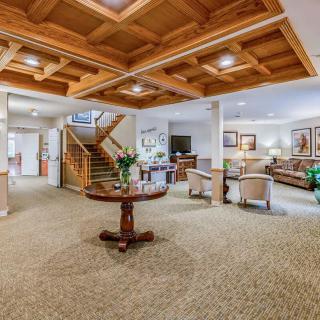
 Intimate, small-capacity setting enabling highly personalized, attentive care.
 Assisted Living Support for Veterans: A Complete and Detailed Overview
 Exploring the Contrasts Between Assisted Living and Skilled Nursing
 8 Key Indicators That Suggest It May Be Time to Transition from Assisted Living to Skilled Nursing Care