

10214 Rock Creek Road, Hayward, WI 54843
For more information about senior living options: (866) 208-4318
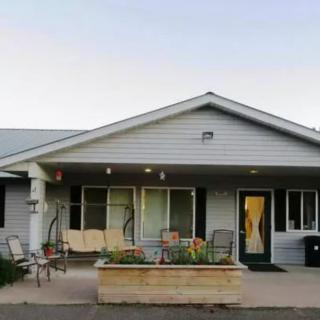
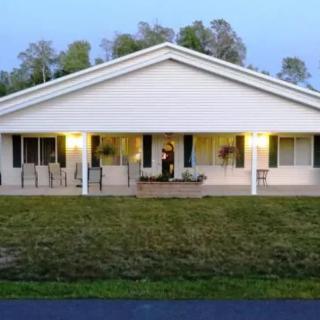
Overall Review of Aspen Acres Assisted Living
Pros
 The staff is always attentive and helpful.
- The activities director is the best.
- Aspen Acres and its staff are spoken of in nothing but good terms.
- They take very good care of all the residents.
- They are awesome with the families.
- They keep everyone involved as much as possible.
- A sister visiting describes feeling at home and regards the staff as family.
Cons
 They gave it zero stars.
Review
Aspen Acres Assisted Living in Hayward is best suited for seniors who want a warm, family-style environment where staff attention feels constant and genuine, and where social engagement is not an afterthought but a core part of daily life. The community earns its strongest credibility from an attentive, helpful staff and an activities program run by a standout activities director. Residents and families repeatedly note that care feels personalized, and that staff foster a sense of belonging, an impression reinforced by residents who speak of staff as almost like family. For families seeking visible warmth, frequent communication, and a calendar packed with events that keep seniors connected to peers, Aspen Acres presents a compelling fit. A tour is strongly recommended for those who want to verify the lived experience behind these endorsements and to see how daily routines unfold in practice.
That said, there are clear reasons some families might want to consider alternatives. The community has a very small review base, with only four evaluations spread across a range of experiences, including a single one-star remark whose specifics aren’t spelled out. In a market where informed choices hinge on patterns rather than anecdotes, the limited sample invites caution. Prospective buyers should balance the upbeat testimonials with a practical assessment of whether Aspen Acres can absorb rising care needs, particularly if medical complexity, memory care, or more intensive supervision will be required over time. Those who prioritize a higher-profile medical campus, more formal clinical oversight, or a larger, more resource-dense facility may find other options more aligned with their expectations.
On the plus side, the day-to-day experience at Aspen Acres consistently centers on strong relationships. The staff are described as attentive and helpful, and the family-centric approach stands out: staff not only care for residents but actively involve families in the process, keeping everyone in the loop through regular communication and transparent programming. The activities director is repeatedly singled out as a standout asset, delivering programming that resonates with residents and helps sustain a sense of purpose and community. The notion that residents feel at home, sometimes described as a family-like atmosphere, is not incidental; it’s repeatedly tied to how staff interact, the inclusion of family, and the visible enthusiasm around events and social spaces. Even visitors who come for a tour or a few hours note a consistent, positive tone in care delivery.
However, the limited number of reviews means occasional variability may be present, and one reviewer’s “zero star” rating introduces a note of caution. Without details, it’s tough to triangulate the source of that dissatisfaction, but it underscores the reality that even well-regarded teams can experience fluctuations. Another nuance to consider is that while most accounts emphasize kindness and consistency, there is no explicit, widely advertised specialization in advanced medical care or memory support within the public-facing narrative. Families with high acuity needs or strict clinical requirements should probe directly about the scope of services, staff training, and access to on-site clinicians or partnerships with local medical providers. This isn’t to discount the evident strengths; it’s simply a prudent reminder to verify alignment with current and anticipated care needs.
When considering how the positives offset the potential drawbacks, Aspen Acres’ core strengths do substantial, practical work to justify its appeal. A staff culture that is consistently described as attentive and family-friendly directly mitigates common senior-living anxieties about isolation and feeling forgotten. The active calendar and visible engagement opportunities reduce boredom and withdrawal, which often drive declines in mood or participation. The perception that care is delivered with warmth and reliability can ease the inevitable transition challenges for both residents and families. In short, the strongest value proposition here is relational: residents are known, involved, and connected, and families feel informed and welcomed rather than sidelined. In a setting where meaningful social engagement can dramatically improve quality of life, those elements carry substantial weight against a lack of breadth in medical offerings.
The practical takeaway for families is straightforward. Prioritize a visit with a clear checklist: observe the interactions between staff and residents, note how quickly questions are answered, and assess whether residents appear engaged and well supervised during activities. Ask about staff-to-resident ratios, shift coverage, and whether specialized services, such as medication management, wound care, or memory-support programming, are available on-site or via referral. Request recent schedules of activities to gauge consistency and continuity; review the community’s Facebook page or other posted events to gauge vibrancy and transparency. Have candid conversations about what happens when a resident’s care needs intensify or when family involvement needs to shift; confirm how care plans are developed, documented, and updated. Most importantly, walk away with a lived impression of the day-to-day atmosphere: warmth, responsiveness, and a palpable sense that residents are valued members of a thriving community.
Ultimately, Aspen Acres stands out for families who prize connection, attentiveness, and a lively, inclusive program that makes residents feel “at home.” It is a solid pick for those who place relationship-driven care and social vitality above the most expansive clinical offerings or on-site medical sophistication. The outlier one-star reminder serves as a practical caveat: no single good day proves universal, and the compact review pool means experiences can vary. For families weighing options, Aspen Acres is a credible, well-regarded option worth serious consideration, provided the care needs of the individual align with the community’s demonstrated strengths. In the end, the decision comes down to whether the heart of the setting, its people, its programming, and its daily rhythm, matches the resident’s personality, preferences, and planned trajectory of care.
 28 resident community capacity
 Assisted Living
 Memory Care
 Activities on-site
 Beauty salon
 Cable or satellite TV
 Devotional services off-site
 Dining room
 Fully furnished
 Garden
 Housekeeping services
 Indoor common areas
 Kitchenette
 Move-in coordination
 Outdoor space
 Restaurant-style dining
 Small library
 Telephone
 Wi-Fi/high-speed internet available
 24-hour call system
 Ambulatory care
 Assistance with bathing
 Assistance with dressing
 Assistance with transfers
 Diabetes diet
 Diabetic care
 Medication management
 Mental wellness program
 Special dietary restrictions

 Understanding Dementia Behaviors: Practical Insights and Strategies for Caregivers
 When Dementia Sparks Anger and Aggression: Understanding the Connection and Ways to Cope
 Dementia Behaviors: In-Depth Understanding and Effective Coping Strategies