Residents and families frequently describe the staff as compassionate and attentive.
Many reviews focus on the day-to-day tone of care, with praise for nurses, CNAs, and the broader team as kind, friendly, and professional. Several visitors describe feeling comfortable asking questions and getting help, and others say staff put residents’ needs first. A few reviews also mention fast response to call lights and smooth coordination between departments during rehab.
common16 reviews mention this
Activities keep residents engaged
Reviews repeatedly highlight a steady schedule of activities.
A large share of reviews mention frequent activities and an engaging environment, including outings, games, and themed moments. Families and staff members describe activities as a key part of life there, with residents encouraged to get out of their rooms and socialize. Reviews also mention community-style touchpoints like happy hour and group events tied to holidays.
common11 reviews mention this
Facilities are described as clean
Multiple reviews mention cleanliness and well-kept common areas.
Several reviews describe the facility as clean, comfortable, and generally well maintained, including common areas and rooms. Some also note that the environment feels ready for visitors, and one review specifically calls out keeping residents comfortable during colder weather. At the same time, a smaller set of negative reviews raise concerns about dirt and cleanliness in specific areas.
common6 reviews mention this
Food quality is mixed but present
Residents mention meals often, with opinions ranging from okay to very good.
Some reviews describe the food as very good or delicious, while others say it was just okay. A few reviews connect meals to the overall experience by describing dining as part of daily life and activities. The community also offers support for special diets, which aligns with residents needing meal adjustments.
caveat8 reviews mention this
Basic care gaps are a concern
A subset of reviews reports serious lapses in care.
Several negative reviews describe inadequate help with basic needs, including call light response and assistance with toileting and changing. A few residents or families also report medication concerns and issues that affected comfort and skin health. These reviews paint a consistent picture of care not meeting expectations during higher-need periods.
common4 reviews mention this
Outdoor and furnished living spaces
Reviews and amenities both point to comfortable, set-up spaces.
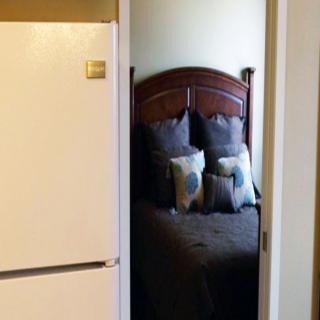
The listing includes furnished rooms, housekeeping, and outdoor space, which matches reviews that describe rooms as comfortable and the facility as inviting. One visitor also notes that room styles vary from hospital-like to more home-like setups. A few reviews also mention practical comforts like parking and basic building upkeep.
How we summarize
Counts show how many written reviews mention each theme; a review can touch several themes, and only frequently mentioned themes are displayed.
Features
Housing
14 resident community capacity
Types of Care
Assisted Living
Board and Care Home
Amenities
Cable or satellite TV
Dining room
Fully furnished
Garden
Housekeeping services
Move-in coordination
Outdoor space
Telephone
Wi-Fi/high-speed internet available
Care Services
24-hour supervision
Activities of daily living assistance
Assistance with bathing
Assistance with dressing
Assistance with transfers
Coordination with health care providers
Diabetes diet
Meal preparation and service
Medication management
Special dietary restrictions
Transportation arrangement (medical)
Transportation to doctors appointments
Dining
Diabetes diet
Special dietary restrictions
Activities
Community-sponsored activities
Scheduled daily activities
Nearby Places of Interest
Restaurants
Phill's Bar and Grill Chetek Wi (0.3 miles)
Bob's Grill (0.3 miles)
Northlakes Drive In (0.4 miles)
Chetek Cafe (0.4 miles)
Subway (0.6 miles)
Gilligans (1.5 miles)
Pokegama Inn (1.6 miles)
Cafes
Caribou Coffee (0.4 miles)
Sherry's Happy Hour Cafe (8.1 miles)
Badger Brew Coffee Loft (13.6 miles)
Pharmacies
Northwest Wisconsin Health Mart Pharmacies (0.4 miles)
Ohde Pharmacy (0.4 miles)
Home Town Pharmacy (0.4 miles)
Ohde Health Mart Pharmacy (0.4 miles)
Gordys Market Barron (11 miles)
Home Town Pharmacy (11.1 miles)
CVS Pharmacy (11.1 miles)
Places of Worship
Chetek Alliance Church Parsonage (0.4 miles)
Chetek Lutheran Church (0.7 miles)
Northwest Synod of Wisconsin (2 miles)
Towering Pines Community Church Assembly of God (7.7 miles)
Abundant Life Church (8.4 miles)
St Judes Catholic Church (9 miles)
First Baptist Church (9.9 miles)
Physicians
Marshfield Clinic Chetek Center (0.4 miles)
Springer Eyecare (11.2 miles)
Chippewa Valley Eye Clinic (12 miles)
Lakeview Medical Center (14.2 miles)
Marshfield Medical Center - Rice Lake (14.3 miles)
Parks
Wildwood Resort Playground (1.4 miles)
Babe & Phyl Park & Boat Landing (8.4 miles)
Dallas Playground (8.6 miles)
Dog park (11.6 miles)
Morris-Erickson County Park (12.6 miles)
Chippewa Moraine Ice Age Unit (13.4 miles)
Theaters
Stardust Drive-In Movie Theater (3.3 miles)
Transportation
Enterprise Rent-A-Car (9 miles)
Lawrence National Lease (10.5 miles)
Hospitals
Mayo Clinic Health System (10.5 miles)
Barron Memorial Medical Center (10.6 miles)
St Joseph's Hospital Of The Hospital Sisters Of The Third Order Of St Francis (11.3 miles)
Atrium Senior Living Of Chetek is located at 708 Tainter Street, Chetek, WI 54728 in Rusk County, Wisconsin
Nearby Communities
Atrium Post Acute Care Of Chetek
Chetek, WI
4.5 from 100 reviews
Comprehensive amenities and round-the-clock care.
Just Like Home
Chetek, WI
4.8 from 4 reviews
Warm, homelike setting with personalized care, dedicated memory care, and on-site amenities (dining, housekeeping, outdoor spaces).
Cedar Shores Family Adult Day Care
Chetek, WI
Small, homelike setting with 24/7 care and transportation.
Meadowbrook at Chetek
Chetek, WI
4.5 from 102 reviews
$1,660 to $1,900 / month
Smooth move-in process with friendly, helpful staff and a clean, well-maintained facility.
Lewallen Adult Family Home
Chetek, WI
5 from 2 reviews
Small, homelike setting for up to 4 residents with personalized care, 24/7 supervision, ADL assistance, meals (including special diets), and transportation coordination.
Ain Dah Ing
Cameron, WI
5 from 2 reviews
Fully furnished assisted living with comprehensive care and diabetes-diet support.
Monroe Manor
Barron, WI
3.1 from 17 reviews
$4,800 to $7,500 / month
Clean, modern environment with friendly staff and good activity options, plus transportation and on-site amenities.
Cambridge Senior Living Rice Lake
Rice Lake, WI
4.6 from 36 reviews
$4,600 / month
Caring, personalized staff in a welcoming community.
Meadowbrook at Bloomer
Bloomer, WI
4.5 from 96 reviews
$6,450 to $7,350 / month
Compassionate staff and an engaged administrator create a welcoming, family-like environment.
Choosing between assisted living and nursing homes involves evaluating emotional and financial factors, with assisted living offering independence and support for daily activities at a lower cost, while nursing homes provide intensive medical care for individuals with significant health needs. The decision is influenced by personal preferences, health status, cognitive function, and varying Medicaid coverage across states.
Assisted living in 2025 offers a crucial balance of independence and support for seniors, with costs varying from $2,500 to over $7,000 per month based on factors such as location and care level. Understanding pricing complexities, including regional differences and potential hidden fees, is essential for families to plan financially while ensuring quality care for their loved ones.
The guide outlines the complexities of Medicaid coverage for assisted living, highlighting significant state-to-state variations, limited coverage often restricted to personal care services, and the existence of specialized waivers for certain needs like memory care. It advises families to consult local Medicaid offices for options while emphasizing the importance of understanding state-specific regulations and facility policies.
Get PricingAsk A QuestionSchedule A TourContact Senior Advisor
By clicking submit, you agree to our Partner's Terms of Use. You
also consent to receive calls and texts, which may be autodialed, from our Partner. Your consent is not a condition to
using our Partner's service. Please visit our Partner's Privacy Policy for information about their privacy practices.


 14 resident community capacity
 Assisted Living
 Board and Care Home
 Cable or satellite TV
 Dining room
 Fully furnished
 Garden
 Housekeeping services
 Move-in coordination
 Outdoor space
 Telephone
 Wi-Fi/high-speed internet available
 24-hour supervision
 Activities of daily living assistance
 Assistance with bathing
 Assistance with dressing
 Assistance with transfers
 Diabetes diet
 Meal preparation and service
 Medication management
 Special dietary restrictions
 Transportation arrangement (medical)
 Transportation to doctors appointments
 Comprehensive amenities and round-the-clock care.


 Choosing the Right Senior Care: A Detailed Exploration of Assisted Living and Nursing Homes
 Understanding the True Cost of Assisted Living in 2025: A Comprehensive Guide
 Understanding Medicaid Coverage for Assisted Living: A Comprehensive Guide