
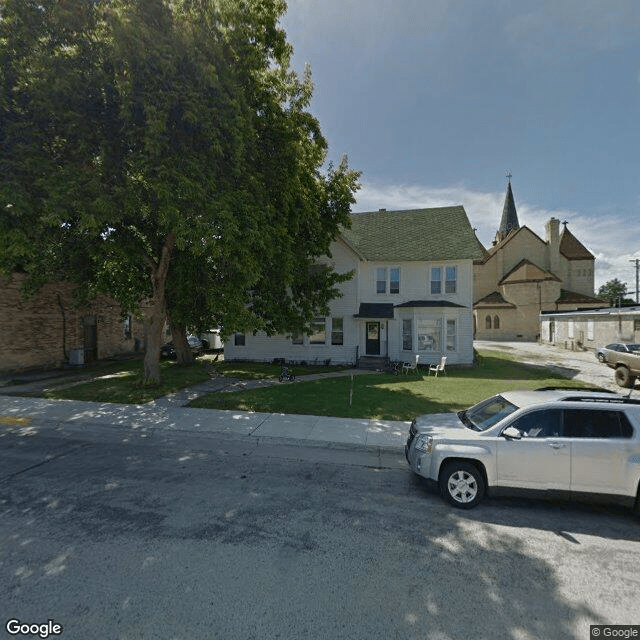
419 3rd St, Algoma, WI 54201
To contact a resident: (920) 487-5751
For more information about senior living options: (866) 208-4318
Overall Review of Dungarvin Wisconsin Inc
Pros
 Rock County traditional is good.
- Mary Hernandez really tries to run it well.
- They provide wheelchair access with a ramp.
- The co-workers are excellent.
- They had a wonderful time at this place.
- They are great people doing great work in supporting vulnerable individuals.
- They are an exceptionally well-run organization.
- They have an extensive training program.
- They are dedicated to their clients and staff.
Cons
 Dane County is not good.
- The supervisor and upper management are very disrespectful and shady.
- They talk down to employees and show little common sense.
- The organization is horrible and has no respect for its employees, treating them like dirt.
- They work employees to death and do not accommodate medical or family needs.
- There is horrible communication; management rarely answers the phone or returns calls.
Review
Dungarvin Wisconsin Inc in Algoma is best suited for families who want a non-profit, training-forward care model and who can select a location with proven leadership. The strongest fit shows up in Rock County, where PD Mary Hernandez is said to exert hands-on oversight and strive to run a solid operation. Families that can align with a site-specific strength will likely see better care coordination and steadier routines. The non-profit ethos can appeal to those seeking mission-driven accountability rather than aggressive marketing, but the quality bar is not uniform across counties, so choosing the right site is essential.
Who may want to consider alternatives? Those requiring uniform excellence across every location should pause and compare other options. Reports from Dane County paint a notably different picture, at times described as not good, with disrespectful, shady management and poor communication. The variability between Rock County and Dane County indicates that care quality and responsiveness hinge heavily on local leadership. Families prioritizing reliable, prompt communication and consistent staffing should vet other providers or push for clear specifics about the Algoma site’s leadership, turnover, and escalation paths. For residents with complex medical needs or families coordinating multiple services, the risk of inconsistent operations makes alternatives a prudent hedge.
On the positive side, several reviews highlight concrete strengths. The non-profit structure, wheelchair-accessible design, and a cadre of coworkers described as excellent set a solid foundation. The organization is praised for an extensive training program and a genuine commitment to clients and staff, with some locations operating in exceptionally well-run fashion. In practical terms, this can translate into thoughtful daily routines, safer practices, and a more person-centered approach, factors that matter when managing chronic conditions or behavioral challenges and when caregivers benefit from robust professional development.
Yet meaningful caveats temper the appeal. The most prominent concerns focus on management credibility and communication. Multiple voices describe supervisors and upper management as disrespectful or untrustworthy, and unresponsive behavior fragments care coordination, delaying fixes when problems arise. The critique is not universal, but the pattern points to inconsistent accountability, poor back-and-forth communication, and a tendency to deflect rather than resolve issues. Additional complaints touch on accommodations, doctors’ notes and other medical modifications are reportedly not consistently honored, and workloads that feel onerous for staff. Taken together, care experiences can diverge sharply by site and by shift, rather than reflecting a stable, predictable system.
How the positives offset the negatives depends on leverage and diligence. If the Algoma choice can be aligned with a Rock County or Mary Hernandez-led site, the strength of training and committed staff can substantially offset management lapses, yielding reliable front-line care. Families who verify strong local leadership, transparent lines of communication, and predictable staffing will gain confidence that daily life for a loved one will be well supported. The non-profit governance angle can reinforce accountability, provided there is active local oversight and responsive administration. Without that assurance, however, the positives risk being eclipsed by persistent operational gaps and inconsistent resident experiences.
Bottom line: Dungarvin Wisconsin Inc is not a default pick for steady, uniform performance across all counties. It remains a viable option for families who can target a high-functioning site and insist on a rigorous training culture. Prospective residents should visit the Algoma operation, request a meeting with the direct supervisor, review the training calendar, and speak with frontline staff and other families about responsiveness and scheduling. Scrutinize how accommodations and emergency changes are handled, confirm wheelchair accessibility, and verify that mobility aids and ramps are in place. If leadership proves inconsistent or unresponsive, explore alternatives within the network or from other providers to safeguard daily routines and long-term well-being.
 Board and Care Home







 Comprehensive Guide to Blood Pressure Charts for Older Adults: Understanding Normal and High Readings by Age
 Financing Long-Term Nursing Home Care Through Social Security: A Thorough Exploration
 Essential Knowledge on Pneumonia in Older Adults