

4613 Northeast Work Avenue, Vancouver, WA 98663
To contact a resident: (360) 314-5448
For more information about senior living options: (866) 208-4318
Agape Home Care Costs & Pricing
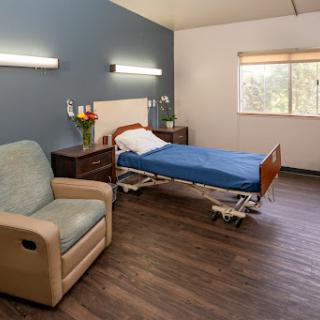
Agape Home Care offers competitive pricing for its private room accommodations, with a monthly cost of $3,500. This rate is notably lower than the average costs in Clark County, which stands at $3,992, and significantly beneath the state average of $4,772 in Washington. These figures reflect Agape Home Care's commitment to providing quality care at an accessible price point, making it an appealing choice for families seeking compassionate and professional home care services without compromising on affordability.
| Floor plans | Agape Home Care | Clark County | Washington |
|---|---|---|---|
| Private | $3,500 | $3,992 | $4,774 |
Senior living communities with a similar price nearby
-
from +$300 / mo

The Inn at University Village
$3,800 to $7,500 / month4.3 miles away -
from -$500 / mo

A Piece of Heaven
$3,000 / month16.0 miles away -
from +$500 / mo

Oaktree Adult Care Home
$4,000 / month22.3 miles away -
from -$500 / mo

Yamhill Senior Care Home
$3,000 / month11.7 miles away -
from -$500 / mo

Peaceful Lighthouse Adult Care Home
$3,000 / month12.2 miles away
Overall Review of Agape Home Care
Pros
 It is a wonderful place to have a parent or relative.
- It is very nice and home-like.
- The owners are wonderful people, very loving and caring, as well as the two employees they have.
- The mother was very happy after the first week.
- They take such good care of residents; they are very kind and helpful.
- The facility is wonderful, clean, warm, and caring, with advanced care for residents' needs.
Cons
 The reviewers felt the facility was not liked at all.
- The managers were not present at the scheduled appointment.
- The place did not appear clean.
- The staff were confused and not at all helpful.
Review
Agape Home Care in Vancouver, WA is best suited for families seeking a small, home-like senior setting where personal attention, warmth, and continuity of care take priority. This community appeals to those who value a intimate atmosphere over a clinical, impersonal vibe, with owners who are deeply involved and genuinely invested in each resident’s well-being. It works well for seniors who want to stay as close to a family feel as possible, and for families looking for a stable, long-term placement where caregivers develop a true understanding of a loved one’s routines and preferences.
Those who may want to consider alternatives are individuals needing high-acuity medical oversight or frequent, formalized clinical interventions. A larger assisted living with on-site nursing staff, more structured programming, and consistently visible management may be preferable for residents with complex medical needs or behavior that requires intensive supervision. Families who prioritize spotless, restaurant-like cleanliness with highly standardized procedures, or who want round-the-clock administrative accessibility, might also find a bigger, more corporate option to fit their expectations better.
The strongest positives here revolve around the environment and the caregiving dynamic. Several families describe a homey, inviting setting where the owners are loving and the staff genuinely kind and helpful. The relationship emphasis appears to translate into residents settling in quickly and showing happiness within days, with one account noting sustained contentment as care continues over years. The ability to tailor care to individual needs, along with a sense of warmth and personal touch, often stands out as the defining advantage, especially for seniors who prize emotional comfort and a familiar routine.
But the reported drawbacks cannot be ignored. The most explicit caution comes from a negative experience where management was absent at a scheduled appointment, cleanliness was questioned, and staff appeared confused or unhelpful. That single account raises legitimate concerns about consistency and operational transparency, particularly given the small size of the team described, owners plus a couple of employees. Such instances, while not universal, signal a potential fragility in day-to-day administrative presence and the risk that needs to be weighed against the otherwise strong relational care.
The key pros, homey ambiance, deeply caring owners, and stable, personable staff, do offset the main cons to a meaningful degree for many families. The human connection and continuity can deliver security and comfort that larger facilities sometimes struggle to sustain. When staff turnover is low and caregivers learn a resident’s preferences, the overall quality of life tends to improve, making life easier for both residents and families. For those who can tolerate occasional management gaps and who are able to verify cleanliness and responsiveness during visits, the positives often outweigh the risks.
In the end, Agape Home Care serves as a solid choice for a specific niche: seniors who want a warm, family-style environment, where caregivers know names, routines, and little preferences, and where a sense of home can endure over several years. It is less well-suited for families prioritizing stringent clinical oversight, uniform cleanliness protocols, and highly structured administration. Prospective families should schedule direct visits, observe the level of cleanliness, ask to meet the owners, and gauge how quickly staff respond to questions or concerns. Clarify the care plan process, confirm staff-to-resident ratios, and verify that management presence aligns with expectations. When those elements align, Agape can offer peace of mind that’s rare in larger, more impersonal facilities.
 Board and Care Home
 Cats allowed
 Dogs allowed
 Activities on-site
 Beautician on-site
 Devotional services off-site
 Indoor common areas
 Outdoor common areas
 Private
 Private bathrooms
 Respite or short term stays offered
 Wheelchair accessible showers
 Portland International (5 miles away)
 Diabetic care
 High acuity care
 Incontinence care
 Medication management
 Kosher







 Understanding Hospice Care at Home: Comprehensive Services, Key Benefits, and Eligibility
 Understanding the Full Cost of 24/7 In-Home Care: A Detailed Overview
 Exploring the World of Home Health Nurses: Qualifications, Roles, and Hiring Tips