
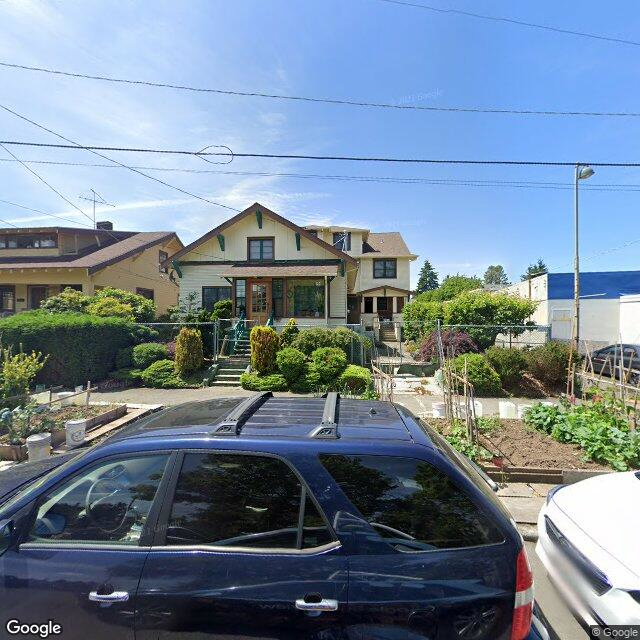
2915 17th Ave S., Seattle, WA 98144
To contact a resident: (206) 861-8055
For more information about senior living options: (866) 208-4318
Overall Review of Hill Park Family Home
Pros
 The staff cleans daily.
- The staff and owners greet residents with smiles and are happy to chat with families.
- The staff are knowledgeable about residents’ well-being.
- They engage residents with games and gentle cognitive activities.
- They accommodate multiple languages so residents can communicate.
- They have a dedicated cook who prepares individualized meals to meet residents’ needs.
- They arrange PT visits and outings that residents enjoy.
- The care provides excellent value for Medicaid.
Cons
 Her memory is spotty due to dementia.
Review
Hill Park Family Home in Seattle is best suited for seniors with dementia who speak Cantonese, Mandarin, or English, and for families seeking a small, home-like setting where daily attention feels personalized and emotionally attentive. This community thrives on the warmth of an owner-led operation, where staff greet visitors with genuine hospitality and where care routines are tightly integrated with meaningful engagement. The most compelling fit is a resident who benefits from cognitive-stimulating activities, language-appropriate communication, and culturally familiar meals prepared by a dedicated cook. For families on Medicaid, the value proposition is particularly strong, combining intimate care with the flexibility that a family-style home can offer.
Those who should consider alternatives are primarily residents whose needs outgrow a small, home-like model. A resident requiring 24/7 formal nursing oversight, high-level clinical interventions, or a highly structured, campus-style program may do better in a larger memory-care community with on-site RNs and a more standardized care cadence. Language considerations also matter for families seeking exclusively English-speaking environments or care models that emphasize a broader range of international cuisines. Additionally, if a resident would benefit from a wider network of organized activities, transportation options, or more comprehensive on-site services, Hill Park’s intimate setting may feel limiting over time.
The strongest advantages here lie in staff accessibility, cultural and linguistic alignment, and daily cognitive engagement. Families report consistent, respectful communication from staff and ownership, plus a proactive approach to memory-oriented activities, ranging from gentle prompts for reminiscence to structured games. The bilingual environment ensures that a resident who speaks Cantonese or Mandarin can participate without barriers, while English is available for broader communication. A dedicated cook customizes meals to each resident’s needs, including dentition considerations, so nutrition and appetite are addressed with a fine-grained, person-centered touch. Regular visits by physical therapy and a social worker, together with in-house social and cognitive activities, help sustain social connection and mental stimulation.
Yet, the scope of Hill Park’s care has its boundaries. The most notable con is scale: a small, family-run home can’t always mimic the depth of clinical resources found in larger facilities, nor guarantee the same level of 24/7 nursing supervision. Staffing is excellent on a personal level, but families should verify whether around-the-clock medical oversight is available and how emergencies are handled after hours. The cultural strengths are significant, but for residents who crave non-Chinese cuisines, more diverse programming, or a broader continuum of care options, the setting may feel narrow. There is also the inherent variability that comes with a family-led operation, the day-to-day rhythm can hinge on the owner’s and caregivers’ schedules, which may suit some families perfectly and not others.
To move from interest to decision with confidence, families should probe concrete operational details. Confirm the current staff-to-resident ratio on all shifts and whether an on-site nurse is always available. Clarify the exact language competencies of the caregiving team and whether translation support is consistent for families visiting from outside the language group. Verify the ability to accommodate specific dietary restrictions beyond general preferences and the degree of customization the kitchen can sustain over time. Inquire about the care coordination process with external therapists, transportation for appointments, and the cadence of activities and outings beyond occasional dim sum excursions. Finally, verify Medicaid acceptance levels and what services are included in the rate to ensure ongoing affordability.
In sum, Hill Park Family Home delivers an exceptionally warm, culturally aligned, dementia-focused living option with strong Medicaid value in Seattle. It excels for families prioritizing intimate, language-accessible care, consistent social interaction, and cognitively engaging routines within a small, family-style setting. However, for those whose loved ones require robust clinical staffing, a highly structured daily program, or a broader catering to non-Chinese cultural preferences, alternatives that offer greater scale and more formal medical resources will likely serve better. For the right resident, this home can feel less like care and more like a thoughtfully managed extension of family life.
 Board and Care Home
 Seattle-Tacoma International (9 miles away)
 Diabetic care



 California's Form 602A: An In-Depth Examination of Senior Care Assessment
 Comprehensive Look at Senior Blood Pressure Charts: Normal and Elevated Levels by Age
 Top Canine Companions for Older Adults