

5501 215th St. SW, Mountlake Terrace, WA 98043
To contact a resident: (425) 640-2251
For more information about senior living options: (866) 208-4318
Gold Standard Care Costs & Pricing
Gold Standard Care offers a private room option at a competitive monthly rate of $2,800. In comparison, the average costs for similar care in Snohomish County reach approximately $4,834, while the broader state of Washington sees an average of $4,772 per month for private rooms. This indicates that Gold Standard Care presents a substantial savings opportunity for families seeking high-quality care without compromising on service. The pricing not only reflects affordability but also positions Gold Standard Care as an appealing choice for those navigating the often complex landscape of healthcare costs in the region.
| Floor plans | Gold Standard Care | Snohomish County | Washington |
|---|---|---|---|
| Private | $2,800 | $4,834 | $4,774 |
Senior living communities with a similar price nearby
-
from +$200 / mo

Caring Adult Family Home #1
$3,000 / month5.8 miles away -
from -$300 / mo
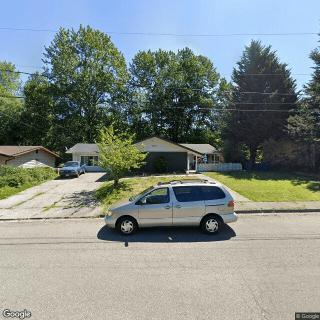
Freedom Care
$2,500 to $3,000 / month25.0 miles away -
from -$225 / mo

Admiral Heights
$2,575 to $2,975 / month15.7 miles away -
from -$300 / mo

Silver Pond AFH
$2,500 to $3,500 / month7.4 miles away -
from +$200 / mo

Good Samaritan Adult Family Home I
$3,000 to $3,500 / month8.1 miles away
Overall Review of Gold Standard Care
Pros
 Freedom Home Care is reliable and trustworthy, delivering compassionate care and courteous service.
- Ron and his team consistently go the extra mile to accommodate families' needs.
- The staff provide professional, attentive care that gives families peace of mind.
- Their transportation services are punctual, safe, and focused on the patient’s comfort.
- Yelena, Mary, Kyle, and Nathen are courteous, friendly, and highly professional.
- Freedom Home Care stays with clients through appointments, ensuring smooth, well-coordinated care and rides.
- Families feel a sense of freedom and relief thanks to dependable care and transportation.
- The company is highly recommended for both care and transportation needs.
Review
Gold Standard Care in Mountlake Terrace suits families who want a solid, well-organized in-facility experience with steady, professional caregiving and clear medical oversight. The community’s strength lies in predictable routines, attentive staff, and a structured approach to daily living that supports independence while providing essential supervision. For families navigating rehab transitions, routine medical appointments, or memory-care needs, Gold Standard Care offers a dependable home base where caregivers know the resident’s patterns, preferences, and safety requirements. When off-site support is needed, the decision often hinges on how seamlessly a trusted partner can integrate with the in-house plan rather than on a standalone transport or at-home-care solution.
Those who may want to consider alternatives are families prioritizing intensive, 24/7 medical nursing, expansive memory-care programming, or highly flexible mobility services that operate entirely outside the facility’s control. If the aim is to avoid coordinating with external providers altogether or to obtain cradle-to-grave coverage within one organization, it’s wise to compare options that promise deeper in-facility medical integration or more aggressive medical oversight. In particular, residents who require frequent, complex medical management or around-the-clock supervision may find that a more comprehensive institutional model better aligns with their needs.
The most compelling positives of a complementary home-care partner, as illustrated by the surrounding reviews, center on reliability, personalized attention, and proactive coordination. Families repeatedly highlight transportation and in-home care teams that show up on time, communicate clearly, and adapt to difficult schedules or special needs. The caregivers are described as trustworthy, patient, and capable of handling unique medical considerations, from dementia to wheelchair transport. When a loved one requires smooth, safe transit to complex medical appointments or rehab, these teams become an indispensable bridge, delivering “piece of mind” and a sense of partnership rather than a one-off service.
Where these external strengths meet potential gaps, the main trade-off becomes evident: mobility and at-home support that live outside the facility’s immediate control. The benefit, flexibility, caregiver continuity, and hands-on assistance during appointments, can be offset by a lack of 24/7 medical availability within the same building, potential scheduling hiccups, or the need to coordinate carefully across multiple vendors. In practice, the best outcomes arise when Gold Standard Care formally incorporates such partners into the care plan, aligning goals, care notes, and timing with the facility’s routines. The result is a more cohesive experience that preserves safety while expanding the resident’s support network.
To maximize value, families should insist on clear coordination protocols. Confirm there is a designated point person at Gold Standard Care who can liaise with the external team, establish shared contact information, and synchronize appointment calendars. Ask about backup arrangements for urgent or late-day needs, verify that external caregivers are licensed and trained in the resident’s specific conditions, and request written care plans that travel with the client across settings. Transparency about rates, service windows, and break/fix contingencies will prevent friction and protect the continuity of care when schedules shift.
In the end, Gold Standard Care is well-positioned for families who want a reliable, well-staffed in-facility experience with the option to layer on trusted, professional transportation and at-home support. The strongest decision framework comes from treating external care partners as extensions of the facility’s care team: deliberate selection, formal communication channels, and shared goals. For families prioritizing a robust, all-in-one model with maximum on-site medical integration and guaranteed 24/7 nursing coverage, exploring alternatives that front-load this capacity may be prudent. For those who value dependable, compassionate mobility and transitional care to maintain independence and peace of mind, coordinating with proven home-care partners makes Gold Standard Care a prudent, practical choice.
 Board and Care Home
 Cats allowed
 Dogs allowed
 Private
 Seattle-Tacoma International (25 miles away)
 Diabetic care





 Comprehensive Insights and Practical Strategies to Help Older Adults Avoid Falls
 6 Crucial Ways an Elder Law Attorney Assists Families
 Navigating the Tax Landscape of Caregiving: Credits, Deductions, and Beyond