

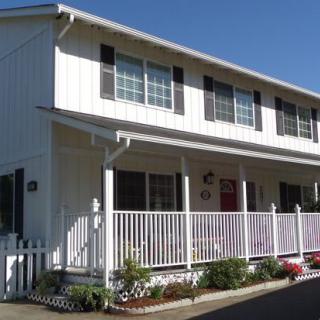
25415 32nd Place, Kent, WA 98032
To contact a resident: (206) 653-7939
For more information about senior living options: (866) 208-4318
House of Epiphany Costs & Pricing
At the House of Epiphany, we offer competitive pricing for our residents, with private and semi-private rooms both available at $3,500 per month. This rate is notably lower than the average costs in King County, where similar private accommodations can reach approximately $5,034, while semi-private options average around $4,430. Additionally, across the broader state of Washington, private room rates hover near $4,772 and semi-private at about $4,267. Our pricing reflects a commitment to providing quality care and comfortable living spaces while ensuring accessibility for our community members.
| Floor plans | House of Epiphany | King County | Washington |
|---|---|---|---|
| Private | $3,500 | $5,034 | $4,774 |
| Semi-Private | $3,500 | $4,430 | $4,272 |
Senior living communities with a similar price nearby
-
from -$125 / mo

Evergreen Manor Senior Care Inc
$3,375 to $7,500 / month22.9 miles away -
from +$500 / mo
Meadow Crest Senior Home
$4,000 to $6,000 / month10.6 miles away -
from -$500 / mo

Hummingbird Homecare
$3,000 / month8.1 miles away -
from +$500 / mo

Riverton Home Care
$4,000 to $5,000 / month7.1 miles away -
from -$500 / mo

Home Care in Kent Inc.
$3,000 to $3,500 / month4.0 miles away
Overall Review of House of Epiphany
Pros
 NW House of Prayer is a wonderful Pentecostal church with strong Biblical teaching and a welcoming Slavic-speaking community, a great place for worship and fellowship.
- It provides great services with plentiful kids, teens, and youth activities.
- It is an amazing place to worship the Lord Jesus and is highly recommended to visit.
Cons
 The reviewer felt terrible after visiting the church because they were subjected to racial slurs.
Review
House of Epiphany in Kent, WA is best suited for seniors who want a faith-centered living environment where worship, prayer, and congregational life sit at the heart of daily life. This community clearly appeals to residents who value a strong spiritual framework, regular services, and a close-knit network that feels like family. The presence of a welcoming Slavic-speaking community and clear biblical teaching suggests a home where faith identity and cultural connections are front and center. For families seeking a setting in which spiritual nourishment and social belonging come first, with programs rooted in religious life, this community offers a compelling alignment. The overall rating sits high, 4.7 from 12 reviews, indicating a track record of positive experiences for most residents, even as a solitary discordance in the mix invites careful scrutiny.
That said, there are clear reasons to consider alternatives, especially for seniors whose needs extend beyond social and spiritual engagement. Individuals requiring robust medical oversight, memory care, or transitional care should look for options with explicit on-site caregiving staffing and medical supervision. A religiously oriented environment can feel limiting to those who want secular programming, broader cultural exposure, or a setting that emphasizes diversity without a specific faith framework. The reviews do not describe medical services, rehabilitation, or dementia care, which is a red flag for families assessing long-term care needs. Additionally, one negative review raises a serious concern about discriminatory behavior, underscoring the necessity of in-depth conversations about inclusivity, resident rights, and how staff respond to conflicts. These signals mean due diligence is essential before committing.
The strongest positives center on worship life, biblical teaching, and active community involvement. Reviewers repeatedly highlight a vibrant worship cadence, plentiful programs, and a strong sense of fellowship, including robust activities for children and youth. For a senior who thrives in a familiar faith community, these elements translate into predictable routines, meaningful purpose, and a built-in social safety net that can mitigate loneliness. The long-run value lies not just in religious observance, but in the cohesion of a multi-generational, faith-driven ecosystem that shares meals, prayers, volunteerships, and communal celebrations. Yet the favorable data are tempered by that lone negative report, which cannot be dismissed. It introduces a credibility risk around inclusivity and safety, suggesting that future residents should probe governance, grievance processes, and real-world demonstrations of respect and fairness within the community.
The practical limits of the model become evident in the gaps. The most conspicuous cons are the environment’s heavy emphasis on faith life and the lack of explicit information about medical or assisted-living services. For seniors whose care plan centers on clinical oversight, medication management, and rehab services, this setting may require outsourcing or a transfer to a partner facility. Families must verify whether on-site aides exist, what level of care can be delivered, and how transitions to higher levels of care are managed. The single negative incident also points to potential inclusivity gaps that could erode confidence if not addressed with transparent policies and consistent staff training. In short, the risk is not merely theological; it is about whether every resident feels safe, respected, and fully supported, regardless of background or language.
When weighing pros and cons, the decision hinges on alignment of personal priorities. For seniors who prize steady spiritual life, regular worship, and a tightly knit faith community, the advantages can substantially outweigh the drawbacks, provided care needs stay within the scope of what the community can support socially and spiritually. The Slavic-speaking network and family-oriented programming offer a sense of belonging that can be deeply stabilizing, especially for residents who share that cultural and linguistic affinity. However, the inclusivity concern raised by a single review cannot be ignored; it should prompt careful inquiry into how anti-discrimination policies are implemented, how complaints are handled, and whether the residence truly welcomes residents and visitors from diverse backgrounds. Prospective families should demand concrete assurances before finalizing a choice.
The bottom line is clear: House of Epiphany stands out as a strong option for those prioritizing a faith-forward, community-centric living experience in Kent. It delivers a high level of resident satisfaction and a robust worship-based ecosystem that can provide meaningful daily purpose and social connection. Yet it is not the right fit for every senior; for anyone whose primary needs include intensive medical care, secular programming, or broad cultural diversity beyond a specific faith community, exploring alternatives with more explicit care offerings and demonstrated inclusivity is prudent. The recommended path is a structured visit: tour the space, observe interactions, and engage leadership in a candid discussion about on-site care capabilities, partnerships for medical services, and the specifics of the community’s anti-discrimination policies. If faith-based living is non-negotiable, this option deserves serious consideration; if not, a broader review of options will likely yield better alignment with medical needs and personal values.
 Board and Care Home
 Activities off-site
 Bath tubs
 Devotional services on-site
 Indoor common areas
 Outdoor common areas
 Private
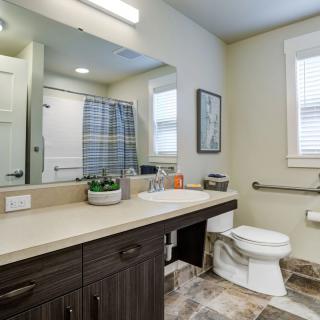
 Private bathrooms
 Respite or short term stays offered
 Wheelchair accessible showers
 Seattle-Tacoma International (5 miles away)
 Ambulatory care
 Diabetic care
 High acuity care
 Incontinence care
 Medication management
 Kosher







 Top Cars for Senior Drivers and Essential Safety Innovations
 A Closer Look at Private Pay Home Care
 Comprehensive Approaches for Arthritis: A Detailed Guide to Symptoms, Causes, and Care