
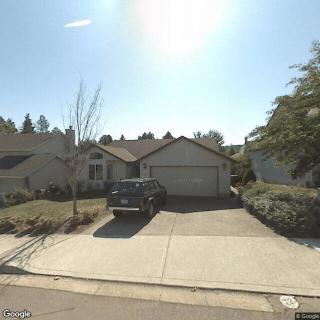
16802 Northeast 152nd Avenue, Brush Prairie, WA 98606
To contact a resident: (360) 891-0070
For more information about senior living options: (866) 208-4318
Bright Care AFH Costs & Pricing
At Bright Care AFH, the monthly costs for various room types reflect a commitment to quality care and services tailored to individual needs. For private rooms, pricing ranges from $3,500 to $5,174, which is competitive when compared to Clark County's average of $3,992 and Washington state's average of $4,772. When it comes to semi-private accommodations, Bright Care AFH charges $4,312 - slightly above the county's average of $3,897 but comparable to the state average of $4,267. Additionally, studio suites at Bright Care are priced at $5,605; while this is significantly higher than Clark County's average of $3,882 and Washington's average of $4,126, it reflects the enhanced amenities and personalized care offered. Overall, these figures illustrate that Bright Care AFH aims to provide exceptional value and comfort in a nurturing environment.
| Floor plans | Bright Care AFH | Clark County | Washington |
|---|---|---|---|
| Private | $3,500 to $5,174 | $3,992 | $4,774 |
| Semi-Private | $4,312 | $3,897 | $4,272 |
| Studio | $5,605 | $3,882 | $4,128 |
Senior living communities with a similar price nearby
-
from +$300 / mo
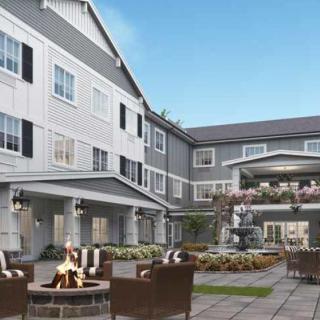
The Inn at University Village
$3,800 to $7,500 / month6.3 miles away -
from -$500 / mo
A Piece of Heaven
$3,000 / month22.3 miles away -
from -$500 / mo
Yamhill Senior Care Home
$3,000 / month15.8 miles away -
from -$500 / mo
Peaceful Lighthouse Adult Care Home
$3,000 / month14.9 miles away -
About the same
Fulga's ACH
$3,500 / month25.0 miles away
Overall Review of Bright Care AFH
Pros
 The facility is bright, clean, and inviting.
- The staff are engaging and maintain a positive attitude.
- Residents feel safe knowing their loved ones are in a good place.
- There was a Christmas dinner for residents and families that was lovely.
- They are very happy with the facility.
- They would recommend Bright Care to other families.
- The facility is beautiful, bright, and clean, with big windows.
- The directors and staff have been absolutely wonderful with residents and their families.
- Rooms are large with nice views of wooded or garden acreage.
- There is a large open common area and dining area.
Review
Bright Care AFH in Brush Prairie is best suited for families seeking an affordable, warm, home-like assisted living where personal attention and family connection come first. The community presents as bright, clean, and inviting from the first impression, with residents cared for in a setting that feels like a well-kept house rather than a clinical campus. The staff are described as engaging and consistently positive, and families express a notable sense of safety knowing a loved one is in a cared-for space. Regular occasions, most memorably Christmas dinners that include residents and their families, underscore a culture centered on belonging and approachable, everyday warmth.
Those who need higher-acuity care, memory-care specialization, or a broader continuum of medical services may want to look at larger facilities with on-site nursing, rehab, and dedicated memory-care wings. The intimate scale of Bright Care AFH, while a strength, can limit the breadth of clinical resources and structured programming found in bigger campuses. Families pursuing independent living with less supervision or seeking a more urban locale should consider options that offer expanded transportation, more robust activity calendars, and 24/7 nursing coverage.
Cost-efficiency is a meaningful pro that integrates with strong social warmth and security. The advantages do not come at the expense of attentiveness; staff engagement is consistently highlighted as a hallmark, and the environment supports safe, at-ease living. While a small, home-like setting may inherently carry fewer formal medical routines, the trade-off is offset by frequent interaction, proactive communication, and visible dedication from directors and front-line caregivers. For many families, that human-centered approach offsets concerns about medical certainty by providing reliable day-to-day support and a peaceful atmosphere.
Beyond the vibe and staff, the physical design reinforces comfort: large rooms with wooded or garden views, expansive common and dining areas, and a back-yard deck that invites light activity and fresh air. The shower spaces are notably accommodating, enabling wheelchairs and easier transfers, which translates into practical independence for residents. The overall cadence, quiet, peaceful, and homey, reduces stress for both residents and family members, making it easier to settle into everyday routines without the clinical feel that can come with larger communities.
Prospective residents should verify that the level of care aligns with individual needs, particularly around memory care, therapy services, and emergency coverage. The reviews emphasize a serene environment and family-inclusive culture, but there is less emphasis on formal rehab programs, transportation options, or a broad activity schedule beyond special dinners. Those seeking vigorous social calendars or highly structured care plans should compare with facilities that routinely advertise extensive activity programming, on-site clinicians, and dementia-specific accommodations.
For families prioritizing cost-conscious care delivered in a bright, respectful, home-like setting, Bright Care AFH offers a solid option with strong staffing and a warm community vibe. If higher medical oversight, specialized memory care, or a larger continuum of care is essential, alternatives merit serious consideration. The decision should hinge on visiting the community, speaking with caregivers, and gauging how well the resident adapts to the pace and layout of a smaller home-style environment. When alignment is found, this community can deliver dependable daily comfort, authentic connection, and peace of mind.
 Board and Care Home
 Activities on-site
 Beautician on-site
 Devotional services on-site
 Indoor common areas
 Outdoor common areas
 Private
 Private bathrooms
 Respite or short term stays offered
 Wheelchair accessible showers
 Portland International (11 miles away)
 Ambulatory care
 Diabetic care
 High acuity care
 Incontinence care
 Medication management
 Kosher
 Adventist services
 Buddhist services
 Islamic services
 Navigating the Tax Landscape of Caregiving: Credits, Deductions, and Beyond
 Highly Beneficial Low-Impact Exercises for Senior Living Residents
 Is In-Home Healthcare Tax Deductible? Your Comprehensive Guide