

711 N Parkway Ave., Battleground, WA 98604
To contact a resident: (360) 989-9197
For more information about senior living options: (866) 208-4318
Find Us At Home Costs & Pricing
Find Us At Home offers care services that are notably higher than the average costs in both Clark County and the state of Washington. For a semi-private room, residents can expect to pay $7,530 per month, which significantly exceeds the county's average of $3,897 and the state's average of $4,267. Similarly, for a private room, the monthly cost at Find Us At Home is $8,310, again surpassing Clark County's rate of $3,992 and Washington's statewide average of $4,772. This pricing reflects a premium on personalized care and tailored services that may be offered by Find Us At Home compared to local alternatives.
| Floor plans | Find Us At Home | Clark County | Washington |
|---|---|---|---|
| Semi-Private | $7,530 | $3,897 | $4,272 |
| Private | $8,310 | $3,992 | $4,774 |
Senior living communities with a similar price nearby
-
from +$470 / mo

Suncrest ACH 2
$8,000 / month17.7 miles away -
from +$299 / mo
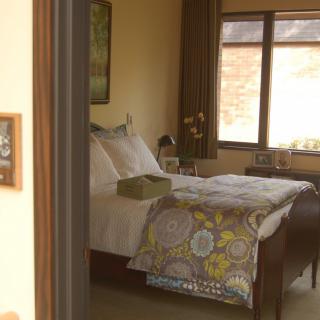
Maryville Memory Care
$7,829 to $8,559 / month13.1 miles away -
from -$1030 / mo
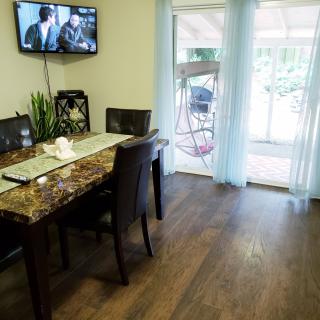
Guardian Angel ACH
$6,500 / month14.8 miles away -
from -$1390 / mo
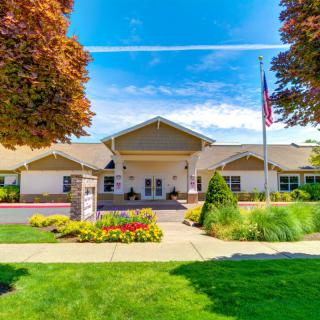
Rosewood Memory Care
$6,140 to $6,585 / month15.2 miles away -
from -$1480 / mo

The Cottages Senior Living
$6,050 to $6,300 / month13.4 miles away
Overall Review of Find Us At Home
Pros
 The service is first-rate and highly attentive to the care that is needed.
- Her experience and knowledge are incredibly helpful.
- She teaches more in a few short weeks than is typically taught over months in a facility.
- She is highly recommended.
Review
Find Us At Home in Battleground, WA is best suited for families who want a highly capable, education-forward partner to map out care options quickly and move toward a practical plan. This community’s strongest appeal is its service orientation: attentive, first-rate care coordination and a depth of knowledge that translates into real-world guidance. It works best for first-time caregivers or families navigating the assisted-living landscape who need someone to translate options, explain trade-offs, and accelerate decision-making with confidence. In short, this is the choice for those who value a meticulous, personalized planning ally over a conventional housing solution from the outset.
Those who may want to consider alternatives include families seeking a traditional, full-service facility with established on-site medical staffing, extensive memory-care programming, and a bustling campus life. If the priority is a move-in option that feels like a finished product, complete with 24/7 nursing, robust activity calendars, and large resident communities, this particular service may not match that scale. Similarly, for households expecting ongoing, in-home clinical care as the primary arrangement, other providers with broader home-health capabilities could be a better fit. This guidance partner excels in planning and education rather than delivering a standard on-site care community.
The strongest pros here are unmistakable: first-rate, attentive service and a level of care that centers on the family’s actual needs. Staff and advisors are described as highly knowledgeable, able to teach and coach quickly, and intensely focused on the care that is required. The ability to transfer practical know-how in weeks, often surpassing what families thought they would gain after months in a facility, creates clear value. These strengths offset the lack of a traditional housing footprint by delivering a decisive advantage in decision quality, reducing uncertainty, and shortening the transition timeline.
The main caveat is the limited data set. With only two reviews, there is a small sample to gauge consistency, and the nature of the service suggests a niche advisory role rather than a broad housing option. This means potential buyers should temper expectations about being handed a ready-made campus or a standardized care plan. The upside is that what is offered, sharp, actionable guidance and a responsive mentor-like presence, can be transformative for families unsure where to begin. The risk is that a complete care solution may require pairing this service with a separate live-in or facility option to meet long-term resident needs.
To maximize fit, approach this option as a precision tool in the decision toolkit. Use it to validate needs, compare potential facilities, and build a concrete action plan with timelines, cost estimates, and step-by-step care pathways. Prospective families should ask how the team structures education sessions, what kinds of referrals or partnerships exist with actual facilities, and how medical coordination is handled if longer-term housing is pursued. If the goal is to gain clarity and a strong plan quickly, this service excels; if the goal is a one-stop housing solution, supplement with visits to traditional communities that offer full-spectrum on-site care.
In the end, Find Us At Home stands out as a pragmatic, candid accelerant for families who want to move from uncertainty to a concrete, informed plan. It is advisable for those who prize expertise, practical guidance, and a trusted partner who can teach families how to navigate options with confidence. The right next step is a focused consultation: identify specific care needs, map out a shortlist of potential living arrangements, and establish a clear transition timeline. For households craving decisive, expert-led planning, this option delivers tangible value, and when paired with a suitable on-site community match, it becomes a powerful catalyst toward a well-founded decision.
 Portland International (5 miles away)
 Anytime dining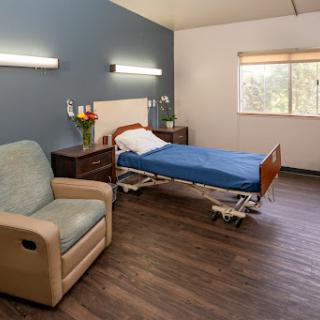






 Understanding the Nuances of Palliative Care and Hospice: A Comprehensive Exploration
 Fecal Incontinence in Older Adults: A Comprehensive Guide
 Recognizing the Journey: Understanding and Navigating Anticipatory Grief