
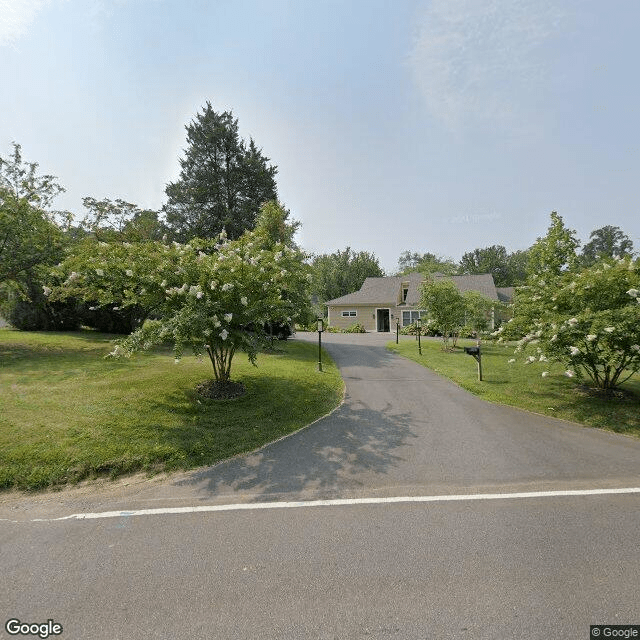
8341 Lewinsville Road, Mc Lean, VA 22102
For more information about senior living options: (866) 208-4318
Larmax Homes - 8341 Lewinsville Costs & Pricing
At Larmax Homes - 8341 Lewinsville, the monthly rental costs present an attractive option when compared to regional benchmarks. For a studio apartment, residents can expect to pay $2,835, significantly lower than the Fairfax County average of $6,335 and the Virginia state average of $4,436. One-bedroom units are available for $3,310, which remains competitive against the county's rate of $4,884 and the state's average of $4,257. Similarly, two-bedroom apartments at Larmax Homes are priced at $4,090, offering a more favorable alternative to both Fairfax County's average of $5,044 and Virginia's overall average of $4,602. These cost comparisons highlight Larmax Homes as an appealing choice for those seeking value without compromising on quality in a desirable location.
| Floor plans | Larmax Homes - 8341 Lewinsville | Fairfax County | Virginia |
|---|---|---|---|
| Studio | $2,835 | $6,335 | $4,436 |
| 1 Bedroom | $3,310 | $4,884 | $4,257 |
| 2 Bedrooms | $4,090 | $5,044 | $4,602 |
Memory care communities with a similar price nearby
-
from -$335 / mo
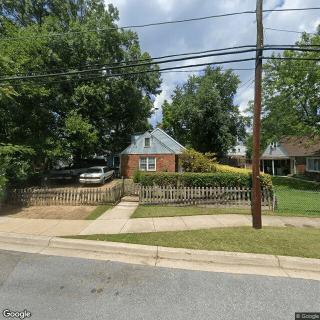
Amazing Grace Senior Care
$2,500 to $3,000 / month18.2 miles away -
from +$515 / mo

Paul Spring Retirement Community
$3,350 to $7,180 / month15.3 miles away -
from -$552 / mo
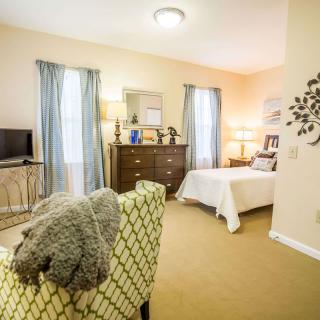
Arbor Terrace Sudley Manor
$2,283 to $7,025 / month18.0 miles away -
from +$165 / mo
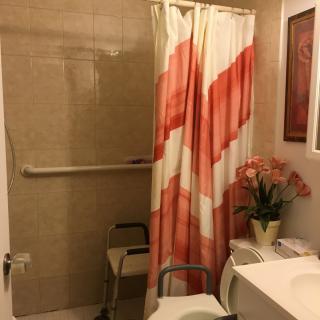
Elder Estates, LLC
$3,000 to $3,250 / month19.5 miles away -
from +$415 / mo
Avalon House In Mc Lean
$3,250 to $5,200 / month3.9 miles away
Overall Review of Larmax Homes - 8341 Lewinsville
Pros
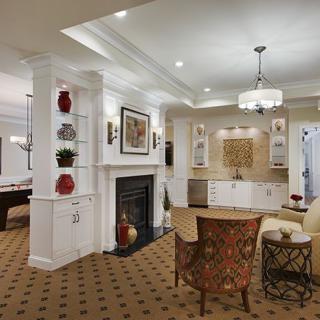
 Larmax Homes offer a small-house memory care model with eight residents per home, providing each resident with a private bedroom and en suite bathroom in a warm, home-like setting.
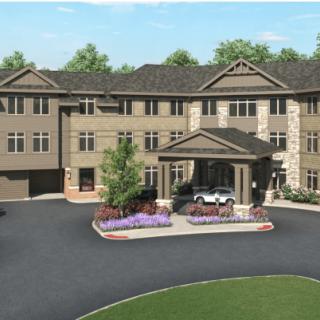
- The homes are bright, cheerful, thoughtfully designed, and comfortably furnished, surrounded by landscaped gardens and lush greenery.
- The staff are warm, caring, and dedicated, delivering personalized care and ample one-on-one time with residents.
- Programs such as equine therapy, art, music, and recreational activities are regularly offered, enriching residents’ lives several times a week.
- House managers and staff are attentive, respectful, and quick to respond, helping residents feel valued and well cared for.
- Families report peace of mind, knowing their loved ones are safe, well cared for, and supported.
- Dining and engagement opportunities are high quality, with meals prepared by professional chefs focused on nutrition and taste, and a range of activities including gardening, cultural outings, and even therapy horses.
Cons
 They described the large private corporate facilities as awful.
 - Residents with dementia were simply parked in the hallway, while others wandered into her room, disturbing her or taking her things.
- The staff at those facilities were overworked and turnover was high.
- The decision to move a parent from a longtime home was not easy.
Review
Larmax Homes in McLean is best suited for families seeking a truly intimate, home-like memory-care option where eight residents share a house, each with a private bedroom and en suite bath, and where daily life centers on personalized attention and meaningful engagement. This community excels for residents who benefit from a calm, predictable routine, close relationships with a small, consistently present care team, and a setting that feels like a private residence rather than a clinical facility. For families prioritizing warmth, dignity, and hands-on activities, along with frequent one-on-one interaction, the McLean homes deliver outcomes that are hard to match in larger systems.
Those weighing alternatives should consider options with more expansive footprints or higher medical acuity. If the priority is a campus-style environment with dozens of residents, or if 24/7 on-site medical specialists, broader social ecosystems, or more intensive clinical programming are non-negotiable, larger memory-care facilities or hospital-based units may be a better fit. For families seeking a very brisk or highly structured hospital feel, or services concentrated on acute medical management rather than a homelike atmosphere, Larmax’s intimate design may feel limiting. In short, Larmax shines where human-scale care and a cozy home ambiance are paramount.
The core advantages translate into tangible, practical value that often outweigh potential trade-offs. The eight-resident homes deliver ample one-on-one time with staff, a hallmark of truly personalized care. The houses are light-filled, beautifully furnished, and embedded in landscaped surroundings that foster comfort and calm, factors that directly support mood, engagement, and daily participation. Residents enjoy robust programming, including equine therapy, art, music, and regular recreational activities, which keep minds active and bodies engaged without the sense of being herded between crowded rooms. Home-like kitchens and dining spaces, plus easy access to common rooms, create natural opportunities for social interaction without sacrificing privacy.
Significant strengths emerge in the staff culture and family communication. The staff are described as warm, attentive, and consistently present, with a minimum of three caregivers on shift in each home, ensuring residents are not left waiting or isolated. The leadership and front-line teams gauge daily changes in mood and behavior, adapting activities to individual preferences. Families receive frequent updates, including photos, and reports are promptly responsive, creating a bridge that reduces worry for caregivers at a distance. The ability to tailor routines to a resident’s likes, whether it’s a preferred chair, a favorite activity, or a beloved keepsake in the room, translates into dignity, routine, and continuity of care that many families struggle to preserve after a transition.
The practical upside of the smaller model is reinforced by the broader Larmax ecosystem. While each home feels intimate, residents can share resources and activities across the three McLean homes, widening opportunities for social engagement without sacrificing personal attention. Meals are crafted by professional chefs focused on nutrition and flavor, addressing a common frustration with institutional dining. The overall environment, sunlit spaces, gardens, a screened porch, and readily accessible shared rooms, mitigates the sense of being in a care facility, replacing it with the comfort of a well-loved home.
A realistic appraisal recognizes that small-house memory care might not check every box for every family. The main con, the potential for fewer on-site medical services or fewer clinical amenities than large facilities, does not truly materialize as a deficit here because the care model emphasizes proactive observation, rapid communication with families, and tight coordination with external providers. The offset comes from a steadfast, high-touch staff ethic, consistent caregiver availability, and a system that treats daily life as the primary therapeutic modality. In practical terms, Larmax’s strengths, personalized attention, home-like design, vibrant activities, and transparent family collaboration, are the antidotes to the typical frictions that drive families to seek alternatives.
For families evaluating memory care in the McLean area, Larmax Homes offers a compelling, decision-ready option when the objective is to preserve dignity, autonomy, and meaningful daily life within a small, highly supportive community. The best-fit profile is clear: a resident who thrives on individualized care, who values a warm, aesthetically pleasing environment, and who benefits from strong family communication and a steady, caring staff. If that alignment exists, the decision is straightforward. If, however, the priority shifts toward a larger social milieu, broader medical capabilities on-site, or a campus atmosphere with more formal clinical infrastructure, it is prudent to visit and compare against other providers that emphasize scale over intimacy. In either path, a tour should focus on staff interactions, room setup, meal quality, activity calendars, and how the home’s rhythm aligns with the resident’s preferences and needs.
 8 resident community capacity
 Assisted Living
 Board and Care Home
 Memory Care
 Activities on-site
 Cable or satellite TV
 Devotional services off-site
 Dining room
 Fully furnished
 Garden
 Housekeeping services
 Indoor common areas
 Move-in coordination
 Outdoor space
 Telephone
 Wi-Fi/high-speed internet available
 Washington Dulles International (12 miles away)
 24-hour supervision
 Ambulatory care
 Assistance with bathing
 Assistance with dressing
 Assistance with transfers
 Diabetes diet
 Diabetic care
 Hospice waiver
 Meal preparation and service
 Medication management
 Mental wellness program
 Special dietary restrictions
 Transportation arrangement (medical)
 Transportation to doctors appointments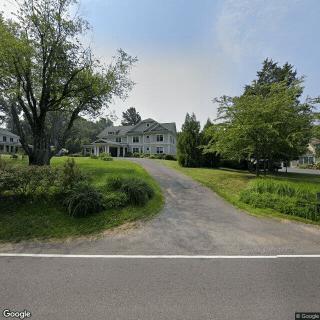



 Understanding Medicaid Coverage for Assisted Living: A Comprehensive Guide
 How and When Medicaid May Cover Assisted Living Costs
 A Detailed Exploration of Assisted Living Medicaid Waivers Across the United States