
3017 Somerville Road, Locust Grove, VA 22508
For more information about senior living options: (866) 208-4318
Overall Review of Trinity Senior Village
Pros
 Trinity Senior Village is clean, new, and family-run.
- It offers a wonderful staff-to-patient ratio and very caring, warm staff.
- It provides engaging activities and uses technology effectively, including wristbands.
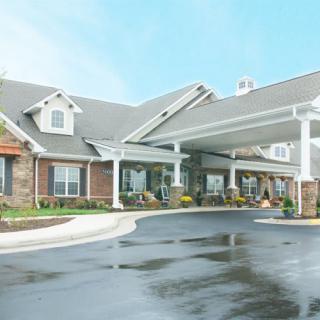
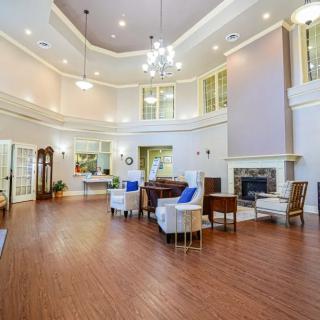
- The rooms are open, airy, bright, and well maintained.
- The food is excellent.
- It is extremely well-maintained and proud of its cleanliness and care.
- It offers excellent value for money with a flat-fee structure and few hidden costs.
- It communicates well with families and provides a welcoming home atmosphere.
Cons
 Trinity Senior Village has closed its doors.
- It was unclear who would reopen Trinity Senior Village or when.
- There were questions about the staffing, and the reviewer was hesitant about that.
- The courtyard looked like it needed some work to improve it, such as shading.
Review
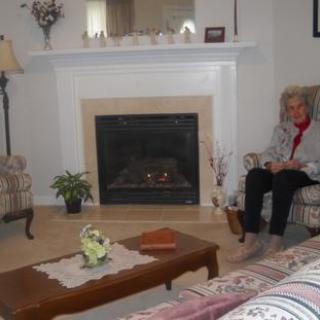
This community was best suited for families seeking a warm, intimate setting where care feels like home: a small, family-run operation with a strong staff-to-resident ratio, bright and open living spaces, and a robust program that can include memory-care technology and hands-on activities. It rewarded direct, ongoing communication with caregivers and a transparent pricing structure that minimizes surprise charges. The home-like atmosphere, craft room, fireplace, family room for private gatherings, and easy navigation, appealed to residents who want dignity, familiarity, and easy family involvement over a grand, resort-style campus. In short, Trinity served as the niche option for those prioritizing personal touch, strong daily engagement, and consistent care over scale or spectacle.
That ideal is now shadowed by a reality that must be acknowledged: Trinity Senior Village has closed its doors, with a letter sent to the local community signaling uncertainty about reopening. For families actively seeking placement, this status shifts the calculus decisively. Alternatives should be prioritized for those who need a stable, ongoing operation with clear governance, especially if the plan is to transition a loved one in the near term. Those who require a larger campus with extensive resources, more elaborate dining venues, or highly scalable memory-care programs may already find a better fit elsewhere. The closure underscores the critical need to verify current operating status and long-term stability before committing.
On the positive side, the strongest pros, an attentive, caring staff with a favorable staff-to-resident ratio, cleanliness, and a nurturing, home-like environment, were consistently highlighted. The facility’s newness and bright design contributed to a sense of well-being, while the social fabric was reinforced by varied activities, family-involved events, and the use of technology such as wristbands for coordination and memory-care tools. Residents benefited from dedicated amenities: a walk-in tub room, a salon, a fitness space, a craft room, and a configuration that fosters ongoing movement and interaction without feeling cramped. Importantly, the operation was praised for transparent pricing, with a flat-fee structure that reduced the burden of hidden charges and made budgeting easier for families.
Where the experience faltered in the past, before the abrupt closure, centers on scalability and consistency under changing conditions. The facility wasn’t expansive, so common areas were smaller and dining spaces more intimate, which could feel limiting for families needing larger social hubs or for residents who require frequent, readily accessible activity options. Early questions about staffing, though not borne out in every visit, suggested a potential risk line for families who must know that capable staff are reliably available around the clock. Even so, the overall profile suggested that, in a fully operational setting, the care model could offset these constraints through tight-knit routines, strong family communication, and a proven value proposition.
For families weighing choices today, the pivotal differentiator is stability. Trinity’s closure serves as a cautionary tale: prioritize operations that can demonstrate ongoing occupancy, transparent reopening plans, and clear transfer processes if a move becomes necessary. If memory care needs are central, assess whether a campus offers dedicated spaces, specialized staff training, and reliable engagement technologies that match the level of personal attention Trinity advertised. Do not tolerate ambiguity around funding, contract terms, or what happens if a facility undergoes transition. Seek options with recent resident turnover data, updated safety and care protocols, and a track record of uninterrupted service.
In sum, Trinity Senior Village exemplified the high-touch, small-community advantage: warmth, communication, and value in a home-like setting. Yet the current closure status makes it a red flag for any new placement unless a reassuring plan for continuity emerges. For families in Locust Grove and nearby areas, the practical path is to pursue other small-to-mid-sized operators with similar intimate atmospheres but with proven, ongoing operations. Visit prospective communities, verify staffing patterns, tour common spaces, and demand clear, current disclosures on pricing and stability. The right choice will balance the desire for a personal, connected environment with the essential certainty that care will be available day after day, without interruption.
 23 resident community capacity
 Assisted Living
 Beauty salon
 Cable or satellite TV
 Dining room
 Fully furnished
 Garden
 Housekeeping services
 Kitchenette
 Move-in coordination
 Outdoor space
 Telephone
 Wi-Fi/high-speed internet available
 24-hour call system
 Activities of daily living assistance
 Assistance with bathing
 Assistance with dressing
 Assistance with transfers
 Diabetes diet
 Meal preparation and service
 Medication management
 Mental wellness program
 Special dietary restrictions
 Transportation arrangement (medical)
 Transportation to doctors appointments

 Exploring the Path to Senior Living: A Comprehensive Look at Independent Living and Assisted Living
 Is Assisted Living Deductible on Your Taxes? Understanding the Complexities of Assisted Living Expenses and Deductions
 Assisted Living Support for Veterans: A Complete and Detailed Overview