
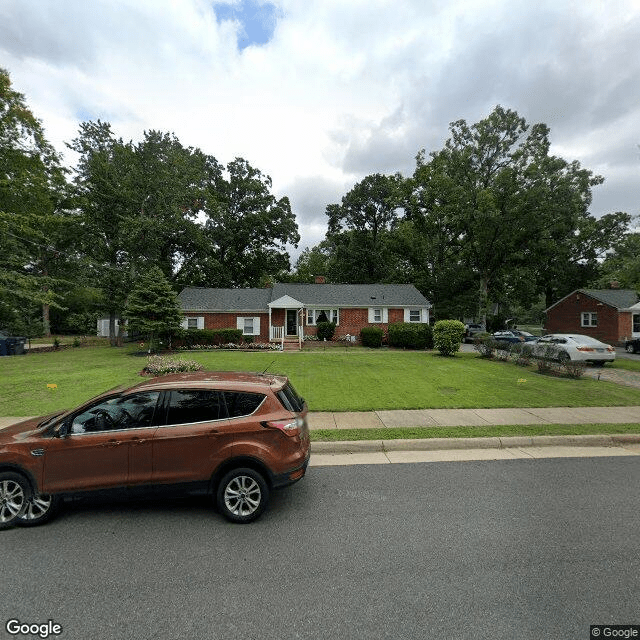
5917 Brookland Road, Alexandria, VA 22310
To contact a resident: (301) 266-6717
For more information about senior living options: (866) 208-4318
Mickey Home Care Costs & Pricing
Mickey Home Care offers competitive pricing for its private room accommodations at $4,500 per month, which is notably lower than the average rate in Fairfax County at $5,449. This positions Mickey Home Care as an attractive option for those seeking quality care without the elevated costs typically associated with the area. In comparison to the wider state of Virginia, where the average cost is $4,684, Mickey Home Care provides a more economical alternative while ensuring that residents receive the exceptional support and services they deserve. This combination of affordability and care makes Mickey Home Care a compelling choice for families considering their options.
| Floor plans | Mickey Home Care | Fairfax County | Virginia |
|---|---|---|---|
| Private | $4,500 | $5,449 | $4,684 |
Senior living communities with a similar price nearby
-
from +$450 / mo

Avalon House on Laburnum Street
$4,950 / month9.9 miles away -
About the same

Olney Memory Care
$4,500 / month24.2 miles away -
from -$500 / mo
Montgomery Eldercare I
$4,000 to $5,900 / month22.9 miles away -
from +$700 / mo

Avalon House On Laburnum Street
$5,200 / month9.9 miles away -
from +$500 / mo

Necitas
$5,000 to $5,500 / month21.4 miles away
Overall Review of Mickey Home Care
Pros
 Beloved HomeCare is compassionate, caring, and hardworking.
- Everyone on staff is highly competent.
- Beloved HomeCare caregivers have been extremely kind, reliable, and flexible.
- The staff are loving, kind, compassionate, and caring.
- The staff are well trained, dedicated, and loyal.
- Beloved HomeCare is the best in the business for carers as well as transportation needs.
- The response to the first call for help was immediate.
- The caregivers Lu and Mary were fantastic—punctual, kind, reliable, and professional.
Cons
 The reviewer notes that the pricing was negotiable but did not include any extras.
- There was no staff available for residents who are able to talk to.
Review
Best suited for families seeking deeply compassionate, reliable in-home care that feels more like family than a service, this team consistently earns trust through demonstrable warmth and competence. The corpus of client feedback centers on Lu and her colleagues, who routinely go beyond the basics of care, visiting after hospitalizations, coordinating with physicians, and adjusting to shifting needs with minimal friction. Caregivers are described as punctual, patient, and easy to rely on, qualities that translate into real peace of mind for relatives who must balance work and caregiving. For seniors who want recognizable faces, ongoing personal attention, and a care approach that respects independence while catching early warning signs, this home-care option rises to the top.
Those who should consider alternatives are families seeking bundled pricing with a wider slate of “extras” included, or residents craving more structured social programming than what a home-care team typically provides. A few reviewers mention that while the caregivers handle essential tasks with tenderness, opportunities for spontaneous conversation or ongoing social interaction can feel limited for residents who can talk and engage. In addition, for families planning around cost, the reported pricing stance leaves little room for add-ons unless negotiated upfront. For seniors needing a more active social environment or clearer, published activity calendars, exploring other agencies with fuller programming may be wise.
On the upside, the key strengths, exceptional compassion, steadiness, and practical competence, help materially offset the modest con list. The personalities running the agency come across as genuinely invested in outcomes, not simply tasks completed. The ability to provide post-hospital support, keep transportation needs coordinated, and maintain a reliable schedule translates into better recovery and less caregiver turnover. The positive red thread, staff who feel like part of the family and who communicate clearly, helps families sleep at night. Proximity to daily conveniences and a favorable caregiver-to-resident ratio mean less logistical stress and more meaningful engagement during visits.
Instances of resilience during weather-adverse events further illustrate the team’s dedication, even as they reveal a potential weakness in extreme conditions. One review notes a snowstorm when staffing was tighter, yet Mary’s care remained a steady, compassionate anchor. That combination of dedication and adaptability matters when care needs spike abruptly after a hospital stay. Families should ask for explicit continuity plans, backup caregivers, and clear escalation paths if schedules get disrupted by bad weather or caregiver illness. The reality is that the strongest outcomes come from a plan that assumes occasional constraints and still preserves quality of interaction.
To decide with confidence, prospective families should drill into practical details: ask about the typical ratio of caregivers to residents, the process for hospital and physician coordination, and whether there are any guaranteed minimum hours. Request a transparent pricing discussion, including what is included and what would count as extras, so expectations align. Inquire about social opportunities and whether staff routinely engage residents in conversation beyond care tasks, or if that is left to family visitors. Obtain references from current clients about continuity of care, responsiveness, and any gaps they observed, and verify that the agency can align with the resident’s medical and mobility needs.
Bottom line: for families prioritizing warmth, reliability, and hands-on post-acute home care, this team offers a standout option that reduces stress and accelerates recovery at home. The care culture, loyal, compassionate, and professional, delivers tangible benefits that can outweigh the modest pricing caveats and the limited social programming in some cases. If extras, broad social engagement, or a predictably priced all-in package are non-negotiable criteria, alternative providers with richer activity calendars and more transparent bundled pricing merit comparison. In the right setting, this home-care partnership can be the difference between a shaky transition home and a confident, supported path toward independence.
 Board and Care Home
 Activities off-site
 Bath tubs
 Devotional services off-site
 Indoor common areas
 Outdoor common areas
 Private
 Private bathrooms
 Respite or short term stays offered
 Wheelchair accessible showers
 Ronald Reagan Washington National (7 miles away)
 Diabetic care
 High acuity care
 Incontinence care
 Meals provided




 Comprehensive Look at Senior Blood Pressure Charts: Normal and Elevated Levels by Age
 Top Canine Companions for Older Adults
 Comprehensive Guide to Blood Pressure Charts for Older Adults: Understanding Normal and High Readings by Age