
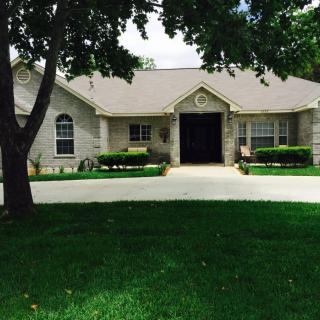
8426 Cascade Ridge Drive, San Antonio, TX 78239
For more information about senior living options: (866) 208-4318
Susan Home Care Costs & Pricing
At Susan Home Care, the monthly costs reflect a commitment to quality care, with semi-private rooms priced at $3,579 and private rooms at $4,294. When compared to Bexar County, where semi-private accommodations average $3,488 and private rooms are around $3,627, Susan Home Care stands slightly higher in the semi-private category but offers a competitive rate for private living spaces. This is particularly relevant considering that the state average for private rooms in Texas is approximately $4,096. Overall, while Susan Home Care may be positioned above some local rates, the emphasis on personalized care and a supportive environment justifies these costs for many families seeking exceptional services for their loved ones.
| Floor plans | Susan Home Care | Bexar County | Texas |
|---|---|---|---|
| Semi-Private | $3,579 | $3,488 | $3,680 |
| Private | $4,294 | $3,627 | $4,096 |
Assisted Living communities with a similar price nearby
-
About the same

Parkway Assisted Living
$3,500 to $4,500 / month15.8 miles away -
About the same
Pembroke Angel Care
$3,500 to $3,800 / month17.4 miles away -
from +$421 / mo

Pecan View Senior Care AL
$4,000 / month16.6 miles away -
from +$421 / mo

La Cantera Assisted Living And Memory Care
$4,000 / month19.0 miles away -
from -$680 / mo

The Etta at Shavano Park
$2,899 to $5,199 / month14.6 miles away
Overall Review of Susan Home Care
Pros
 Safe Homecare accommodated 24-hour care for a dying father with almost no notice.
- Safe Homecare was professional and helpful, providing essential support during a difficult time.
- The onsite personnel at Safe Homecare were attentive and personable and did a great job.
- The administrator at Safe Homecare was easy to reach and quick to answer questions and offer solutions.
- Safe Homecare is highly recommended for anyone needing home care services.
Cons
Review
Susan Home Care in San Antonio, TX is best suited for families needing immediate, reliable 24/7 in-home support for a loved one, especially during crisis moments or end-of-life care when staying at home is the clear preference. The strongest signal from the available feedback is a proven ability to mobilize around-the-clock care on short notice, keeping the patient in a familiar setting while relieving family members from overwhelming caregiving demands. In short, this provider is a practical, action-first option for urgent in-home assistance.
Families should consider alternatives if the situation calls for deeper medical oversight or a more structured facility-based environment. If continuous, licensed nursing supervision around the clock is non-negotiable, or if the plan involves robust social activities, therapeutic programming, and predictable daily routines outside the home, a facility-based option or a home-health provider with stronger medical staffing may better align with needs. Likewise, if cost transparency and long-term budgeting require more clarity, exploring multiple agencies or a formalized hospice or palliative care pathway could be prudent.
The core strengths, rapid 24/7 availability, professional and helpful staff, and attentive on-site caregivers, work in concert to reduce stress and coordinate care efficiently. An administrator who is consistently reachable and quick to respond to questions or small issues signals strong ongoing coordination, a critical factor when family members are juggling work and other responsibilities. These elements matter most when family members are deciding how to transition a loved one from hospital to home or how to maintain continuity of care during changing medical needs; they can make the difference between a chaotic experience and a manageable, compassionate one.
What remains unspoken in the single review is as telling as what is stated: no clear drawbacks are listed. That silence can be interpreted as a genuine strength, but it also invites careful due diligence. Prospective families should still probe for the limits of service, exactly which tasks the team can and cannot perform in-home, how caregiver assignments are made and maintained, and how coverage is handled during holidays, vacations, or unexpected staffing gaps. Cost structure, eligibility for insurance or benefits, and potential add-ons (such as respite care or hospice support integration) are essential details to confirm before committing.
To move from consideration to decision, families should demand concrete, written information and referrals. Verify licensing and certifications, request a formal care plan with 24/7 coverage specifics, and seek clear caregiver matching criteria. Ask for recent references and contact details for families with similar needs, and confirm how the agency handles care plan revisions as conditions evolve. Use the administrator’s accessibility as the baseline for expectations around ongoing updates, escalation processes, and problem-solving. With these checks, the picture becomes clear: the ability to mobilize rapid, compassionate in-home care is the provider’s strongest asset, and that strength should be the deciding factor when the priority is keeping a loved one safe at home under demanding circumstances.
Bottom line: for families who prize speed, attentiveness, and an at-home care approach during a crisis or end-of-life phase, this provider is a sensible, dependable option worth pursuing. Those needing deeper medical oversight, a more socialized facility environment, or a lower-cost long-term arrangement should evaluate alternatives, other home-health options with expanded nursing support or an assisted living setting, so the care setting aligns with medical needs, family capacity, and long-range goals. The right choice hinges on aligning the care model with the patient’s medical requirements and the family's ability to sustain it, and in that calculation this provider presents a compelling, practical path forward.
 10 resident community capacity
 Assisted Living
 Board and Care Home
 Cable or satellite TV
 Dining room
 Fully furnished
 Garden
 Housekeeping services
 Move-in coordination
 Outdoor space
 Telephone
 Wi-Fi/high-speed internet available
 San Antonio International (8 miles away)
 24-hour supervision
 Activities of daily living assistance
 Assistance with bathing
 Assistance with dressing
 Assistance with transfers
 Diabetes diet
 Meal preparation and service
 Medication management
 Special dietary restrictions
 Transportation arrangement (medical)
 Transportation to doctors appointments








 Funding and Affording Assisted Living: A Thorough Overview
 Assisted Living Expenses and Long-Term Care Insurance: A Comprehensive Exploration
 Securing Financial Support for Assisted Living: A Comprehensive Overview