

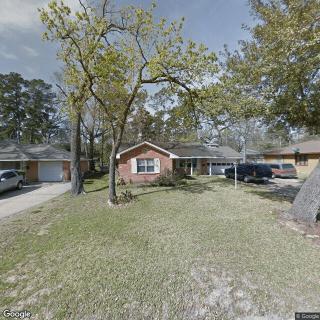
1930 River Falls Drive, Kingwood, TX 77339
To contact a resident: (281) 678-2520
For more information about senior living options: (866) 208-4318
Heritage Retreat Kingwood Costs & Pricing
Heritage Retreat Kingwood offers competitive pricing for its residents, particularly in comparison to both Montgomery County and the broader Texas state averages. For a semi-private room at Heritage Retreat Kingwood, the monthly cost is $2,800, significantly lower than the county average of $3,664 and the state average of $3,680. Similarly, those seeking a private room will find the price at Heritage Retreat Kingwood to be $3,300, which also undercuts both Montgomery County's average of $4,177 and Texas's average of $4,096. These rates reflect an appealing option for individuals seeking quality care without compromising their financial wellbeing in an increasingly costly healthcare environment.
| Floor plans | Heritage Retreat Kingwood | Montgomery County | Texas |
|---|---|---|---|
| Semi-Private | $2,800 | $3,664 | $3,680 |
| Private | $3,300 | $4,177 | $4,096 |
Senior living communities with a similar price nearby
-
from -$300 / mo
Pattie Duke's Personal Care
$2,500 / month23.7 miles away -
from +$200 / mo

Plantation Assisted living B
$3,000 to $4,910 / month3.4 miles away -
from +$200 / mo

Northgate 2 Assisted Living
$3,000 to $3,500 / month21.5 miles away -
from -$300 / mo

Grace Memory Care
$2,500 to $3,000 / month14.6 miles away -
About the same

Atascocita Seniors Care Home
$2,800 to $3,300 / month5.0 miles away
Overall Review of Heritage Retreat Kingwood
Cons
 The reviewer warns others to stay away from this place.
- The reviewer claims Donna O'Conner never returned calls or paid the bill.
- The reviewer accuses Donna O'Conner of cutting corners and stealing from contractors.
- The reviewer believes the elderly are treated poorly by this business.
- The reviewer says they will never do business with this place again.
Review
Heritage Retreat Kingwood in Kingwood, TX is best suited for families that can tolerate a high degree of hands-on scrutiny of management and are prepared to verify commitments before moving in. This community will appeal to those who want to closely oversee how administrative matters are handled, billing, vendor relations, and appointment follow-through, rather than relying on an automatic expectation that a small operation will run flawlessly. The sole publicly available critique centers on the owner, Donna O'Conner, and alleges that after a service-call appointment the owner did not return calls or pay a bill to contractors. The claim is unmistakable: a pattern of non-responsiveness and potential financial irregularity that directly touches trust and daily operations. In practical terms, this signals a fundamental governance risk.
Families must consider alternatives if ethical consistency and reliability are non-negotiable. Any prospective resident who depends on timely communication, transparent billing, and firm contract enforcement should look toward options with documented accountability and steady vendor management. If care supervision, staff stability, and a predictable payer relationship with suppliers are priorities, the available evidence suggests seeking other communities. The warning extends beyond resident care to the broader ecosystem of the facility: contractors, vendors, and service providers play a crucial role in maintenance and safety; a breakdown in those relationships is not easily contained within resident oversight.
From the information at hand, there are effectively no documented advantages to offset the grave concerns. The review’s tone and content point squarely to management credibility as the decisive issue, and that issue overshadows any speculation about care quality or environment. The alleged refusal to engage after an appointment and to honor owed payments raises questions about financial controls, accountability, and governance. If an operation cannot sustain basic business promises, returning calls, paying bills on time, the risk is not merely cosmetic; it signals potential harm to residents through missed repairs, delayed services, and eroded trust. Without credible endorsements or positive operational indicators, the negatives dominate.
For families still weighing Heritage Retreat, a disciplined due-diligence approach is essential. Request detailed, written statements on billing practices, dispute resolution, and how vendor invoices are approved and paid. Ask for current references from multiple families, not just marketing contacts. Visit with a focus on administrative processes: how service requests are tracked, how accountability is assigned for missed appointments, and what checks exist to prevent financial irregularities. Check state licensing records and any consumer complaints; reach out to local senior-service networks for independent impressions. Collecting a spectrum of experiences will illuminate whether the reported concerns are isolated or indicative of a pattern.
Even acknowledging potential positives that a smaller, intimate setting could offer in other contexts, the reported governance weakness undermines any supposed benefits. When management reliability is suspect, residents risk gaps in maintenance, slow responses to urgent needs, and a fragile safety net if emergencies arise. The absence of timely communication compounds these risks, as does a lack of transparent financial dealings with contractors and suppliers. In practical terms, the bottom line is this: a facility cannot be trusted to guard residents’ daily needs if basic promises and financial commitments are not honored. The practical impact is measurable in delays, frustration, and compromised peace of mind for families.
The prudent decision, given the current signal, is to explore other Kingwood area options with verifiable ethics, consistent communication, and documented procedural controls. If Heritage Retreat remains under serious consideration, move forward only with ironclad assurances: written contracts detailing payment timelines, escalation paths for missed commitments, and verified references. Prioritize facilities where owner and administrative leadership have transparent track records and sustained vendor relationships. In short: protect the resident by choosing a setting where governance and trust are foundational, not negotiable.
 Board and Care Home
 Activities on-site
 Bath tubs
 Cable or satellite TV
 Indoor common areas
 Laundry
 Outdoor common areas
 Private
 Respite or short term stays offered
 Wheelchair accessible showers
 George Bush Intercontinental (8 miles away)
 Diabetic care
 High acuity care
 Incontinence care
 Medication management
 Meals provided
 Luxurious, well-maintained community with extensive amenities and friendly staff.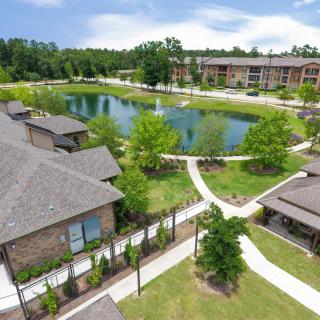





 Comprehensive Look at Senior Blood Pressure Charts: Normal and Elevated Levels by Age
 Top Canine Companions for Older Adults
 Comprehensive Guide to Blood Pressure Charts for Older Adults: Understanding Normal and High Readings by Age