
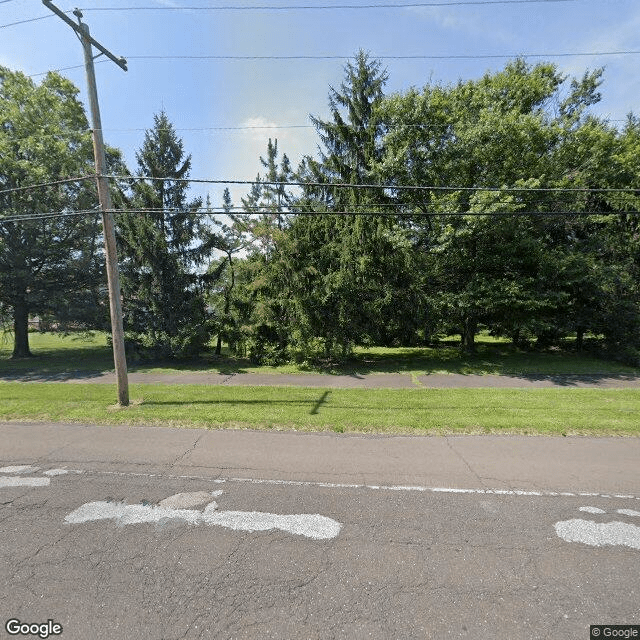
1750 Quarry Rd, Yardley, PA 19067
To contact a resident: (215) 579-1750
For more information about senior living options: (866) 208-4318
D'Youville Manor Costs & Pricing
D'Youville Manor offers competitive pricing for its residents, particularly when compared to the broader market in Bucks County and across Pennsylvania. For a studio apartment, the monthly cost at D'Youville Manor is $3,636, which is notably lower than the average studio price of $4,593 in Bucks County and aligns closely with the state average of $3,737. Similarly, the one-bedroom option is priced at $3,818, again reflecting a more budget-friendly solution compared to Bucks County's average of $4,397 and slightly below Pennsylvania's statewide average of $4,006. These figures suggest that D'Youville Manor provides valuable options for individuals seeking quality living arrangements without overstretching their financial resources.
| Floor plans | D'Youville Manor | Bucks County | Pennsylvania |
|---|---|---|---|
| Studio | $3,636 | $4,593 | $3,737 |
| 1 Bedroom | $3,818 | $4,397 | $4,006 |
Assisted Living communities with a similar price nearby
-
from +$314 / mo

The Landing of Towamencin
$3,950 to $6,950 / month21.3 miles away -
from +$229 / mo
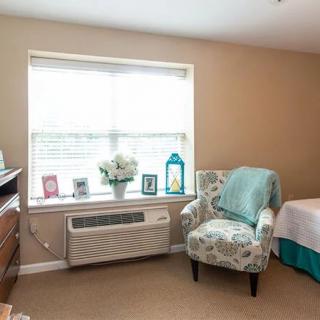
Granville Place
$3,865 to $6,506 / month13.6 miles away -
from +$144 / mo
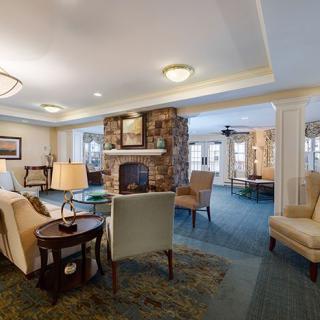
Brightview Greentree
$3,780 to $9,675 / month23.1 miles away -
from +$294 / mo
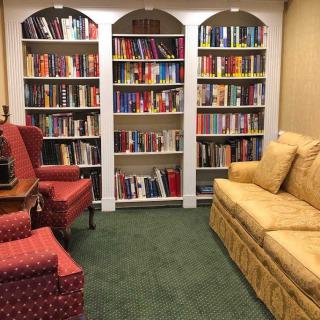
Brandywine Living At Pennington
$3,930 to $6,690 / month7.6 miles away -
from +$359 / mo

The 501
$3,995 to $6,850 / month17.3 miles away
Overall Review of D'Youville Manor
Pros
 The community does its best to care for its residents.
- The staff is very friendly and treats all residents like family.
- D'Youville Manor does not feel like an institution and has a home-like feeling.
- Residents and family members enjoy the community very much.
Cons
 None found.
Review
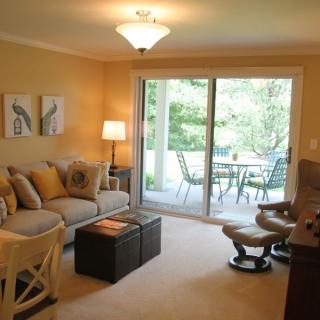
D'Youville Manor in Yardley, PA is best suited for seniors who want a warm, intimate living environment where staff know residents by name and treat them like family. This community excels in delivering a non-institutional, home-like atmosphere that reduces the clinical feel many fear in senior housing. It will appeal to residents who prize personal connections, steady routines, and a sense of belonging over sprawling campuses or glossy amenities. Families seeking daily life that resembles a comfortable, small-town home rather than a medical facility will likely feel at ease here. That sense of belonging is not incidental, it is the core promise the staff appears to honor in everyday interactions.
Those who may want to consider alternatives include families prioritizing intensive medical oversight, expansive activity calendars, or specialized care programs (such as memory care) on-site. If a resident’s needs include high-frequency clinical monitoring, complex therapies, or a broad spectrum of on-site specialists, other communities with larger medical teams and more varied programmatic offerings may be a better fit. For families evaluating long-term care options, it’s prudent to weigh whether the environment’s warmth compromises access to certain services that larger, more resource-rich facilities can provide.
The primary strengths emerge clearly in the reported experience: staff friendliness, genuine warmth, and an atmosphere that feels like family care rather than impersonal custodial support. Residents and their families describe staff as welcoming and attentive, with a daily cadence that reinforces personal connections. The home-like vibe minimizes the sense of institutional rigidity, which can be a substantial enhancement to quality of life for many seniors. When care feels relational and consistent, it often translates into lower stress, easier daily routines, and greater satisfaction for both residents and visiting family members.
No explicit drawbacks were cited in the available feedback, but the nature of an intimate community can imply tradeoffs. A smaller operation may carry a limited menu of on-site services compared with larger campuses, and the depth of medical staffing may not match what occasionally surfaces in higher-acuity environments. Potential gaps could include fewer specialized programs or limited capacity for rapid expansion of services as needs evolve. These possibilities are not presented as negatives, but as practical realities to verify during a direct tour and conversations with the team.
In weighing the pros against the potential cons, the warmth of the staff and the home-like setting carry substantial weight. For residents who thrive on predictable routines and strong personal relationships, these strengths tend to offset any lack of expansive amenities or medical complexity. The emotional comfort derived from being treated like family can significantly enhance daily well-being and reduce feelings of isolation, which are common concerns in assisted living. Prospective residents with rising care needs should still assess whether medical support and activity options align with expectations, but the current profile strongly supports a positive fit for a particular cohort of seniors.
The practical path to a confident decision is straightforward. Prioritize a firsthand visit: observe how staff interact with residents, gauge responsiveness, and assess whether the pace and tone match personal preferences. Ask about the level of medical oversight, what on-site therapies are available, and how memory-related care, if needed, is handled. Clarify pricing, what is included, and how changes in care level would be managed. Given the single positive report and a five-star rating, corroborating impressions from additional families and recent inspections will be key. When alignment with the resident’s values centers on warmth, belonging, and a home-like routine, D'Youville Manor stands out as a strong, practical option.
 Assisted Living
 Activities on-site
 Devotional services off-site
 Indoor common areas
 Respite or short term stays offered
 Trenton-Mercer County (4 miles away)
 Ambulatory care
 Diabetic care
 Meals provided


 Exploring the Path to Senior Living: A Comprehensive Look at Independent Living and Assisted Living
 Is Assisted Living Deductible on Your Taxes? Understanding the Complexities of Assisted Living Expenses and Deductions
 Assisted Living Support for Veterans: A Complete and Detailed Overview