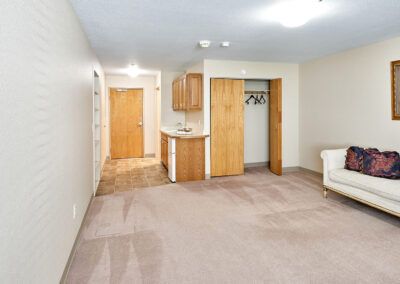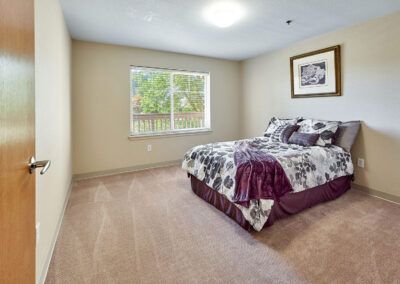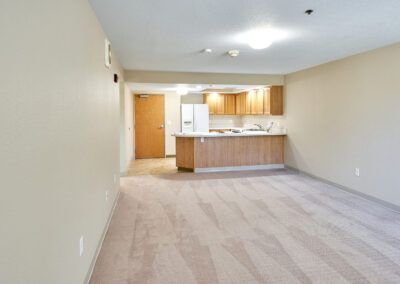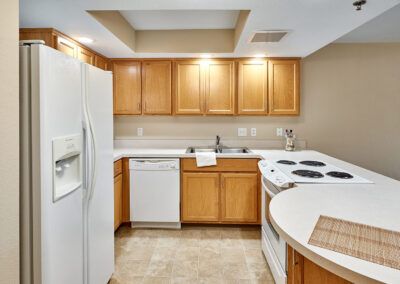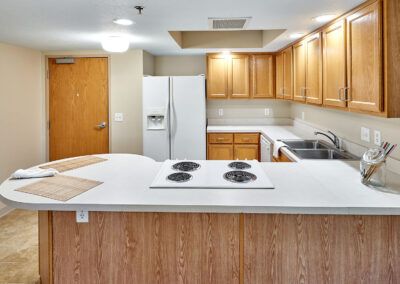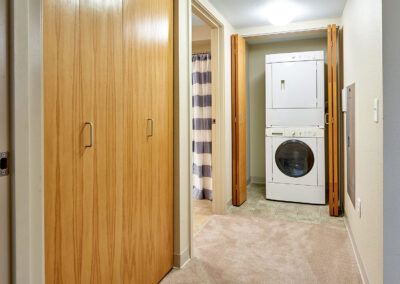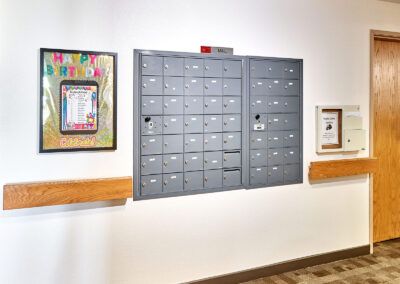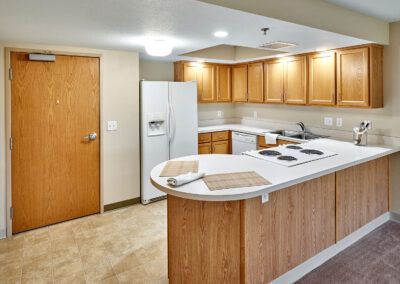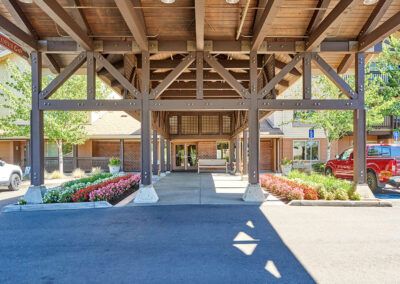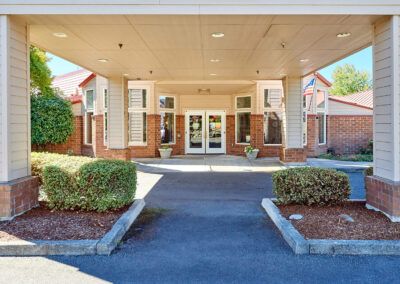
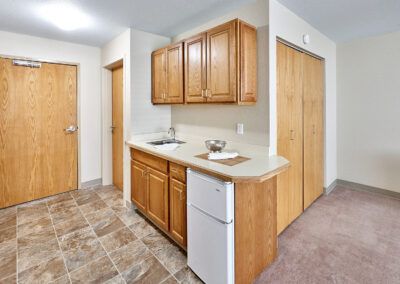

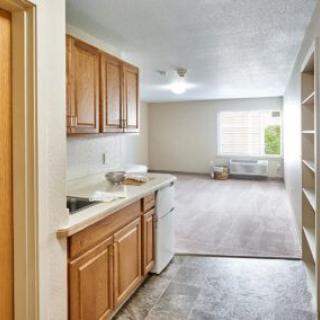


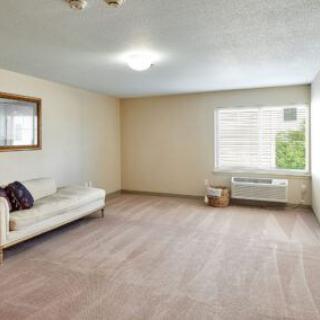



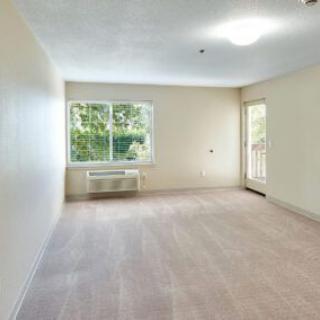
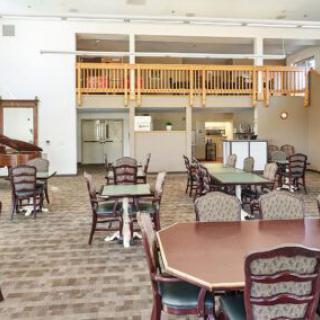
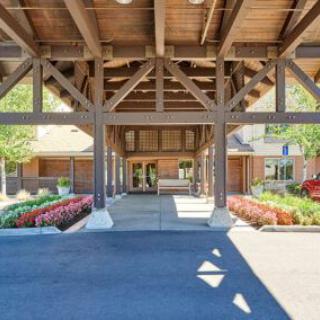
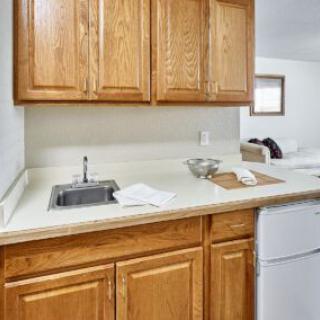



390 Church Street, Sublimity, OR 97385
For more information about senior living options: (866) 208-4318
Elliott Residence Costs & Pricing
Elliott Residence offers competitive pricing that notably stands out when compared to both the county and state averages. For a studio apartment, residents will find the monthly cost at Elliott Residence to be $2,132, significantly lower than Marion County's average of $3,836 and Oregon's state average of $3,815. Similarly, a one-bedroom unit is available for $2,238 - again, presenting a favorable option compared to Marion County's $4,001 and Oregon's $3,904. Even with two-bedroom accommodations priced at $2,918, Elliott Residence remains a cost-effective choice relative to the county average of $3,417 and the higher state average of $4,436. Overall, these figures reflect an attractive opportunity for potential residents seeking quality living without the financial burden typically associated with similar properties in the region.
| Floor plans | Elliott Residence | Marion County | Oregon |
|---|---|---|---|
| Studio | $2,132 | $3,836 | $3,815 |
| 1 Bedroom | $2,238 | $4,001 | $3,904 |
| 2 Bedrooms | $2,918 | $3,417 | $4,436 |
Assisted Living communities with a similar price nearby
-
from +$143 / mo

Lancaster Village
$2,275 to $2,950 / month12.5 miles away -
from +$363 / mo
Brookdale Stayton
$2,495 to $4,695 / month1.1 miles away -
from -$348 / mo

Avamere Court At Keizer
$1,784 to $3,000 / month16.7 miles away
Overall Review of Elliott Residence
Pros
 The staff are kind and caring.
- There are many excellent staff members who really care.
- The food is great.
- Management cares.
- Marian Estates is very friendly and very quiet.
- The staff is very friendly and very helpful.
- The food is all made from scratch and very good.
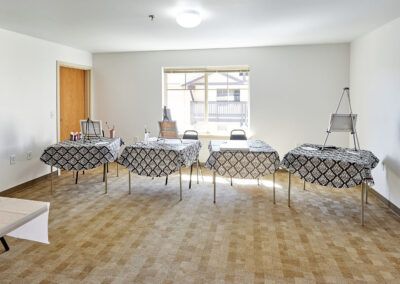
- They offer activities like exercise classes, memory classes, bingo, and more.
- Marian Estates was a very nice facility.
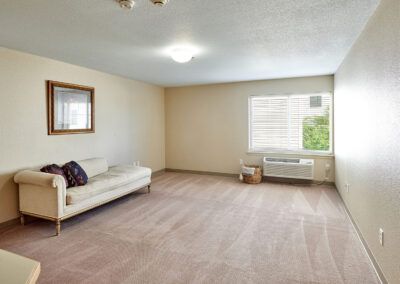
- The staff was accommodating and the units were very spacious.
- The grounds were beautiful.
- Everybody seemed very warm and friendly there.
- It is much more affordable than other places.
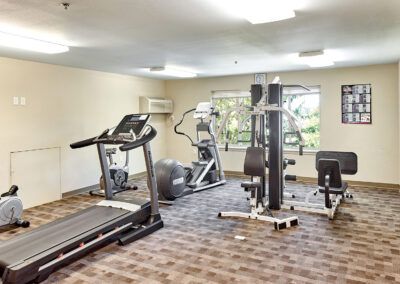
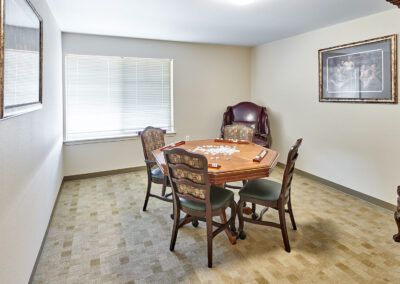
- The library, exercise room, and game room are nice and well-equipped.
- The residents were very friendly and personable.
- The place was clean, well-maintained, new, fresh, and pleasing to the eye.
- Marian Estates has the best staff and they are always smiling.
- They are always there to support residents' loved ones.
Cons
 The reviews claim management lies to family members or investigators and inflicts mental abuse and hostility toward residents.
- Assisted living here is not recommended.
- Repeated apartment flooding occurred with slow, unhelpful responses, and management became adversarial, with gaslighting over time.
- Cruelty and mental abuse toward residents were witnessed on a regular basis.
- Incontinence care was described as horrible, with rooms smelling of urine, soiled bedding, and insufficient staffing.
- Current management changes are uncertain, and the reviewer is not optimistic about improvement.
- Staff turnover leads to ongoing cleaning and care shortages, making it hard to maintain standards.
Review
Elliott Residence in Sublimity, OR is best suited for families that are prepared to stay actively involved in advocacy and monitoring, and that can tolerate a mix of genuine care from some staff with a broader pattern of governance and reliability concerns. This community can deliver moments of warmth, good meals, attentive aides during certain shifts, and management that appears to care, in a setting where oversight and consistency are not consistently demonstrated. For families seeking a hands-off experience with guaranteed, high-quality oversight and stable operations, Elliott Residence is not the right match.
Those who should consider alternatives are primarily families prioritizing dependable, dignified care delivered with steady leadership and transparent accountability. The reviews flag frequent and serious red flags around management conduct and maintenance responsiveness, which can erode trust and safety over time. If the elder requires consistent, day-to-day reliability and a respectful, resident-centered environment, look elsewhere. In the Sublimity area, facilities that showcase stable staffing, fewer complaints about leadership, and consistently clean, well-maintained spaces are worth comparing, rather than risking ongoing friction and unclear problem resolution here.
On the upside, several reviewers note that some staff members are kind and genuinely caring, and that the food quality at Elliott Residence is a definite strength. When management is attentive, concerns are addressed promptly, and residents receive attention from caregivers who understand their needs. These positives show that the operation can function well under the right conditions, and that a portion of the team is capable of delivering compassionate, attentive care amid organizational challenges. For families who can regularly engage with the facility and verify care standards, these elements may provide meaningful daily comfort.
The most troubling dimensions are the recurring governance and care failures described across multiple accounts. Allegations of deception toward families, gaslighting, and hostile behavior toward residents reveal a dangerous pattern of abuse of trust and dignity at the hands of some management personnel. Chronic maintenance problems, such as repeated apartment flooding, persistent odor issues from incontinence, and inconsistent housekeeping, signal that environmental quality and safety are not reliably safeguarded. Staffing turnover compounds these issues, leaving residents with uneven care quality, inconsistent routines, and gaps in critical tasks like bathing, linen washing, and monitoring for falls. These are not minor irritants; they undermine health, safety, and quality of life.
Pros offsetting cons are limited and largely situational. When the facility is well-staffed and properly managed, the supportive care and appealing meals can briefly offset the discomfort of a rocky administrative environment. However, episodic improvements do not negate the risk of ongoing governance problems or the potential for mistreatment. The possibility that management will change could herald improvement, but the history here suggests a pattern of instability rather than a reliable trajectory. In practical terms, the positives do not provide a sufficient counterweight to the core concerns about trust, safety, and consistent care.
For decision-making, the prudent path is to prioritize communities with proven, stable leadership, transparent operations, and a track record of consistently clean environments and respectful resident care. If Elliott Residence is still under consideration, pursue a rigorous, itemized on-site assessment: request detailed maintenance histories and incident logs, speak to several current residents and their families, inspect room cleanliness and odor control, and probe how emergencies and incontinence care are managed day-to-day. Compare these findings with nearby options that receive consistently strong reviews for care quality, staff stability, and administrator responsiveness. In most cases, Elliott Residence should be set aside in favor of safer, steadier alternatives that deliver not just meals and intermittent kindness, but reliable dignity, safety, and accountability.
 60 resident community capacity
 Assisted Living
 Independent Living
 Memory Care
 Skilled Nursing Facility
 Activities on-site
 Air-conditioning
 Beauty salon
 Cable or satellite TV
 Computer center
 Devotional services off-site
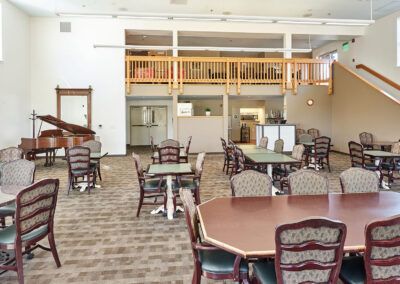
 Dining room
 Fitness room
 Fully furnished
 Gaming room
 Garden
 Housekeeping services
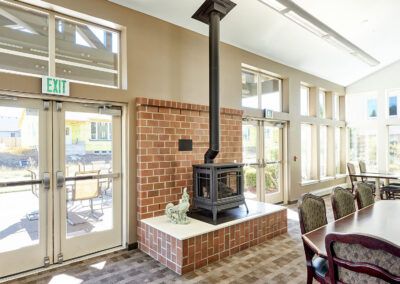
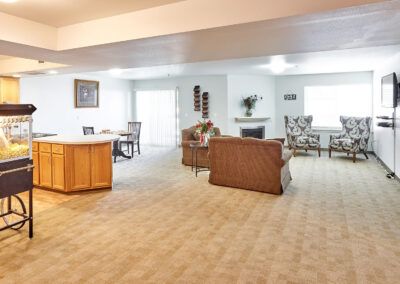
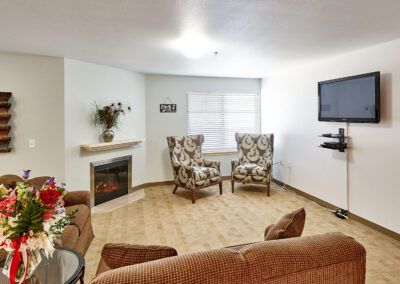
 Indoor common areas
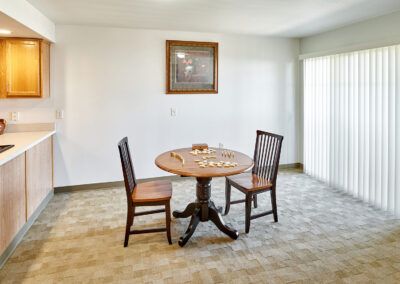
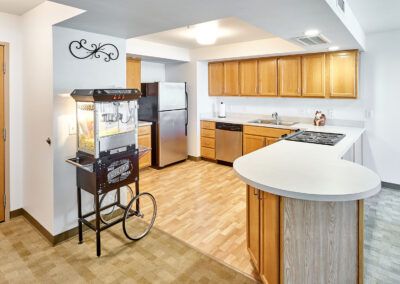
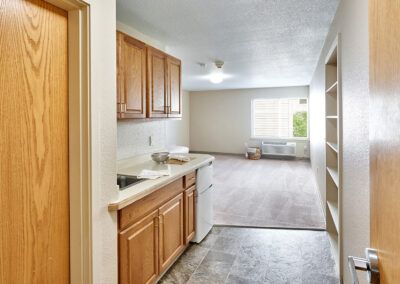
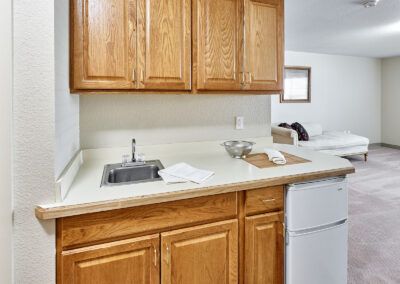
 Kitchenette
 Move-in coordination
 Outdoor space
 Overnight guests
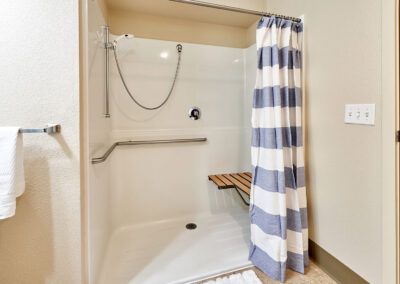
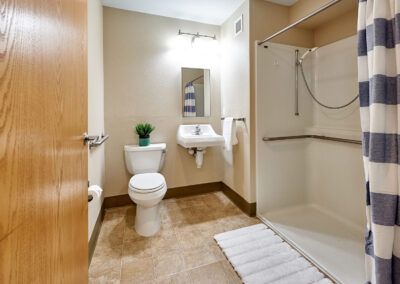
 Private bathrooms
 Resident parking
 Restaurant-style dining
 Small library
 Telephone
 Wellness center
 Wi-Fi/high-speed internet available
 Community operated transportation
 24-hour call system
 Ambulatory care
 Assistance with bathing
 Assistance with dressing
 Assistance with transfers
 Diabetes diet
 Diabetic care
 Medication management
 Mental wellness program
 Special dietary restrictions
 Concierge services
 Planned day trips





 22 Remarkable Caregiver Support Groups Available Online and In-Person
 Understanding Medicaid Coverage for Assisted Living: A Comprehensive Guide
 How and When Medicaid May Cover Assisted Living Costs