

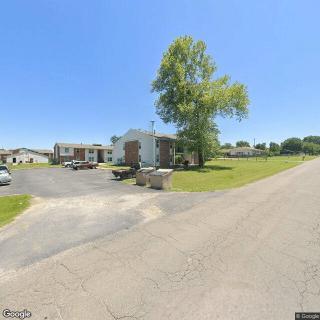
1001 S Belmont Ave, Okmulgee, OK 74447
To contact a resident: (918) 756-1253
For more information about senior living options: (866) 208-4318
Senior Star at The Brook Costs & Pricing
At Senior Star at The Brook, the costs for monthly accommodations are notably competitive when compared to the broader market of Okmulgee County and the state of Oklahoma. For instance, the semi-private rooms are priced at $2,925, aligning with the county's cost yet significantly lower than the state average of $4,053. Similarly, for those seeking more privacy, one-bedroom units are offered at $3,540 - this cost is consistent with local pricing and remains quite close to the statewide average of $3,565. This strategic positioning not only reflects Senior Star's commitment to providing value but also ensures that residents receive quality care in a supportive environment without straining their finances.
| Floor plans | Senior Star at The Brook | Okmulgee County | Oklahoma |
|---|---|---|---|
| Semi-Private | $2,925 | $2,925 | $4,053 |
| 1 Bedroom | $3,540 | $3,540 | $3,565 |
Overall Review of Senior Star at The Brook
Pros
 They couldn't be happier with the care their mom receives.
- The staff go above and beyond for their residents.
- They are grateful for the care their mom receives there.
Review
Senior Star at The Brook in Okmulgee, Oklahoma, is best suited for families seeking a small, deeply attentive senior living option where care consistency and a warm, resident-centered culture take precedence over showroom amenities. The community appears to serve older adults who want daily reassurance that caregivers notice changes, remember preferences, and respond quickly. The strongest signal from available observations is that staff genuinely invest in residents’ well-being, with families reporting that care for their loved ones is thorough and personable. In short, this is a place where the day-to-day experience centers on personalized attention, predictable routines, and a compassionate approach that reduces the anxiety families feel about supervision and safety.
Those evaluating alternatives should consider what matters most in a living situation, cost, scale, and the breadth of programming. If a family needs aggressive memory-care support, a formal memory-care unit, or access to a wide array of on-site activities and transportation options, a larger campus with more resources might be a better fit. Similarly, if budget constraints require more predictable, lower-cost options, or if a target is a city with extensive social programming, this smaller setting may feel limited. Prospective buyers should weigh whether the intimate size and direct accountability of leadership align with expectations for 24/7 oversight and a highly structured daily calendar.
On the upside, the most salient pros are the staff’s evident commitment and the sense of truly being cared for. Family reports that the mom in their care thrives because caregivers go above and beyond, staying in close touch, advocating for needs, and sustaining a compassionate, watchful presence. This level of engagement translates into quicker problem resolution, careful attention to routines, and a feeling of safety for families who cannot be on site constantly. The trade-off is that the community’s intimate footprint may limit some amenities and the pace of programming compared with larger campuses. Yet the core value remains: real people, real empathy, and consistent guardianship of daily life.
Those who recognize that front-line compassion can offset fewer bells and whistles will find substantial value here. The offset comes from clear, person-centered communication, dependable caregiving, and the ability to build trust with the same caregivers over time. Families can count on caregivers who learn residents’ preferences, monitor subtle changes, and involve families in care planning without the noise of a bigger facility. The risk is complacency if turnover rises or if leadership becomes less hands-on; the practical response is ongoing investment in staff development and resident welfare, which tends to minimize those downsides when present.
To decide with confidence, families should verify several practical factors during a visit. Ask about caregiver-to-resident ratios, shift coverage, and the continuity of assignments so that the same aides are not rotating constantly. Inquire about care planning processes, physician coordination, and how swiftly staff escalate concerns. Probe the depth of on-site medical support, dining quality, housekeeping standards, and transportation arrangements for appointments and social activities. Observe the environment: are interactions warm, respectful, and unhurried? Request candid examples of when staff went beyond expectations and whether family communication remains steady even on busy days.
Overall, Senior Star at The Brook represents a strong option for families who value reliable, compassionate, hands-on care and a friendly, intimate community atmosphere. It is a particularly good match for residents who want confident, visible staff engagement and a sense of security that comes from a small, well-managed operation. It may be less well suited for those seeking expansive programming, aggressive medical services, or a campus with broad, diverse amenities. For families prioritizing heart-driven caregiving and a tight-knit team that treats residents like family, this Oklahoma community stands out as a practical, trustworthy choice that reduces daily caregiving stress and preserves dignity and independence as long as possible.
 Assisted Living
 Cats allowed
 Dogs allowed
 Activities on-site
 Devotional services off-site
 Indoor common areas
 Respite or short term stays offered
 Wheelchair accessible showers
 Ambulatory care
 Diabetic care
 Medication management
 Meals provided





 Understanding the True Cost of Assisted Living in 2025: A Comprehensive Guide
 Understanding Medicaid Coverage for Assisted Living: A Comprehensive Guide
 How and When Medicaid May Cover Assisted Living Costs