
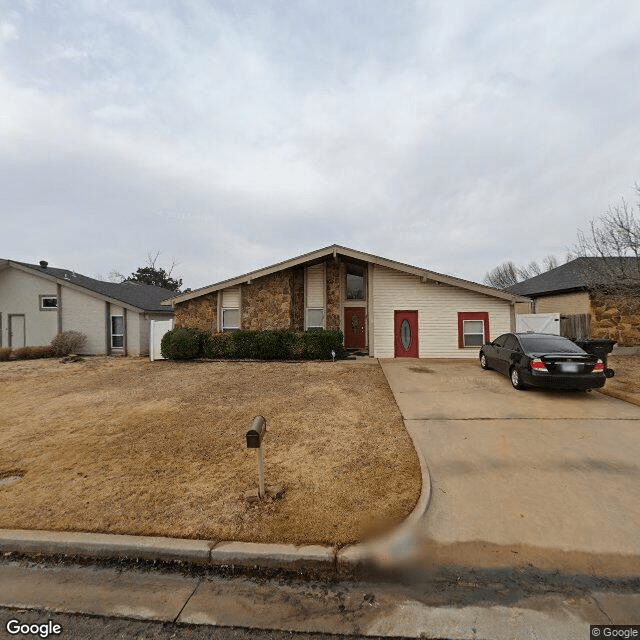
9909 South Ridge Drive, Oklahoma City, OK 73159
To contact a resident: (405) 378-7312
For more information about senior living options: (866) 208-4318
Overall Review of Double-Day Quality Home
Pros
 Morada has a small, intimate feel that residents appreciate.
- The staff cared for the aunt exceptionally well.
- All requests were addressed promptly.
- Reviews were a major consideration, and the facility earned five stars.
- The family has many wonderful stories of their parents’ adventures at Southridge and is glad they found the place.
- The staff helped the parents feel safe and secure during the ownership transition.
- Caregivers the family had grown to love were kept on staff.
- The staff have always treated the parents like family.
- The staff are fantastic and the care is deeply appreciated.
- The parents are very happy there.
- The staff treat residents like family and listen to concerns.
- The facility has a homey feel and is not stinky or dilapidated.
- It’s a hidden gem.
Cons
 They have high turnover.
- After a year they still cannot remember to put her hearing aids in.
- They're supposed to be remodeling.
- Our Dad was a little cantankerous about living there.
Review
This Oklahoma City community is best suited for families seeking a small, intimate, home-like environment where residents are known by name and caregivers treat them like family. It excels for seniors who value personal attention, open lines of communication with staff, and a sense of continuity, particularly during transitions, instead of a hotel-style atmosphere or a off-site activity schedule. In these experiences, families describe care that centers on warmth, accessibility, and a truly neighborly feel, making it a natural fit for residents who thrive when staff become familiar, trusted faces.
Those weighing alternatives should recognize that this setting may not be ideal for everyone. Families pursuing aggressive daily programming, a broad activity calendar, or robust on-site medical services may prefer a larger, more resource-dense community. For residents with complex medical needs requiring constant, highly specialized oversight, a bigger campus with dedicated nursing units could be a better match. A few notes in the reviews about turnover and ongoing remodeling also signal that, at times, stability and ongoing capital improvements may influence day-to-day life, which is a consideration for those who place a premium on predictability.
The strongest pros center on the human connection. The small scale enables staff to know residents well, remember their preferences, and respond to requests quickly. Reviewers repeatedly highlight how staff treat residents with genuine kindness and how families feel welcomed and included. The atmosphere feels more like a well-run family home than a clinical facility, with residents described as thriving under attentive supervision. Positive anecdotes about staff members going above and beyond, staying patient with difficult days, soothing transitions, and maintaining a friendly, respectful tone, underscore a compelling value in a home-centered model.
Where the balance tips against the strongest positives are practical realities: turnover can appear in some moments, and a remodeling phase is noted by some families. For families with loved ones who rely on consistent staff relationships, this highlights a need for careful onboarding and ongoing communication with management to ensure continuity. There is also a reminder that not every resident will be perfectly matched with every care philosophy; those who require highly structured routines or seamless integration of medical devices should verify that the day-to-day operations align with expectations. The occasional lapse in managing assistive devices, noted in one review, reinforces the importance of proactive, individualized care planning.
From a decision-making standpoint, prospective residents should prioritize the intimate care model and the clearly valued culture of compassion. It pays to observe how easily staff interactions occur during a visit, how caregivers listen to concerns, and how well the kitchen and housekeeping support the resident experience. The honest testimony about good food, clean, comfortable rooms, and a homey scent in the facility adds a practical layer to the decision: the environment itself reinforces a sense of well-being that often underpins ongoing satisfaction. For families who want a setting where the staff feel like an extended family, this is a meaningful differentiator.
In summary, this community delivers when the objective is a warm, personalized, family-oriented atmosphere that keeps residents felt at home. The trade-offs are real: a smaller footprint means fewer on-site amenities and potential variability during transitions or remodeling, along with the risk that high-acuity medical needs may require a different arrangement. For families prioritizing connection, attentiveness, and a sense of belonging, the pros substantially offset the cons. For those needing broader programming, greater medical infrastructure, or heightened stability amid ongoing capital improvements, exploring alternatives with larger scale and more formalized oversight is prudent. A targeted tour with the caregiving team, plus a frank discussion of care plans, turnover history, and remodeling schedules, will reveal, in concrete terms, whether this intimate, home-centered model aligns with the loved one’s care goals.
 Board and Care Home
 Will Rogers World (3 miles away)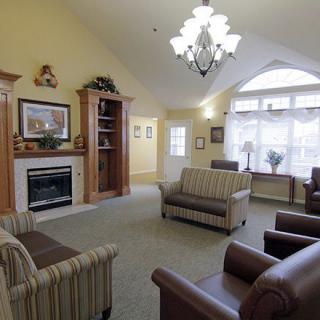






 Encouraging Participation in Adult Day Care: A Guide to Supporting a Hesitant Parent
 Comprehensive Exploration of Living Wills and Other Advance Directives
 A Detailed Exploration of Living Wills and Advance Directives