

1500 E Van Buren Ave, Mc Alester, OK 74501
To contact a resident: (918) 426-5600
For more information about senior living options: (866) 208-4318
Van Buren House Costs & Pricing
At Van Buren House, residents can expect competitive monthly costs that reflect both the quality of accommodations and the overall market in Pittsburg County and Oklahoma. For a one-bedroom unit, the monthly fee is $2,600, which is notably lower than the county average of $2,875 and significantly less than the state average of $3,565. Similarly, for a two-bedroom option priced at $3,200, it remains more affordable compared to the county's rate of $3,438 and the state's average cost of $3,747. These pricing advantages not only highlight Van Buren House as a value-driven choice for individuals seeking comfortable living arrangements but also illustrate our commitment to providing accessible housing options within the region.
| Floor plans | Van Buren House | Pittsburg County | Oklahoma |
|---|---|---|---|
| 1 Bedroom | $2,600 | $2,875 | $3,565 |
| 2 Bedrooms | $3,200 | $3,438 | $3,747 |
Assisted Living communities with a similar price nearby
-
About the same
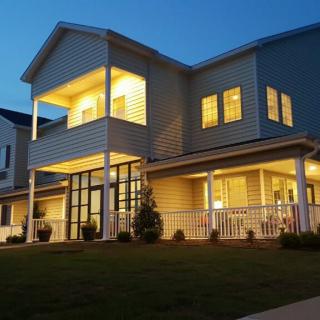
Belfair Of Mcalester
$2,625 to $3,675 / month1.4 miles away
Overall Review of Van Buren House
Pros
 Van Buren House is a very good and clean place with an elegant dining area.
- The nurses are very attentive.
- They have different bus schedules for different places to go.
- The staff seem really nice.
- Mom likes them a lot.
- They’ve always been very helpful when questions are asked.
- Everybody there likes the food.
- The apartment has a little kitchenette and enough room to move around.
- They take care of laundry.
- They offer Bingo, outings, a puzzle, and an exercise group.
- They have a beauty shop and church on Sundays.
- They take residents to doctor and dentist appointments and on weekly outings to Walmart.
Cons
 He didn't like the long halls.
- He gained 70 pounds and died within three months after being moved to Texas.
- The speaker advised locating one place and keeping him there if possible.
Review
Van Buren House is best suited for families seeking a truly integrated, all-in-one care setting where daily living, medical access, and an active social calendar are tightly coordinated. This McAlester community shines for seniors who want a hospital-connected environment with reliable transportation, routine assistance, and a broad slate of organized activities. The practical layout and attentive staff create a predictable, hands-on care experience, with conveniences like a nearby doctor’s office and a built-in transportation system that makes appointments, errands, and outings manageable rather than stressful.
Those who may want to consider alternatives are seniors who prize maximum independence and larger, more private living spaces, or who seek a home-like atmosphere with less structure and fewer scheduled activities. If memory care needs are substantial or personalized independent living options are a priority, it’s worth exploring communities that specialize in those models. Families wary of transitions between facilities or who prefer not to be tied to a hospital campus might also want to compare options that emphasize more autonomous living or southern-style charm with fewer visible hospital ties.
The strongest pros here clearly offset potential drawbacks. The long, navigable halls that residents might see as a chore actually become a built-in exercise program, which, paired with healthful meals, contributes to ongoing vitality. The “all-care” model, in particular, is a decisive advantage: staff coordinates transportation, doctor visits, and daily care needs, reducing caregiver burden and ensuring medical appointments stay front and center. Attentive nurses and friendly front-line staff translate into real peace of mind for families and a calmer day-to-day for residents, with a demonstrated willingness to answer questions and accommodate individual routines.
Equally compelling are the social and logistical strengths. The dining room presents a clean, elegant space, and the calendar is rich with activities, bingo, outings, exercise groups, church services, and a beauty shop, creating a sense of community that keeps residents engaged. The facility’s integration with McAlester Regional Hospital means care is supported by a robust clinical network, while transportation options and scheduled outings, including trips to Wal‑Mart or nearby conveniences, ensure opportunities stay within reach. Apartment living, though compact, is practical: roughly 400 square feet with a kitchenette, refrigerator, and laundry services, which suits many seniors who value efficiency and ready access to services over square footage alone.
The most salient caution arises from real-life stories about transitions. One family’s experience, moving a loved one out of the area and suffering a collapse in health shortly after, underscores the importance of stable placement and continuity of care. The takeaway is clear: Van Buren House works best when it is the steady, ongoing home with a consistent caregiving team. This is not a setting designed for frequent relocations or for families who anticipate regularly moving a loved one to different facilities as needs shift. Stability here counts, and the risk highlighted by that anecdote favors staying put once the choice is made.
In the end, Van Buren House delivers a practical, confident option for families seeking dependable care with a lively, connected lifestyle. It excels for seniors who value a comprehensive care package, strong staff support, convenient medical access, and a rich program of social activities, all within a hospital-linked framework that simplifies coordination for busy families. For those who need less structure, more independence, or a more residential, home-like feel, alternatives should be compared attentively. A thoughtful visit, conversations with the activities director, a review of the menu and transportation schedules, and a candid discussion about care needs will reveal whether Van Buren House is the prepared, steady home that aligns with long-term goals.
 Assisted Living
 Cats allowed
 Dogs allowed
 Activities off-site
 Air-conditioning
 Beautician on-site
 Devotional services off-site
 Ground floor units
 Handicap accessible
 Indoor common areas
 Kitchenette
 Outdoor common areas
 Private patio, deck, or balcony
 Respite or short term stays offered
 Wheelchair accessible showers
 Wi-Fi/high-speed internet available
 Ambulatory care
 Diabetic care
 Incontinence care
 Medication management
 Anytime dining
 Art classes
 Bible study group
 Cooking classes
 Day trips and outings
 Educational speakers / life long learning
 Live well programs



 Funding and Affording Assisted Living: A Thorough Overview
 Assisted Living Expenses and Long-Term Care Insurance: A Comprehensive Exploration
 Securing Financial Support for Assisted Living: A Comprehensive Overview