
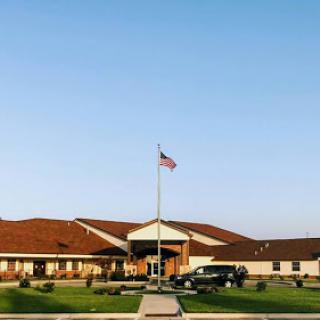
301 S Oakwood Rd, Enid, OK 73703
To contact a resident: (580) 237-6164
For more information about senior living options: (866) 208-4318
Overall Review of The Commons
Pros
 The staff were great.
- The Commons has more staff and a professional administration.
- The food is far better at The Commons, and supplies are fully stocked.
- The Commons provided excellent care for residents.
- Residents were happy there and staff were kind, going out of their way to help.
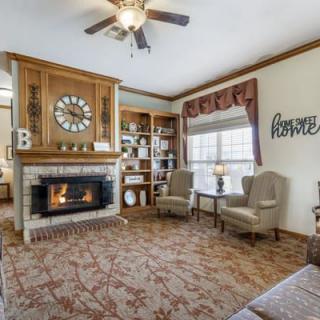
- Facilities and amenities appeared to be above average, including an exercise room and activities.
- Exercises and physical therapies were great.
Cons
 Residents’ medications were stolen by staff, and their social workers failed to respond to calls.
 - The facility appeared poorly run.
- The rooms were dusty and dirty, and bathrooms had strong odors.
- It was a terrible place to place one’s parents.
- The staff were short-staffed and failed to provide adequate care, leaving the reviewer disappointed and disgusted.
- Neglect was observed in multiple cases, indicating substandard care.
- Frequent changes and new rules caused stress, with minor neglect accumulating into bigger problems, and there is uncertainty about recommending the home.
Review
The Commons in Enid is best suited for families that want an active, amenity-rich assisted living environment where independence is supported and structured programming exists, but whose loved ones require vigilant advocacy. It can work well for seniors who can participate in exercise, activities, and social opportunities, provided one carefully targets a well-run wing or neighborhood and remains on top of care plans and staff communication. In practice, this means the community can deliver quality care in pockets, yet with notable unevenness across units that demands a proactive, hands-on approach from families.
Those who may want to consider alternatives include anyone who cannot tolerate inconsistent safety and responsiveness across the campus. Reports of medication being mishandled or stolen, social workers slow to respond, and overall variability in how different wings are run argue for caution. For families prioritizing uniform reliability, zero incidents, and a consistently clean, odor-free environment, other facilities, such as comparable campuses with demonstrated, system-wide staffing discipline, will likely be preferable. In short, The Commons can be a strong option, but only if the decision-maker accepts that quality hinges on choosing a particular wing and ongoing oversight.
On the upside, there are genuine strengths in places where The Commons shines. Several residents and families praise good food, attentive staff in certain wings, and a robust set of amenities, including exercise rooms and active programming that supports physical therapy and social engagement. When administrative leadership is professional and proactive, families report regular progress meetings and a sense that staff genuinely care for individuals. The variety of living options, from apartments to cottages and an Alzheimer’s unit, can be a meaningful fit for seniors who want to maintain independence while having access to support services as needs evolve.
Yet these positives do not erase the core concerns. The most troubling threads center on safety and consistency: stories of neglected rooms or kitchens with dusty surfaces and foul odors, episodes of medication mishandling, and complaints that social workers do not respond promptly. Reports of understaffing, uneven care standards across wings, and the emotional toll of rapid transitions or changing procedures underscore a landscape where good outcomes can occur but are not guaranteed. In practice, the pros can offset risks only if families perform due diligence, visit multiple units, and insist on seeing current staffing levels, care plans, and incident documentation before making a commitment.
Practical due-diligence steps are essential. Families evaluating The Commons should arrange tours of distinct wings and speak with residents and their families about their day-to-day experiences. Ask pointed questions about medication handling, incident reports, and response times; review care plans to confirm they align with your loved one’s needs; verify activity schedules, PT availability, and meal quality; and request candid conversations with administration, the director of nursing, and front-line caregivers. It’s crucial to observe cleanliness, maintenance responsiveness, and how morning and evening routines are managed. If possible, request recent references and check for consistency in care, nutrition, and safety across different sections of the campus.
In the end, The Commons functions best as a targeted, wing-specific choice for families who want an engaging community and are willing to invest in ongoing oversight. It is not a universal solution for every senior needing assisted living, especially for those who demand unwavering, campus-wide reliability and flawless execution of every care element. The advised path: view with a critical eye, compare with viable alternatives, and commit only after confirming a reliably well-staffed, well-managed neighborhood that consistently delivers clean, respectful care, solid food, and prompt communication. Where that is found, the result can be a solid fit; where it is not, the downsides significantly overshadow the upsides.
 Active Adult Communities (55+)
 Assisted Living
 Independent Living
 Memory Care
 Skilled Nursing Facility
 Activities on-site
 Devotional services off-site
 Indoor common areas
 Ambulatory care
 Diabetic care
 Meals provided



 Estimating the Expenses of At-Home Dementia Care: A Detailed Exploration
 Comprehensive Insights on the Late Stages of Dementia: What to Expect and How to Provide Care
 Medications Associated with Dementia Risk: A Comprehensive Overview