
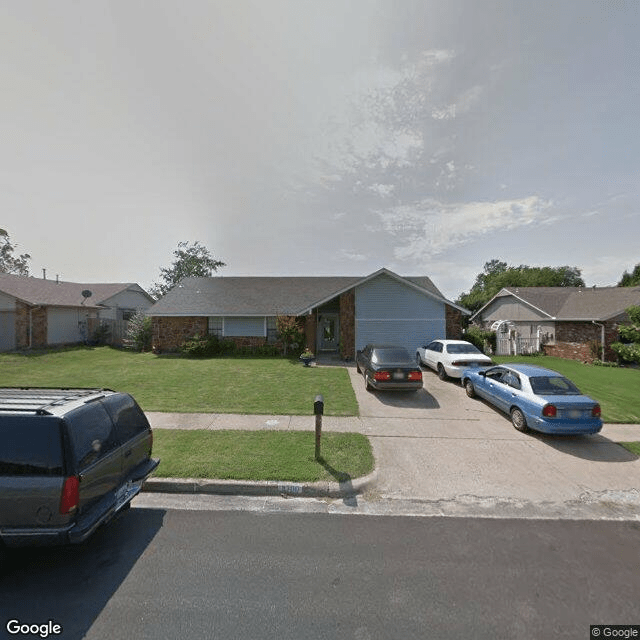
3700 South Sycamore, Broken Arrow, OK 74011
To contact a resident: (918) 451-6848
For more information about senior living options: (866) 208-4318
New Directions Costs & Pricing
New Directions offers competitively priced accommodations, providing both semi-private and private room options that are more affordable than the averages seen in Tulsa County and across Oklahoma. Specifically, the semi-private rooms at New Directions are available for $2,945 per month, significantly lower than the county average of $3,624 and the state average of $4,053. Similarly, private rooms at New Directions are offered at $3,100, again offering substantial savings compared to Tulsa County's average of $3,774 and Oklahoma's overall average of $4,618. This pricing strategy not only ensures accessibility but also reflects New Directions' commitment to delivering quality care without compromising on affordability.
| Floor plans | New Directions | Tulsa County | Oklahoma |
|---|---|---|---|
| Semi-Private | $2,945 | $3,624 | $4,053 |
| Private | $3,100 | $3,774 | $4,618 |
Senior living communities with a similar price nearby
-
from +$155 / mo

Cedarhurst of Woodland Hills
$3,100 to $3,600 / month4.2 miles away -
from +$455 / mo

Harvest Residential Care Home II
$3,400 to $3,700 / month7.9 miles away -
from +$155 / mo

The Linden at Stonehaven Square
$3,100 to $5,800 / month3.1 miles away -
from +$555 / mo
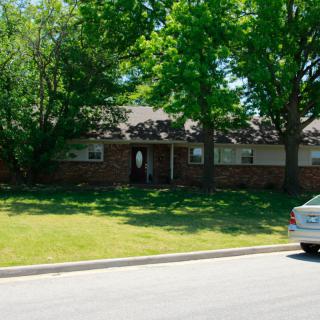
TrustedKare
$3,500 / month6.8 miles away -
from -$136 / mo

Holiday Prairie Rose
$2,809 to $4,159 / month9.5 miles away
Overall Review of New Directions
Pros
 Frank Geis helps people on their journey to healing with his knowledge and experience.
- Frank Geis brings clients to a new understanding of their struggles and how to overcome them.
- He is highly recommended for mental health, addiction, or behavioral issues.
- Frank Geis is a kind and competent Neuroptimal provider.
- The counselors are helpful.
- The facility makes it easy to find a therapist, and the therapy experience is great.
- Neurofeedback can produce rapid changes, with improvements in focus after a few sessions.
- Frank Geis is charismatic and fun to be around, which helps clients feel comfortable in therapy.
- The staff are very nice and provide quality, loving care.
Cons
 The staff could not meet the mom's diabetic needs.
- The facility was more expensive than what they felt it should be.
Review
New Directions in Broken Arrow is best suited for seniors and adults who place a premium on mental health support, therapy, and neurofeedback as the core of their care plan. It functions more as a behavioral health hub than a traditional assisted-living campus, so it shines for individuals who want accessible counseling, skills training, and neurofeedback that targets attention and mood. The setting is clean, welcoming, and staffed by clinicians who communicate clearly and treat concerns with respect. For families navigating cognitive and emotional challenges, this program offers a practical route to steadier days and improved daily functioning, delivered in a focused, supportive environment rather than a generic elder-care atmosphere.
Those whose primary needs involve comprehensive diabetes management, chronic medical care, or the full spectrum of assisted living services should consider alternatives. One family’s experience underscores this gap: the caregivers were kind and competent, but they could not meet Mom’s diabetic requirements, and pricing felt misaligned with what was delivered. In such cases, a community that provides explicit medical oversight, regular meals, and medications administration alongside housing and activities would be a better fit. New Directions excels in therapy, not in medical-intensive living arrangements, so expectations must align with the core offerings.
On the upside, the main advantages stack up decisively for the right profile. Easy access to therapists and helpful counseling staff creates a low-friction path to care, and neurofeedback is described as remarkably effective, with rapid shifts in focus and mood. The testimonials point to Frank Geis as a knowledgeable, charismatic facilitator whose presence makes the process less intimidating and more engaging for those who are new to mental health work. The environment itself reinforces progress: friendly staff, predictable routines, and a sense that care is individualized rather than a one-size-fits-all approach. For families seeking clear, actionable improvement, these are meaningful differentiators.
However, there are clear constraints that cannot be ignored. The facility does not appear equipped to handle diabetic management or other medical requirements at a level typical of assisted living. Cost is another factor; several reviewers described pricing as higher than expected for the facility’s level of medical oversight, raising concerns about value for money if medical care becomes a priority. The absence of integrated, medical-day-to-day living services means families must arrange external medical support, transportation, and nutrition management, increasing the overall coordination burden. These factors limit suitability for seniors needing hands-on daily living assistance.
Yet the positives can offset these limits when care goals center on mental health optimization. For a senior who does not require frequent medical interventions but seeks better cognitive function, reduced anxiety, or mood stabilization, the quality of therapy and the measurable gains in focus can significantly enhance independence and quality of life. The clean, friendly environment, coupled with staff responsiveness, can alleviate caregiver stress and provide peace of mind that emotional health is being actively addressed. In short, the balance tips toward New Directions when behavioral health outcomes are the priority and medical-intensive needs are minimal or already managed elsewhere.
The bottom line is practical and decision-guided: New Directions is a strong choice for families prioritizing mental health services, neurofeedback, and personalized counseling in a supportive, well-run setting. It is not a substitute for a traditional assisted-living arrangement with on-site medical oversight, diabetes management, or comprehensive daily living assistance. To move forward, schedule an on-site assessment, ask pointed questions about care coordination with medical providers, pricing, and what is included in the program versus external services, and compare with communities that offer full living arrangements. If mental health improvement is the primary objective, New Directions deserves close consideration; if medical needs dominate, seek alternatives with robust on-site medical care.
 Board and Care Home
 Private
 Tulsa International (13 miles away)
 Ambulatory care
 Incontinence care






 Urinary Tract Infections in Older Adults: Comprehensive Insights on Symptoms, Treatment, and Prevention
 California's Form 602A: An In-Depth Examination of Senior Care Assessment
 Comprehensive Look at Senior Blood Pressure Charts: Normal and Elevated Levels by Age