
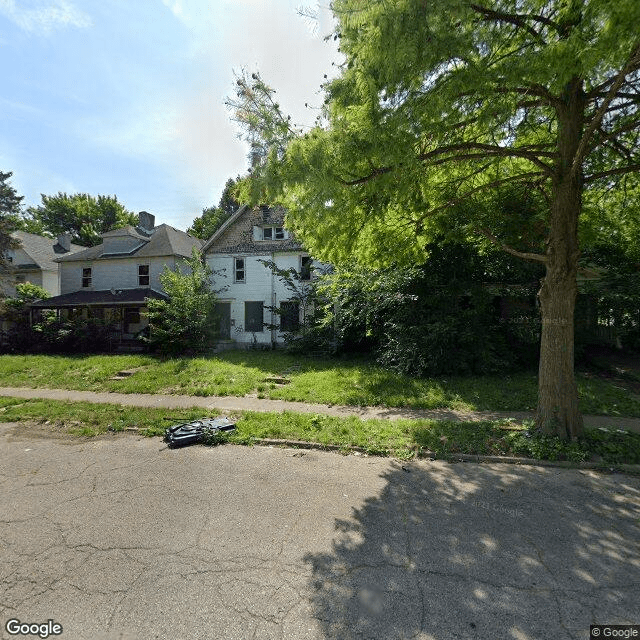
40 Fountain Avenue, Dayton, OH 45405
To contact a resident: (937) 520-1087
For more information about senior living options: (866) 208-4318
Overall Review of House of Refuge
Pros
 Oasis House helped me rekindle and improve the relationship with my kids, they became the family I never had.
- Oasis House is the best place on earth to me!
- The staff and program has helped change my life ! I am so truly grateful !
- Oasis House is the FIRST that I can say truely has been here with me the entire 6 months since I graduated and remain the support to me they were the 2 years I was a resident.
- Oasis House does great work.
- These folks are doing amazing work!
- Wonderful organization. Please support.
- They do God’s work!
Cons
 Oasis House's donor interactions were rude and condescending.
- They would pull people seeking help into a room and tell them they were cheating them, withholding services until Bible study attendance.
- Lies, misrepresentation of the women they help, and misappropriated funds.
- This organization needs a public investigation.
- They will only help you if you go to their Bible study.
- They block people who have had bad experiences on their Facebook page.
- Not sure how they conduct business.
Review
House of Refuge in Dayton is best suited for adults who want a structured, faith-informed recovery environment with long-term aftercare and a community that treats healing as a holistic, relationship-centered process. The program consistently earns praise for compassionate staff, nonjudgmental attitudes, and a framework that helps residents rebuild trust and reenter society. It is especially strong for those who value spiritual support as part of healing and who aim to preserve and strengthen family bonds during and after residency. The most meaningful outcomes cited are rekindled connections with children, a renewed sense of belonging, and the ability to move forward after treatment with ongoing guidance.
Those who should consider alternatives are individuals who insist on a strictly secular approach or who require a governance and operation model with crystal-clear, universally applied policies and donor interactions. Several reviews flag potential friction around religious requirements, with some residents feeling pressured to participate in Bible study as a condition for receiving services. For families seeking transparent fundraising practices, consistent service access without religious prerequisites, or a more secular recovery model, it makes sense to explore other options. Criticisms about how donations are handled and how staff communicate with outside supporters also temper the otherwise strong testimonials.
On the positive side, the core strengths, genuine staff empathy, a welcoming, nonjudgmental climate, and robust aftercare, offer a meaningful offset to the main concerns when the client aligns with the program’s ethos. The ability to stay connected after graduation, sometimes for six months to years, translates into real stability during a vulnerable transition. The program’s culture often helps residents rebuild family ties and feel supported through difficult life events. Volunteers and community engagement further reinforce a sense of belonging that many recovery paths struggle to provide.
However, the most significant caveat centers on religious engagement as a doorway to services. When clients diverge from Christian practices, some reviewers say access to help can feel contingent, or even punitive, if Bible study attendance wanes. This risk of conditional care undermines the program’s inclusive intent for those who are spiritual but not dogmatic, or for nonbelievers seeking straightforward treatment. Related critiques touch on administrative responsiveness and donor relations, including reports of rude interactions or blocked feedback on public platforms. Taken together, these factors can erode trust and complicate the decision for families who prioritize clarity and consistency.
From a practical standpoint, families must weigh the value of sustained aftercare and a forgiving, faith-tinged framework against the possibility of religious gatekeeping and opaque governance. Those who place a premium on personal autonomy in religious matters, or who require a secular recovery environment, should pursue alternatives with explicit policies that protect nonreligious participation and provide transparent fundraising practices. Prospective residents should request a candid discussion about service eligibility, whether Bible study is truly mandatory for access to care, and the exact nature of the aftercare program. Verifying references and seeking out current families’s experiences can illuminate whether the community’s strengths align with individual needs.
In the end, House of Refuge/Oasis House represents a powerful option for a subset of families: those who welcome faith-based support, highly value long-term aftercare, and are prepared to engage with a program that blends spiritual elements with practical recovery work. When the client is comfortable with and embraces that religious dimension, the pros, empathy, community, and enduring guidance, can far outweigh the drawbacks. For others, particularly those seeking secular, fully transparent service access, exploring alternatives with clearer nonreligious policies and cleaner donor conduct is sensible. The right fit hinges on honest conversations about expectations, requirements, and the level of ongoing support desired.
 Board and Care Home
 James M Cox Dayton International (9 miles away)

 Navigating Medicare Coverage for In-Home Care Services
 In-Home Care Costs in 2025: A Detailed State-by-State Exploration
 Understanding Home Health Care: A Comprehensive Guide