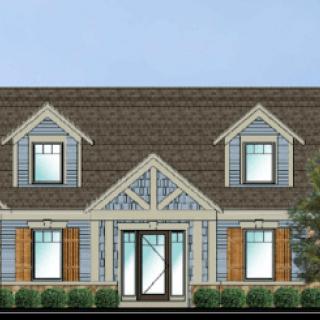


30091 Cedar Road, Mayfield Heights, OH 44124
For more information about senior living options: (866) 208-4318
Cedar Living at Mayfield Heights Costs & Pricing
Cedar Living at Mayfield Heights offers competitive pricing in comparison to broader regional averages, particularly within Cuyahoga County and the state of Ohio. The monthly cost for a semi-private room is $4,950, which notably exceeds the county average of $3,582 and the state average of $3,965. For those seeking more privacy, a studio at Cedar Living is priced at $5,950 - again higher than both the county's $3,632 and Ohio's $3,727 averages. Additionally, residents opting for a one-bedroom accommodation will find it available at $6,950, surpassing the local county rate of $3,410 and the state's figure of $3,712. While Cedar Living may be on the higher end in terms of pricing compared to its counterparts in the area and state, this premium reflects their commitment to quality care and an enriching living environment.
| Floor plans | Cedar Living at Mayfield Heights | Cuyahoga County | Ohio |
|---|---|---|---|
| Semi-Private | $4,950 | $3,582 | $3,965 |
| Studio | $5,950 | $3,632 | $3,727 |
| 1 Bedroom | $6,950 | $3,410 | $3,712 |
Memory care communities with a similar price nearby
-
About the same
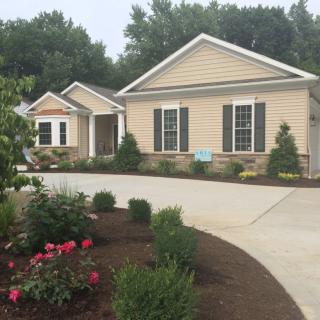
Aria at Gates Mills
$4,950 to $6,950 / month1.6 miles away -
from -$750 / mo
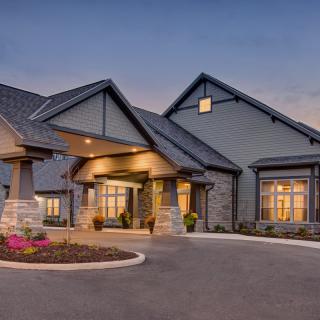
Maplewood At Cuyahoga Falls
$4,200 to $5,500 / month23.9 miles away -
About the same

Maplewood At Chardon
$5,000 / month12.9 miles away -
from -$360 / mo
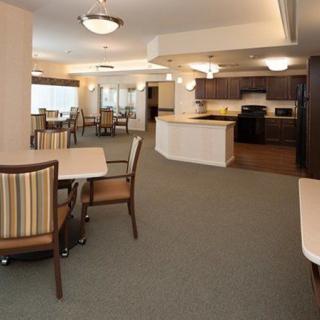
Kemper House Highland Heights
$4,590 to $6,360 / month4.0 miles away -
from -$250 / mo
Windsor Heights Memory Care & Transitional Assisted Living
$4,700 to $5,800 / month4.3 miles away
Overall Review of Cedar Living at Mayfield Heights
Pros
 The staff are kind, attentive, and knowledgeable, taking the time to learn about residents.
- The facilities are clean and comfortable, with activities that keep residents socially engaged.
- Meals are freshly prepared and delicious.
- Derek Hansen helped make the move seamless and reassured the family during the transition.
- Nadia ensures residents’ medical needs are met.
- Cedar Living is described as outstanding, with a happy, caring atmosphere where staff genuinely care about residents.
- The community is small and close-knit, allowing for more individualized attention.
- The staff-to-resident ratio is strong, enabling personalized care and involvement in activities.
- The setting feels home-like rather than institutional, with shared spaces for dining and socializing and proactive staff.
- Families receive updates and photos showing residents happy and well cared for.
Cons
 They did not have enough good things to say about the care her mother received.
- Derek Hansen was not helpful in providing details about the facility or pricing.
- Derek Hansen accused the reviewer of calling to do a market comparison.
- Derek Hansen was insensitive and uncompassionate during a difficult conversation.
- The facility was not upscale for those seeking upscale premises.
- That other facility was not responsive at all.
- The facility was understaffed during the loved one's stay, and laundry and housekeeping were lacking.
- The staff were lazy and rude.
Review
Cedar Living at Mayfield Heights is best suited for families seeking a warm, intimate, non-chain assisted living experience in Mayfield Heights, where residents are treated as individuals within a small, home-like community. With a footprint of roughly 16 residents, the setting feels less institutional and more like a close-knit neighborhood. Caregivers can form real relationships with each resident, and families often participate in gatherings and meals, reinforcing a sense of belonging. The environment rewards familiarity: staff knowledge of routines, personalized attention, and a daily rhythm that makes transitions easier for residents who thrive on predictability and social connection. For older adults who want to be known by name, who value homemade meals, accessible staff, and frequent, direct communication about daily life, Cedar Living provides a compelling fit.
But this community is not for everyone. Families weighing options should consider alternatives if upscale ambiance, expansive amenities, or highly standardized, systems-driven care are priorities. Some reviewers express a desire for clearer pricing transparency and more formalized information about costs, suggesting that pricing conversations can feel opaque or frustrating. Others seek consistently hands-on staffing across all shifts, or worry about the potential for understaffing to affect routine tasks like laundry and housekeeping. For those who equate quality with polish, larger campuses, or the prestige of a national chain, Cedar Living may appear modest by comparison. In short, it’s a strong match for those prioritizing intimacy and personal care, and less so for those chasing a high-rise, resort-like environment or rigid cost structures.
The strongest positives center on people and pace. The staff described by families as kind, attentive, and knowledgeable consistently learn resident preferences, tailor activities, and keep a perceptible pulse on well-being. The small, familiar setting enables high visibility: a cook who helps with more than meals, frequent checks, and ongoing efforts to keep residents engaged. Meals are home-cooked and adaptable to dietary needs, and the activity slate is lively enough to sustain social interaction without feeling crowded. A concrete advantage is the sense that everyone, residents, families, and staff, knows each other well; this creates a supportive, family-like atmosphere where conversations with administrators feel straightforward and responsive. When care goes well, Cedar Living shines as a place where happiness is palpable and daily life feels like a shared family effort.
Yet the experience is not without friction points. The most credible concerns center on staffing consistency and communication around costs. Occasional reports of understaffing suggest that routine tasks can slip, including laundry and housekeeping, which undermines the otherwise strong commitment to resident well-being. A single reviewer flagged staff as “lazy and rude,” signaling that behavior can color perceptions of care quality, especially on tough days. Another voice highlighted pricing conversations as unsatisfying, hinting at a lack of upfront transparency. Taken together, these drawbacks do not negate the genuine warmth and attentiveness described by many families, but they do remind prospective residents to verify staffing levels and obtain a clear, written understanding of all anticipated costs before committing. The offset comes in the form of daily, visible care and a community that visibly treats residents as family members.
Decision-making for families should center on balance and preference. If the aim is a tight-knit, homey environment where staff know each resident by name, where meals are comforting and flexible, and where families can participate in everyday life without feeling like outsiders, Cedar Living is a strong contender. The small size and non-chain ownership matter: they translate into more direct accountability and a culture of personal investment from caregivers. However, if the priority leans toward a highly polished, resort-like setting, or if a fully transparent, easy-to-navigate pricing structure is non-negotiable, then alternatives, especially larger facilities or well-known chains with standardized pricing and broader staffing resources, should be explored. Prospective families should insist on a transparent cost breakdown, request to speak with current residents or families, and tour with questions about daily staffing ratios, medical coordination, and the cadence of routine tasks.
In the final analysis, Cedar Living at Mayfield Heights earns its strongest recommendation for families prioritizing warmth, personal attention, and a genuine sense of community over grandiosity or uniform branding. It is especially well-suited for residents who value a home-like atmosphere where the caregiving staff are visible, engaged, and genuinely invested in happiness and daily quality of life. For those who can tolerate occasional staffing gaps and pricing ambiguities in exchange for intimate care and social vibrancy, Cedar Living operates as a dependable, candid choice with meaningful upside. For families with different priorities, particularly upscale finishes, predictable pricing, or extensive on-site medical resources, alternative options should be pursued with the same diligence that defines the Cedar Living inquiry: tour, question, and compare, then decide with clarity and confidence.
 18 resident community capacity
 Studio apartments
 Assisted Living
 Memory Care
 Dogs allowed
 Activities off-site
 Air-conditioning
 Beautician on-site
 Cable or satellite TV
 Cafe
Cafe Computer center
 Devotional services off-site
 Dining room
 Fully furnished
 Garden
 Ground floor units
 Guest parking
 Handicap accessible
 Housekeeping services
 Indoor common areas
 Laundry
 Move-in coordination
 Outdoor common areas
 Overnight guests
 Respite or short term stays offered
 Security gate
 Telephone
 VA Benefits Consultation
 Wheelchair accessible showers
 Wi-Fi/high-speed internet available
 Cleveland-Hopkins International (21 miles away)
 Transportation & parking
 24-hour supervision
 Assistance with bathing
 Assistance with dressing
 Assistance with transfers
 Companion care
 Diabetes diet
 Diabetic care
 Hospice care
 Incontinence care
 Meal preparation and service
 Medication management
 Physical therapy
 Special dietary restrictions
 Transportation arrangement (medical)
 Art classes
 Book club
 Catholic services
 Cooking classes
 Day trips and outings
 Educational speakers / life long learning
 Games
Games Karaoke
 Live musical performances
 Live well programs
 Wii bowling
 Wine tasting

 Assisted Living and Memory Care: Understanding Their Core Differences
 Choosing the Right Senior Care: A Detailed Exploration of Assisted Living and Nursing Homes
 Safeguarding Your Memory Through the Golden Years: Eight Ways to Preserve Cognitive Health