
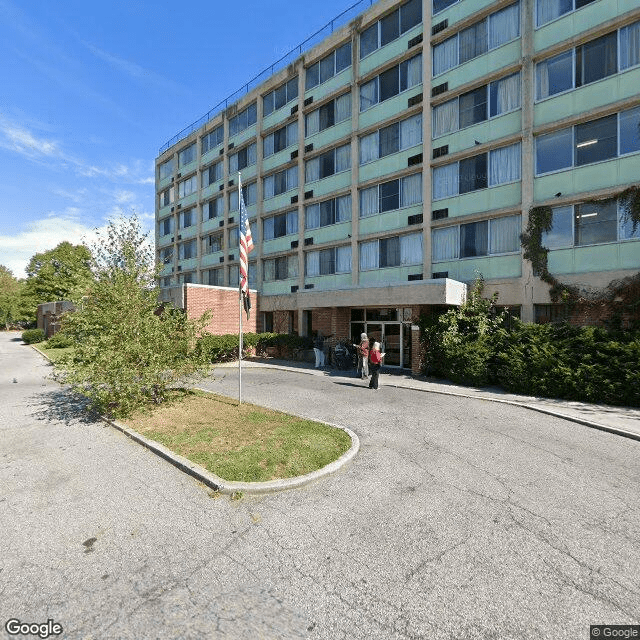
2099 Forest Avenue, Staten Island, NY 10303
For more information about senior living options: (866) 208-4318
Mariners Residence Costs & Pricing
Mariners Residence offers a compelling value for senior living, especially when compared to the average costs in Richmond County and across New York State. For those seeking a semi-private room, Mariners Residence charges $1,150 per month, which is significantly lower than the county average of $3,787 and the state average of $4,389. Similarly, their studio apartments are priced at $1,850 per month - again presenting an attractive alternative to the local rates of $4,514 and statewide figures reaching $4,532. This pricing structure demonstrates Mariners Residence's commitment to providing quality care at a more accessible cost, making it an appealing option for families considering long-term accommodations for loved ones.
| Floor plans | Mariners Residence | Richmond County | New York |
|---|---|---|---|
| Semi-Private | $1,150 | $3,787 | $4,389 |
| Studio | $1,850 | $4,514 | $4,532 |
Assisted Living communities with a similar price nearby
-
from +$163 / mo

Queens Adult Care Center
$1,313 / month16.4 miles away -
from +$125 / mo

The Heritage of Clara Barton
$1,275 to $1,831 / month11.4 miles away -
from +$217 / mo
Lott Community Home Health Care
$1,367 / month16.0 miles away -
from +$85 / mo
Brooklyn Adult Care Center
$1,235 to $4,000 / month15.6 miles away -
from -$150 / mo

Alcott Manor
$1,000 / month24.0 miles away
Overall Review of Mariners Residence
Pros
 The place is fantastic and the service is good.
- The staff are great, friendly, polite, and respectful.
- Ms. Catalina was very helpful and professional.
- The facility provides medical attention seven days a week.
- The rooms are very large and each has its own bathroom.
- The bathrooms are nicely sized.
- Everything is kept spotless on the floors and walls.
- The people take care of the residents well.
Cons
 The facility is described as basically a homeless shelter and should be avoided at all costs.
- Residents are treated poorly, and the nurses are extremely rude and unprofessional.
- The food looks like dog food, and cockroaches were found in meals on multiple occasions.
- The place has a bad odor and is never kept up.
- The staff is mean, with front desk personnel giving residents the worst attitude and showing no compassion.
- A nurse in charge of medications was unprofessional, talking over residents and hanging up on them.
- The building is old, with stained rugs, and there is no central air; air conditioning costs extra.
Review
Mariners Residence in Staten Island is best suited for families operating under a strict budget who still require routine medical oversight and proximity to home. The model here leans toward basic custodial care with some medical elements rather than upscale living or high-intensity clinical services. For households where cost is the sole driver and proximity is important, this community can be a practical option, provided expectations are aligned with what the facility can reliably deliver.
Those who should seriously consider alternatives are families seeking consistently clean facilities, uniformly courteous staff, and high-quality dining. The reviews indicate a pattern of dissatisfaction around care quality, communication, and environment, with some residents appearing to be underserved. If dignity, warmth, and a consistently respectful atmosphere are nonnegotiable, it is wise to look at other options that prioritize staffing stability, resident engagement, and transparent administration.
On the upside, the most tangible benefits relate to cost and access to medical attention. Several reviewers point to affordable pricing and the presence of a nurse overseeing medications, plus aides who handle dispensing and day-to-day care. In situations where a senior requires regular medical touchpoints without premium-tier pricing, these factors can be decisive. The facility’s location also matters for families who want to limit travel time, making routine visits and quick contingencies more manageable.
However, the weight of the cons is substantial and difficult to overlook. Multiple accounts describe the environment as dirty or poorly maintained, with a troubling image of food quality and safety, cockroaches were reported in meals and there is mention of a persistent odor. Staff interactions frequently appear inconsistent or unfriendly, with complaints about rude front-desk behavior and nurses who are unprofessional or not fully attentive to families’ concerns. Administrative responsiveness is described as uneven, and in some cases residents’ distress has gone unaddressed or inadequately handled. The sense from several reviews is that care is driven more by cost constraints than by a culture of compassionate, resident-centered service.
The pros can somewhat offset the cons if the family’s priority is keeping costs down while ensuring a basic medical presence. Acknowledge that medication oversight exists and that some staff members are capable and caring, and that proximity makes visits practical. Still, the risks, unreliable dining quality, potential lapses in courtesy and communication, and a perception of neglect, mean this option should be vetted with rigorous due diligence. Prospective families should request to observe a medication pass, speak with current residents and staff about daily routines, and scrutinize the dining area and kitchen for cleanliness. Access to inspection records and any recent quality improvement plans is also essential.
In the final analysis, Mariners Residence is a practical fit only for families prioritizing budget and local convenience over pristine conditions and consistently exemplary care. If the priority is quality of life, seamless communication, and a consistently respectful environment, alternatives with stronger dining programs, better maintenance, and more stable staff dynamics will likely offer greater peace of mind. Decision-making should hinge on five factors: true total cost of care, cleanliness and safety standards, staff consistency and tone, effectiveness of care coordination (especially medication management), and the transparency of administration. When these are weighed, one can determine whether Mariners Residence meets the family’s non-negotiables or whether another community will deliver a clearer, more reliable path to comfortable aging in place.
 270 resident community capacity
 Assisted Living
 Activities on-site
 Air-conditioning
 Beauty salon
 Cable or satellite TV
 Computer center
 Devotional services off-site
 Dining room
 Fitness room
 Fully furnished
 Gaming room
 Garden
 Housekeeping services
 Indoor common areas
 Kitchenette
 Laundry
 Move-in coordination
 Outdoor space
 Overnight guests
 Private bathrooms
 Resident parking
 Restaurant-style dining
 Security gate
 Small library
 Telephone
 Wellness center
 Wi-Fi/high-speed internet available
 Newark International (5 miles away)
 Community operated transportation
 12-16 hour nursing
 24-hour call system
 Ambulatory care
 Assistance with bathing
 Assistance with dressing
 Assistance with transfers
 Diabetes diet
 Medication management
 Mental wellness program
 Special dietary restrictions
 Concierge services
 Planned day trips
 English






 When to Transition from Assisted Living to Memory Care: Key Indicators, Steps, and Finding the Right Community
 Assisted Living and Memory Care: Understanding Their Core Differences
 Beyond the Bingo Hall: 50+ Enriching Activities for Seniors in Assisted Living