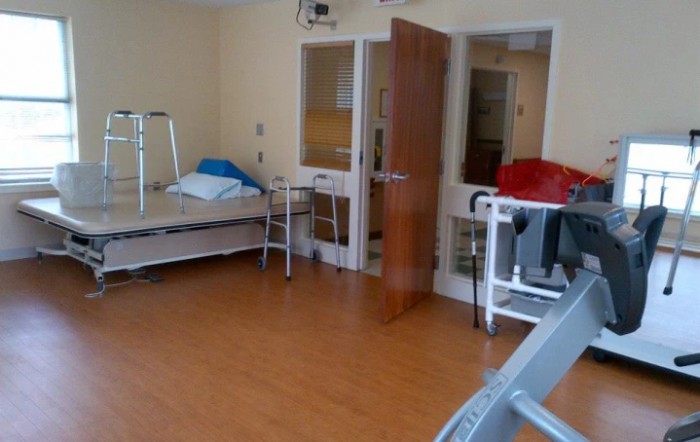
3000 Hilltop Road, Whiting, NJ 08759
For more information about senior living options: (866) 208-4318
Overall Review of Whiting Health Care Center
Pros
 The nursing staff are very good and keep families informed.
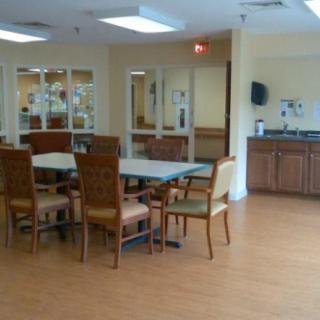
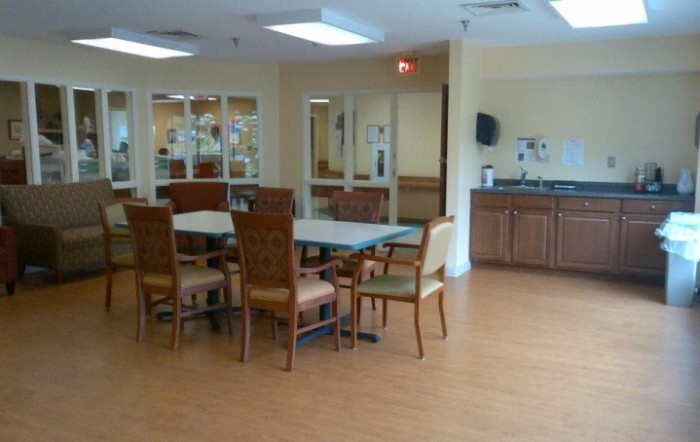
- The facility has a dedicated dining room in a secure, locked-down wing.
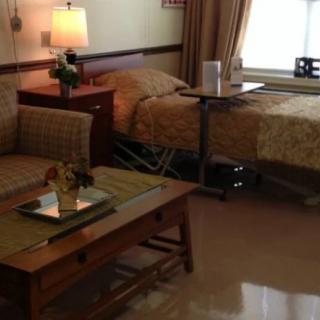
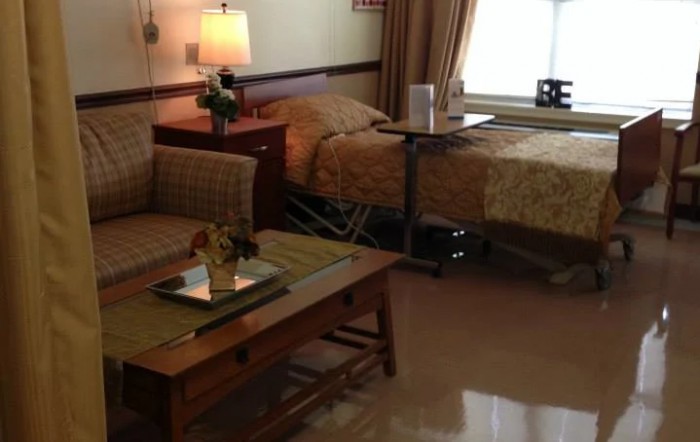
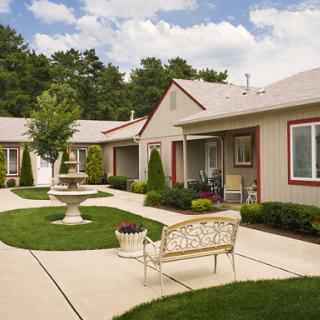
- It offers a library, a salon, and outside patios for residents to enjoy safely.
- There is a weekly schedule of crafts, games, and activities to keep residents active.
- The day care area provides private rooms, a nice dining room, social engagement, and activities like bingo.
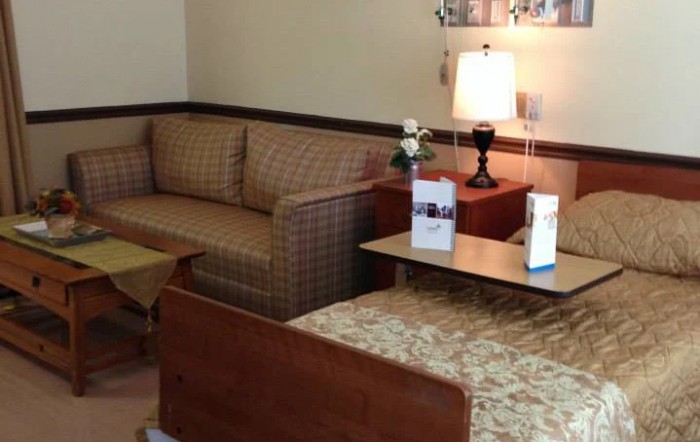
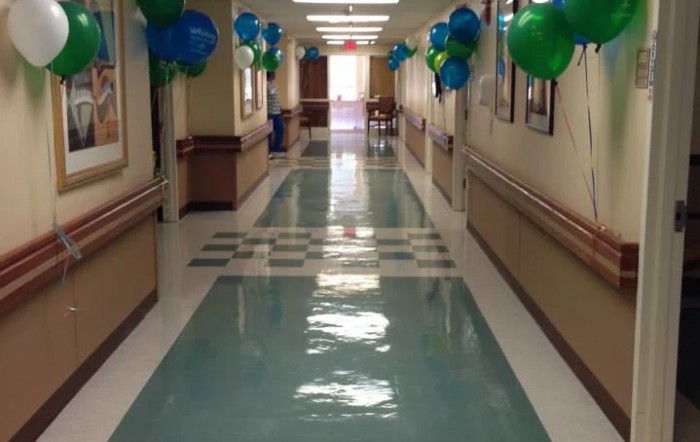
- Whiting Healthcare looks great compared to others, and the staff truly care about residents.
- The staff are described as friendly and nice.
Cons
 Staff took hours to attend to the mother after she needed care.
- The facility was criticized for a low level of care and long waiting times.
- Staff were described as inattentive toward people in need and leaving clients unattended.
- The place was described as very disorganized, with belongings lost from the room.
- The adult day care was called a disaster, with administrator, nurse, and CNA allegedly bullying staff and ignoring clients (abuse).
- Administration was accused of fixing home visit reports and leaving early, and the department described as out of control.
- There were unreported client falls and other abuse concerns, raising safety and oversight issues.
- The reviewer would not recommend the place, would not want loved ones there, and warns that appearances don’t reflect the quality of care.
Review
Whiting Health Care Center is best suited for families facing memory decline in a loved one who can benefit from a secured, dementia-focused environment and who can commit to hands-on oversight. The campus offers a locked wing with its own dining room, plus a library, a salon, and outdoor patios that are accessible yet secure. A steady schedule of crafts, games, and activities is designed to keep residents engaged and oriented. When a caregiver can be on site regularly to monitor care and maintain direct communication with staff, this setting can deliver meaningful daily quality of life for someone in the memory-impaired range. Those who cannot provide that level of daily advocacy should consider alternatives.
On the positive side, the Alzheimer’s unit appears to deliver better nursing attentiveness and clearer communication with families than several other areas of the campus. Family members note that staff in the dementia-restricted space tends to be more engaged, and the dining and activity structure helps residents stay connected to routines that feel familiar. The secure wing and defined programming create a framework that reduces wandering risk and supports predictable days. Yet these strengths do not fully compensate for recurrent, broader concerns about care quality across the facility. Multiple accounts describe slow responses to requests, disorganization, and moments when residents were left waiting or unattended, undermining the trust that families rely on in a care setting.
The adult day-care program, in particular, stands out as a serious red flag. Reviews describe bullying by long-tenured staff, inconsistent accountability, and perceived disregard for resident needs, patterns that would be unacceptable in any respite or day program. Administrators, nurses, and aides are repeatedly cited as failing to enforce policies or to protect clients, even as some aspects of the building, like private dining and certain social activities, receive praise. The disconnect between the more favorable day-to-day scenes reported by some visitors and the darker, persistent concerns raised by others creates a troubling dual image: a place that can feel safe in the memory unit while presenting ongoing danger elsewhere on site if oversight loosens.
Administrative instability compounds the risk. Several reviews document frequent changes in leadership and intermittent on-site presence of administrators, which correlates with inconsistent communication and uneven quality of care. Difficulties obtaining medical records, unclear or inconsistent information about care plans, and perceived inequities in how families are treated contribute to a fragile sense of security. When a facility looks good on the surface but operators struggle to maintain accountability, the risk to a vulnerable resident increases. The net effect is a facility that can disappoint families who expect reliable, transparent governance and predictable responses to concerns.
For families pursuing Whiting, the practical path is to insist on rigorous governance and concrete safeguards. Require a formal, written daily care plan with explicit response times; establish a named liaison for daily updates; and demand in-person reviews with the nursing leadership on a regular schedule. Verify staffing ratios during peak hours, confirm emergency protocols, and insist on complete, timely documentation of any incidents, falls, or changes in medical status. Consider a short-term stay or respite period first to test alignment between promises and actual practice, and map out a clear escalation process if care falls short. In short, this can be a workable option for the right family, but only with disciplined oversight and a readiness to switch courses if conditions do not improve.
Overall, Whiting Health Care Center sits at a crossroads: a secure, activity-rich environment for memory care that can deliver meaningful days for residents who have robust family advocacy, and a setting where ongoing care and administrative reliability remain uncertain. For families able to provide vigilant, daily oversight and to demand consistent staffing and transparent communication, it is a defensible choice. For those who cannot commit to that level of involvement, or who require uniformly proactive, stable administration and flawless coordination, exploring stronger alternatives is prudent. The decision should hinge on the ability to maintain close contact, monitor care in real time, and activate a rapid change if the care trajectory deteriorates.
 21 resident community capacity
 Assisted Living
 Skilled Nursing Facility
 Beauty salon
 Cable or satellite TV
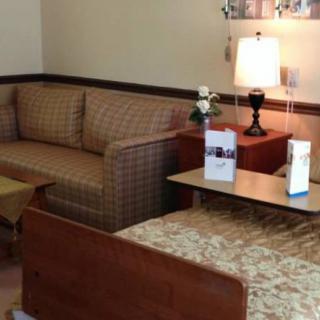
 Dining room
 Fully furnished
 Garden
 Housekeeping services
 Kitchenette
 Move-in coordination
 Outdoor space
 Telephone
 Wi-Fi/high-speed internet available
 24-hour call system
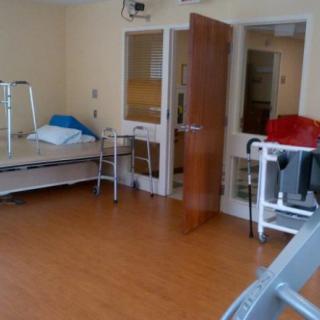
 Activities of daily living assistance
 Assistance with bathing
 Assistance with dressing
 Assistance with transfers
 Diabetes diet
 Meal preparation and service
 Medication management
 Mental wellness program
 Special dietary restrictions
 Transportation arrangement (medical)
 Transportation to doctors appointments

 Understanding the Distinctions: Assisted Living and Memory Care Explained
 Guiding Elderly Parents Who Refuse Assisted Living: 6 Practical Steps
 Your Comprehensive Guide to Luxury Assisted Living: Elevated Facilities, Amenities, and Costs