
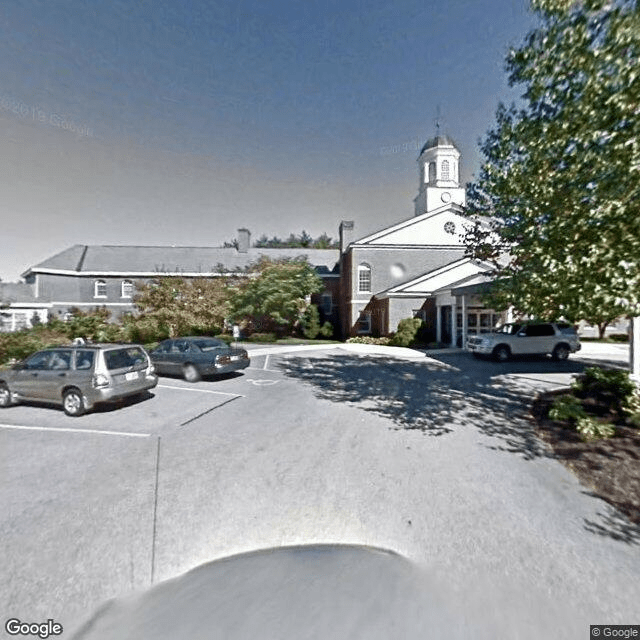
300 Rivermead Road, Peterborough, NH 03458
For more information about senior living options: (866) 208-4318
Overall Review of Rivermead
Pros
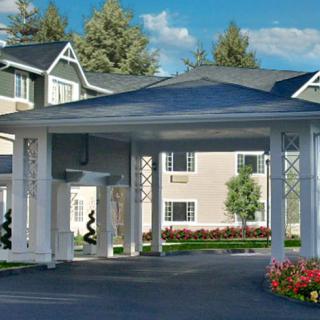
 Rivermead is a lovely place with a beautiful campus.
- The campus is gorgeous and well-kept.
- The staff is very professional.
- The facilities and their communication are excellent.
- Rivermead is brand-new and updated.
- It offers amenities such as bowling, an art gallery, and a library.
- The ambiance inside and outside the buildings is outstanding.
- The food is well prepared, healthy, and has good variety.
Cons
 They found Rivermead’s price excessively high due to an unusual business model that diverts about half of the fees to a health-insurance budget.
- They were concerned by what they saw as hiding the not-for-profit status under a different name, reducing transparency for prospective residents.
- They viewed the overall cost as unjustified given the level of cultural and activities spending, describing it as stingy in that area.
- They criticized the meal plan as inflexible, requiring about 30 meals per month regardless of usage.
- They noted that, despite a luxurious ambiance, the value did not seem to match the high costs for their needs.
Review
Rivermead in Peterborough, NH is best suited for families seeking a high-end, campus-style continuum of care where a loved one can move fairly seamlessly from independent living through assisted living and into memory care within a single community. The appeal rests with a polished, resort-like setting: well-kept cottages and villas, indoor pool, arts facilities, a library, and on-site activities that create a self-contained micro-community. It works best for residents who value a robust social calendar, strong on-site services, and the reassurance of nearby care levels when health needs rise. For someone who wants straightforward, budget-conscious simplicity, this is likely too much and too costly.
Those who should consider alternatives include households prioritizing transparent, straightforward pricing, lean programming, and a simpler living environment. The price point at Rivermead sits at the top of the market for New England retirement campuses, driven by a distinctive financial model that many prospective residents overlook until late in the process. Several reviewers question the lack of clear, upfront disclosure about where the money goes, citing a health-insurance budget component and a broader concern about financial transparency. If clarity and predictability of costs matter, more conventional CCRCs or smaller, less ornate campuses may fit better.
On the upside, the strongest advantages are unmistakable. Rivermead offers a genuine campus vibe with professional staff, easy communication, and a seamless care continuum that provides real flexibility as care needs evolve. Families recount staff who are attentive across nursing, housekeeping, and kitchen teams, along with strong mobility and fitness programming. The physical environment is frequently praised as beautiful and well-maintained, with amenities such as an indoor pool and a variety of housing options that allow couples or multi-generational living within the same community. For families whose loved ones embrace social engagement, Rivermead can become a transformative place.
Yet the main drawbacks do not shrink in the face of appealing amenities. The most persistent concerns orbit around cost and financial structure: the high price for what some perceive as only marginally better offerings than cheaper rural options, and the notion that a substantial portion of fees supports a health-insurance budget rather than core monthly services. Compounding this is a perceived lack of financial transparency, including questions about not-for-profit status and the history of tax filings under an alternate name. Cultural programming and resident-organized events are also critiqued as underfunded for a campus of this scale, with responsibility often shifted to residents rather than the community investing in speakers, performances, or robust arts programming.
A practical decision framework crystallizes around who most benefits here. Rivermead is a strong fit for newer retirees with significant resources who want a luxurious, all-inclusive environment and who anticipate eventually requiring assisted living or memory care without changing communities. It can be particularly suitable for couples seeking separate but proximate living spaces (cottages or villas), coupled with easy access to a comprehensive on-site care team. The experiences of families with loved ones already benefiting from strong social participation and visible health improvements through activity and engagement reinforce the value of this model for the right resident. However, it is not ideal for someone counting every dollar, desiring lean operations, or needing a highly transparent, low-fee pricing structure.
For families navigating a Rivermead decision, the recommended path is disciplined due diligence. Request a granular, year-by-year cost breakdown that clearly delineates what portion funds health services versus daily living, and obtain a current, explicit explanation of any ancillary charges. Seek direct confirmation about accreditation status and recent certifications, and probe the honesty and frequency of financial disclosures. Talk with residents about how often they participate in activities, whether they feel engaged, and how meals align with individual preferences given the rigid “30 meals a month” structure. Finally, visit with the care team in blended settings, independent living, assisted living, and memory care, to observe transitions and ensure the environment aligns with the resident’s values, health trajectory, and tolerance for a high-touch, high-cost lifestyle.
 33 resident community capacity
 Assisted Living
 Activities on-site
 Beauty salon
 Cable or satellite TV
 Devotional services off-site
 Dining room
 Fully furnished
 Garden
 Housekeeping services
 Indoor common areas
 Kitchenette
 Move-in coordination
 Outdoor space
 Restaurant-style dining
 Small library
 Telephone
 Wi-Fi/high-speed internet available
 24-hour call system
 Ambulatory care
 Assistance with bathing
 Assistance with dressing
 Assistance with transfers
 Diabetes diet
 Diabetic care
 Medication management
 Mental wellness program
 Special dietary restrictions


 8 Key Indicators That Suggest It May Be Time to Transition from Assisted Living to Skilled Nursing Care
 Vibrant Senior Living: A Comprehensive Guide for Active Older Adults
 When to Transition from Assisted Living to Memory Care: Key Indicators, Steps, and Finding the Right Community