
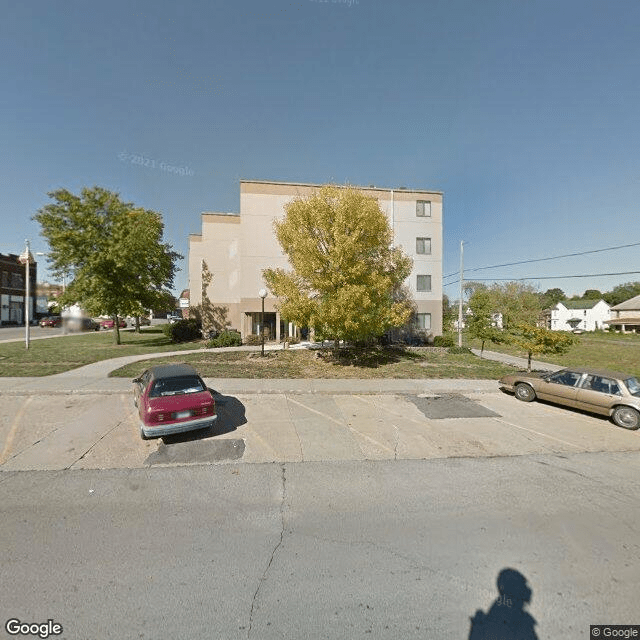
525 Jackson Street, Chillicothe, MO 64601
To contact a resident: (660) 646-0350
For more information about senior living options: (866) 208-4318
The Center Costs & Pricing
The Center offers an appealing monthly cost for its 1-bedroom accommodations at $694, significantly lower than both Livingston County and the broader state of Missouri, where similar options average around $2,344 and $3,349, respectively. This competitive pricing not only makes The Center a financially attractive choice for residents but also reflects its commitment to providing quality living spaces that are accessible within the local market. By positioning itself as a budget-friendly alternative without compromising on service or amenities, The Center stands out as a valuable option for those seeking affordable housing solutions in the area.
| Floor plans | The Center | Livingston County | Missouri |
|---|---|---|---|
| 1 Bedroom | $694 | $2,344 | $3,349 |
Overall Review of The Center
Pros
 The apartments are nice.
- The mother-in-law lived there for a year, and the family was very happy with the place.
Cons
 They allow smoking inside, so the smoke and smoke smells are the strongest in all the common areas.
- The smoke and smoke smells are the strongest in all the common areas.
- They had to buy an air purifier for the apartment.
- It is really hard for people with allergies or sensitivities.
Review
The Center in Chillicothe, MO is best suited for seniors who want a comfortable, apartment-style living arrangement with access to basic assisted-living services, and who are not highly sensitive to indoor tobacco smoke. The apartments themselves are a clear strength, offering a home-like setting that can support independence while still allowing for the daily assistance many families seek. For families prioritizing a straightforward, residential atmosphere over high-end programming, this community provides a practical option where daily life can feel familiar and manageable.
Those considering alternatives should weigh strongly against indoor smoking and odor sensitivity. Individuals with allergies, asthma, or chemical sensitivities are likely to be frustrated by smoke in the common areas and potentially in living spaces, even with air purification. Anyone who requires a strict non-smoking environment or who values minimal odor intrusion as a major factor in comfort should look at communities with explicit non-smoking policies and better air-quality controls. Families seeking extensive medical care coordination or elaborate activity calendars may also find more robust options elsewhere.
The primary positives here are tangible: the apartments are described as nice, offering a solid baseline of comfort and livability. In at least one review, the experience was framed as a year-long success, with a family expressing happiness and satisfaction. That kind of continuity matters for families who want predictable, stable environments where residents can settle in and feel at home. When coupled with a supportive, low-stress setting, these aspects can deliver genuine peace of mind for caretakers who value consistency and a simple lifestyle.
The main drawbacks center on indoor smoking. Allowing smoking inside the building means strong smoke smells can permeate common areas and, in some cases, living spaces, creating a challenge for sensitive individuals. The reviewer’s note about needing an air purifier underscores how significant this issue can be in everyday life. While air purifiers can mitigate odors and improve air quality to some extent, they do not fully eliminate the impact of tobacco smoke, especially in shared spaces and for those with heightened sensitivities.
In weighing the pros against the cons, the apartment quality and the potential for a happy, stable residence can offset smoke-related downsides for a subset of residents, specifically, those who can tolerate or mitigate odors through personal solutions and who do not suffer from serious indoor-air sensitivities. For someone who prioritizes home-like living with accessible support, and who enters with reasonable expectations about odor and air management, The Center can still be a satisfactory choice. The key is a clear-eyed assessment of personal tolerance for smoke in common areas and a willingness to test air quality during a visit.
The practical next steps are decisive. Prospective residents should visit to sample the environment, focusing on odor levels in common areas and the effectiveness of any air-management measures. Ask directly about current smoking policies, whether any non-smoking floors or rooms exist, and how staff respond to odor complaints. Compare the overall feel against other local options that enforce stricter non-smoking rules or provide more aggressive air-quality controls. If choosing The Center, plan for a trial period with visibility into daily routines, and ensure a plan is in place for ongoing allergy or sensitivity management. For families prioritizing smoke-free environments, it will be prudent to explore alternatives that deliver stronger assurances on air quality and a broader range of programming and medical support.
 Active Adult Communities (55+)



 Encouraging Participation in Adult Day Care: A Guide to Supporting a Hesitant Parent
 Comprehensive Exploration of Living Wills and Other Advance Directives
 A Detailed Exploration of Living Wills and Advance Directives