
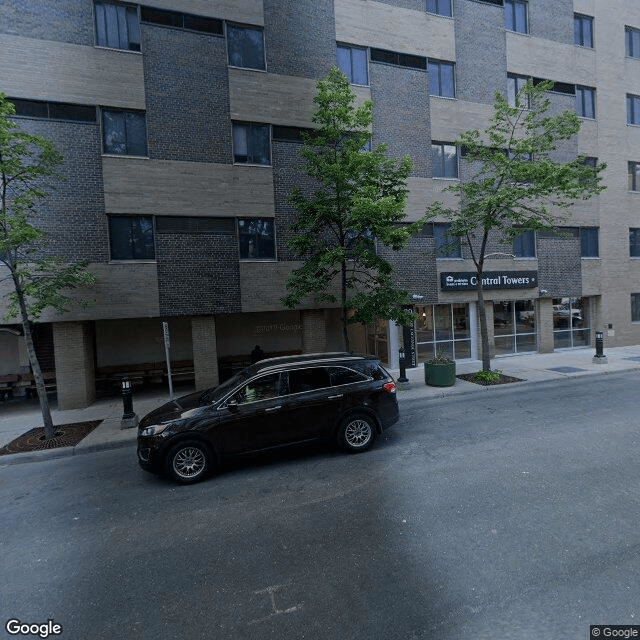
20 Exchange St E, St. Paul, MN 55101
To contact a resident: (651) 215-4600
For more information about senior living options: (866) 208-4318
Overall Review of Central Towers Limited Partner
Pros
 The new manager brings a wealth of experience and is expected to do a lot of good.
- Residents appreciate staff efforts to return lost items.
- The community offers discounted cable, free Wi-Fi, food shelves, a variety of activities, and same-day maintenance.
- The newly remodeled apartments and lobby are beautiful.
- Residents are happy to call Central Towers their home and plan to stay.
- Kirsten and her team provided essential support during the COVID pandemic, including food, supplies, mental and emotional support, and vaccinations.
- Normal services and activities have returned after the pandemic.
- The building is beautifully remodeled with friendly staff, fun outings, and transit connections (St. Paul skyway and green line).
Cons
 Residents are treated as objects.
- There are do-not signs all over the place during tours.
- Wheelchair users face hard-to-open doors when trying to dispose of trash or do laundry.
- Some residents smoke indoors, exposing nonsmokers to secondhand smoke in elevators and hallways.
- Smokers are told to forget coming here.
- Walkers have to walk down the block and across the street in the dead of winter.
Review
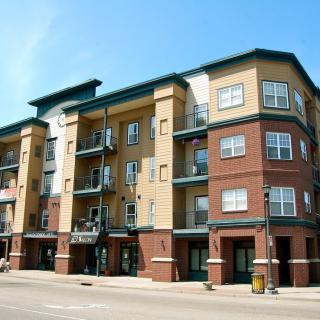
Central Towers Limited Partner in St. Paul is best suited for active, budget-conscious seniors who want an urban, connected lifestyle with built-in social programming and strong transit access. The community shines for residents who value renovated apartments, a walkable campus that ties into the St. Paul skyway, and convenient links to buses and light rail. It is particularly appealing to those who appreciate on-site conveniences, chapel, cafeteria, reception, security, and home care options, and to residents who benefit from cost-saving measures like discounted cable and free Wi‑Fi, plus local food shelves delivered to the building. This is a place where a daily schedule of activities can anchor daily life and where the pride of a remodeled environment is palpable. Those who prize quiet, low-key settings with minimal security presence may want to consider other options.
The current management signal is strong. The new manager brings substantial experience, and long-term residents repeatedly highlight the practical, hands-on leadership that translates into real support. Accounts of staff stepping up during difficult times, keeping residents fed, engaged, and emotionally supported, underscore a team that treats resident welfare as a priority. The evidence of continuity and reliability shows in comments about same-day maintenance, accessible home care, and responsive reception and security staff. This stability matters, especially for seniors who rely on predictable service levels and a responsive team to navigate day-to-day needs.
Yet, the community carries notable caveats that influence decisions. A lineage of concerns centers on how residents are treated and how space is managed. Tour experiences described as rigid or over-regulated, with “do not disturb” cues and locked common areas, raise questions about autonomy and ease of access. Accessibility gaps are also a recurrent theme, doors that are hard to open for wheelchair users and friction between mobility needs and building design. The urban setting magnifies other tensions: a visible security footprint, cameras, and guards that some residents view as essential while others perceive as intrusive. In addition, despite a firm no-smoking policy, secondhand smoke leaks into common areas, and some residents report ongoing challenges with exposure and enforcement. Outside the walls, homelessness in the immediate vicinity adds to safety considerations for prospective residents.
Despite these tensions, the upside often compensates for the drawbacks. The building’s recent remodeling creates a bright, welcoming interior that complements a location advantage, direct access to the skyway and proximity to transit corridors reduces dependence on private vehicles. On-site amenities, cafeteria, chapel, reception services, and a capable maintenance team, deliver practical value, while social programming and outings help sustain an engaged resident community. The no-cost conveniences (cable, Wi-Fi, and food shelves) shrink monthly expenses, and the availability of home care on site provides a degree of care flexibility that can delay or prevent transitions to higher levels of care. The overall atmosphere remains warm and community-centered, with staff praised for attentiveness and reliability.
For those weighing options, alternatives should be considered by anyone who cannot tolerate even sporadic smoke exposure, or who requires a less regulated, more open living environment. Prospective residents who prioritize a completely smoke-free, ultra-accessible layout with minimal security barriers may find other communities better aligned with those standards. Similarly, families seeking a quieter, less urban setting or who want a strictly passive service model may prefer different senior living arrangements. The city-adjacent convenience and security-oriented atmosphere at Central Towers make it a strong fit for many, but not for all lifestyles or health needs.
In the end, Central Towers offers a practical, solution-oriented choice for seniors who want active social life, strong staff support, and affordable on-site services in a transit-rich, remodeled setting. It works best for residents who can tolerate some security infrastructure and occasional access frictions in exchange for hallway-to-skyway connectivity and a robust array of on-site resources. The decisive step is a thorough, purpose-driven tour: verify door accessibility, observe common-area use, discuss the no-smoking enforcement with management, and probe the new leadership’s concrete plans to address accessibility and resident autonomy. With those checks, families can determine whether this community will deliver sustainable independence, security, and companionship, or whether a different setting would better align with priorities and budget.
 Assisted Living
 Independent Living
 Activities on-site
 Devotional services off-site
 Indoor common areas
 Minneapolis-St Paul International (8 miles away)
 Ambulatory care
 Diabetic care
 Meals provided

 An Extensive Exploration of the VA Aid and Attendance Benefit
 Senior Transition Services: Understanding Their Role, Cost, and Importance
 Exploring the Path to Senior Living: A Comprehensive Look at Independent Living and Assisted Living