
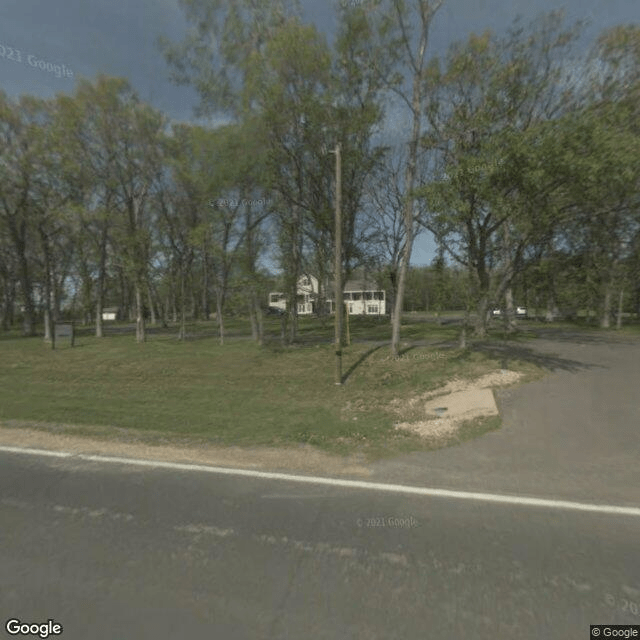
6880 St. Croix Trail, Hastings, MN 55033
To contact a resident: (651) 249-8518
For more information about senior living options: (866) 208-4318
Overall Review of New Challenges Inc Afton
Pros
 The group home is phenomenal and considered the best, with residents very happy.
- The company is outstanding and provides more care and options than before.
- Mohammed has gotten to know the resident and is already making progress.
- The owner cares about helping residents thrive, not just meeting basic needs.
- The staff are considerate, gentle, respectful, and amazing.
- The clients are amazing and positive, and the owner offers fun and enriching activities.
- The owner is readily available by phone, text, or email to assist.
- They provide a 24-hour emergency cell number for immediate response.
Cons
 The reviewer notes that staff abused clients and silenced them, refusing to believe their reports.
- The reviewer notes chronic understaffing, leaving residents to seek outside help.
- The reviewer notes horrible maintenance, staff not meeting residents’ needs, no communication, and a perception of money-driven management.
- The reviewer notes horrible communication, poor services, and unsanitary conditions, and would not trust a family member with the institution; the facility is in litigation.
- The reviewer notes experiences of retaliation, lack of one-on-one time, privacy violations, and resulting PTSD.
- The reviewer advises against moving loved ones into these group homes and says they have been deeply hurt.
Review
New Challenges Inc Afton is best suited for families seeking a small, home-like setting for adults who need daily living assistance but respond well to intimate caregiver relationships. The network of group homes emphasizes personalized attention, flexibility in activities, and a hands-on owner who is reachable by phone or text, rather than a large, impersonal campus. This environment tends to reward residents who benefit from consistent staff interactions, daily routines that can be tailored, and social programming that aims to help individuals thrive rather than simply exist. For someone who values caregiver continuity, clear daily engagement, and a setting that can adapt quickly to changing needs, this option offers real, tangible benefits.
Those who may want to consider alternatives are families prioritizing uniform quality control and formal oversight. The reviews reveal a wide variance in experiences across homes, with some residents reporting excellent care and others recounting abuse, neglect, or sanitation issues. Where a family requires consistently high staffing ratios, rigorous monitoring, and responses measured against regulatory standards, a larger, centrally managed facility or a licensed memory-care community with documented accreditation may provide more predictable safeguards. Potential residents with complex medical needs who require regular skilled nursing interventions could also outgrow a home-like setting in favor of an environment with on-site licensed clinicians and standardized protocols.
On the positive side, the strongest recurring strengths are the caregiver relationships and the owner’s hands-on involvement. Families repeatedly credit staff who know residents by name, recognize quirks, and tailor activities and routines to individual interests. The ability to access an emergency contact line around the clock is seen as a meaningful safety net, and the emphasis on enrichment, social outings, purposeful programming, and opportunities to thrive, sets this option apart from facilities that default to minimal engagement. In the most favorable cases, families describe progress that outpaces what was possible in prior placements, with care providers who seem genuinely invested in residents’ well-being rather than merely meeting basic needs.
Yet a number of reviews pull sharply in the opposite direction. Accounts of perceived abuse, poor communication, and unsanitary conditions cannot be dismissed and raise serious red flags for any family evaluating this network. Reports of ongoing staffing shortages and residents sometimes needing to seek outside help speak to fragility in operations that, if true across multiple homes, undermine the reliability of daily care. Some comments describe financial motives overshadowing resident welfare, and there are references to litigation and long-standing dissatisfaction. Taken together, these criticisms suggest a landscape where outcomes vary substantially from one residence to the next and where due diligence is essential before committing.
How the strong points stack against the drawbacks comes down to disciplined selection and ongoing oversight. The best-fit scenario is a family that can visit multiple homes, meet the front-line caregivers, and verify staffing levels, meal quality, and sanitation practices in person. The owner’s apparent accessibility is a meaningful advantage, provided it translates into consistent problem-solving rather than episodic responsiveness. If the community can show stable staffing, transparent communication channels, and evidence of ongoing quality improvements, such as documented changes within recent months, the positives can indeed offset the most troubling concerns. Prospective residents should demand clear care plans, regular progress updates, and a definitive escalation path if concerns arise.
In sum, New Challenges Inc Afton represents a practical option for families who prize a home-like atmosphere, the opportunity for real staff-resident bonds, and a management team willing to stay involved with daily care. It is well worth considering for residents who can accept some variability and who are prepared to actively supervise placement, including visiting the home, asking hard questions, and seeking references. For families whose priority criteria include ironclad safety, uniform care standards, or comprehensive medical oversight, alternatives, such as larger assisted living campuses or licensed facilities with uniform metrics, are advisable. The path to a sound decision lies in a thorough, disciplined comparison, anchored by direct site visits, concrete operational metrics, and a clear contingency plan should expectations not align with reality.
 Board and Care Home
 Private
 Private bathrooms
 Minneapolis-St Paul International (21 miles away)
 Diabetic care
 High acuity care




 9 Stimulating Memory Activities for Seniors: Puzzles, Cards, and Much More
 Managing Nursing Home Expenses After Medicare Coverage Ends
 Is a Geriatric Care Manager the Right Choice for Your Family?