
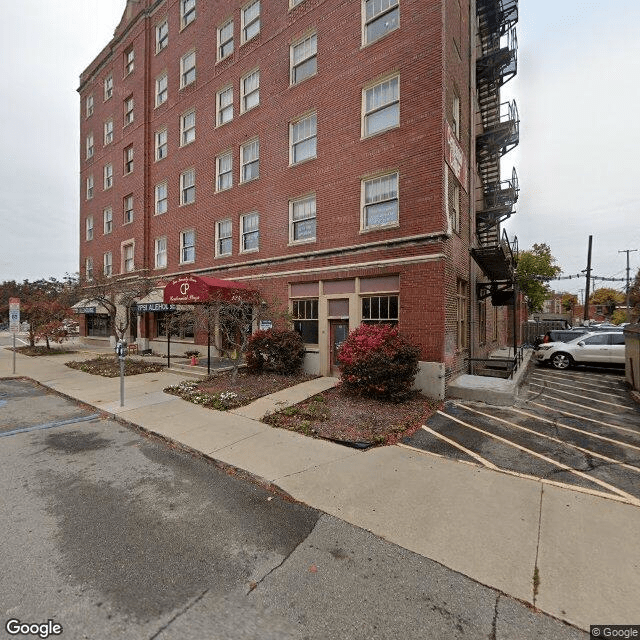
124 Pearl St. Suite 203, Ypsilanti, MI 48197
To contact a resident: (734) 739-2273
For more information about senior living options: (866) 208-4318
Overall Review of Comforcare Home Care of Washtenaw/ Downriver
Pros
 Bill and Kelly are great people.
- They consistently go above and beyond the call of duty and care deeply for their clients.
- They and their staff are proactive, resourceful, and focused on continuously improving their loved ones’ quality of life.
- They feel like family to their clients, hiring exceptional caregivers and ensuring continuity of care.
- They are accessible and engaged nearly 24/7, responding with patience and understanding.
- They are professional yet personable, easy to reach, and provide clear answers to questions.
- Their service gives families comfort and peace of mind, especially during challenging times like the pandemic.
Review
This community is best suited for families who want to preserve independence for a loved one by keeping them at home with a relentlessly attentive, highly reliable in-home care team. The model shines when a person values continuity, quick responsiveness, and a care partner who treats daily life as something to optimize rather than endure. It works especially well for households where one or both adult children live out of town but still need trustworthy oversight, seamless communication, and hands-on support that stays with the client through evolving health and cognitive changes. The owners, Bill and Kelly, position the service as an extension of family care, with a team that shows up with both practical know-how and genuine warmth.
Those who may want to consider alternatives include seniors who require constant medical supervision or a memory-care environment with formal, on-site nursing and a structured daily program. If a structured campus setting with built-in social programming, transportation, and round-the-clock clinical oversight is a priority, an assisted living facility or a memory-care wing may deliver more of what some families expect. Additionally, if the expectation is a predictable, fixed schedule with a large, rotating staff rather than a closely matched, continuity-driven team, that preference should guide a different choice. In short, for families seeking a hospital-like cadence or extensive on-site medical staffing, alternatives deserve serious consideration.
The strongest positives here are unmistakable and substantial. The care team demonstrates extraordinary empathy and practical initiative, consistently going “above and beyond” to make small moments meaningful and to stabilize life during rapid changes in mental or physical health. Caregivers are matched thoughtfully to the client, with insights shared at shift changes to preserve continuity. The model supports a loved one aging in place by scaling from respite care to around-the-clock hours as needs grow, without friction. Accessibility is real, care teams are reachable and responsive, coordinating with family members who live far away and handling emergencies with composure. The personal touch extends to everyday acts of thoughtfulness, reinforced by the owners’ hands-on involvement and a culture that treats the client as part of the family.
Those strong advantages offset several potential drawbacks that often accompany in-home care. While there is no on-site medical director or a fixed campus infrastructure, the owners’ proactive management and careful caregiver screening deliver consistency and quality that many families seek in a non-facility model. The reviews repeatedly emphasize reliability, transparency, and a willingness to accommodate burdensome requests, with extras and good will not appearing on the bill. That combination, high-caliber caregiving aligned with flexible, patient-centered problem solving, tends to counterbalance concerns about limited clinical oversight and the absence of a traditional community calendar. In short, the value lies in trusted relationships, rapid problem resolution, and a willingness to adapt rather than in a fixed, institutional setting.
To make a well-informed decision, families should probe three practical areas. First, verify the caregiving model: how caregiver matching works, who supervises shifts, and what red flags trigger escalation. Second, outline a concrete care plan for both respite and potential full-time needs, including emergency transport, medication management, and cognitive support strategies, so no surprise gaps appear. Third, obtain a transparent view of cost, how billing aligns with services rendered, what is included versus extra, and whether there is flexibility for seasonal or crisis scenarios. Request current references, and if possible, arrange for a short trial period to observe team cohesion, communication clarity, and the ease of coordinating with out-of-area family members.
Bottom line: this community stands out for families seeking an exceptionally warm, responsive, home-based care partnership that treats a loved one like family and can scale care up or down with remarkable agility. The combination of Bill and Kelly’s leadership, careful caregiver matching, and a culture of proactive problem-solving makes it a compelling choice for aging in place with dignity, especially when personal attention and continuity outweigh the benefits of a larger, clinical facility. It is the right fit for those prioritizing intimate supervision, flexible hours, and a trusted team that will shoulder burdens with grace. It may not be the best fit for families needing a formal nursing presence on-site or a highly structured social program within a campus setting.
 Detroit Metropolitan-Wayne County (14 miles away)



 Caring for Those Who Care: Recognizing, Understanding, and Overcoming Caregiver Burnout
 Caregiver Exhaustion: Recognizing the Signs and Restoring Your Well-Being
 Understanding Hospice Care at Home: Comprehensive Services, Key Benefits, and Eligibility