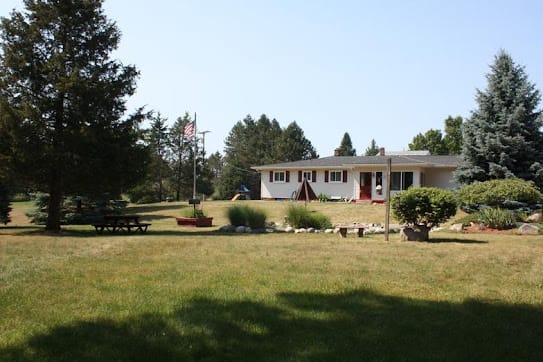

651 State Park Rd, Ortonville, MI 48462
To contact a resident: (248) 627-3858
For more information about senior living options: (866) 208-4318
Caremore of Ortonville Costs & Pricing
Caremore of Ortonville offers competitive pricing for its services, particularly when compared to the broader market in Oakland County and the state of Michigan. For a semi-private room, Caremore's monthly cost is $2,800, which is significantly lower than the county average of $3,204 and just slightly below the state average of $3,191. This represents a considerable savings for individuals seeking affordable care options. Moreover, the facility's studio apartments are priced at $3,500 per month - still more economical than the Oakland County average of $4,577 and below Michigan's overall average of $3,824. These cost-effective rates make Caremore of Ortonville an appealing choice for families looking for quality care without compromising their financial stability.
| Floor plans | Caremore of Ortonville | Oakland County | Michigan |
|---|---|---|---|
| Semi-Private | $2,800 | $3,204 | $3,189 |
| Studio | $3,500 | $4,577 | $3,824 |
Memory care communities with a similar price nearby
-
from +$400 / mo
Vicky's Place
$3,200 to $6,000 / month24.9 miles away -
from +$200 / mo
Butternut Hill Senior Living
$3,000 to $4,000 / month23.7 miles away -
from +$100 / mo

Metacare Inc
$2,900 to $3,300 / month9.0 miles away -
from -$295 / mo

Devonshire Retirement Village
$2,505 to $4,500 / month13.5 miles away -
from +$200 / mo

Vicinia Gardens Transition
$3,000 to $4,500 / month13.9 miles away
Overall Review of Caremore of Ortonville
Pros
 Some staff are nice.
- The goats are a positive feature of the place.
- The staff are great.
- She is safe and receiving extremely good care.
- The home is very well-kept.
- The care home is highly recommended.
Cons
 They don’t feed residents well.
- Residents go hungry.
- Some residents are mean.
- The manager is too bossy and really mean.
- They are not allowed to leave.
Review
This community is best suited for families seeking a small, home-like atmosphere where safety, cleanliness, and attentive caregiving are the core priorities. It works best for residents who require steady supervision and a consistent, structured routine, with a strong emphasis on staff involvement in daily care. For families that prize a well-kept living environment and a calm, secure setting where the care team takes personal responsibility for resident well-being, this location offers a compelling fit.
Those who may want to consider alternatives include families who place a premium on dining experiences and social dining, or who expect greater resident autonomy and freedom to come and go. If gourmet meals, a highly social atmosphere, or a liberal leave policy are non-negotiables, this community may fall short. Additionally, potential residents who are sensitive to managerial style or who favor a more relaxed, less directive leadership approach might prefer other options with a different care culture.
The strongest positives here, courtesy care staff, high safety standards, and a consistently clean, well-maintained environment, are meaningful counterweights to the concerns raised in the less favorable experiences. When staff are perceived as supportive and genuinely involved, residents can thrive, and families frequently report reassuring levels of oversight and dependable day-to-day care. The sense of security and the home’s tidiness contribute to peace of mind for families navigating transitions, and the presence of long-tenured or highly engaged caregivers can translate into reliable routines and responsive attention to evolving needs. In that context, a resident who values routine, predictable care, and a calm setting can experience meaningful gains.
However, not all encounters are uniformly favorable, and the drawbacks matter in decision-making. Meal quality and dining satisfaction appear to be inconsistent, with some residents going hungry or feeling dissatisfied at mealtimes. Social dynamics can be strained when interpersonal friction arises among residents, and a manager who comes across as overly controlling may color the overall experience. The ability to leave the facility is described as restricted, which directly impacts independence and could be a decisive factor for more active, socially engaged individuals. These factors do not erase the benefits of good care and a clean environment, but they do limit the community’s appeal for residents who prize freedom and culinary enjoyment as much as safety.
To make a well-informed choice, prioritize a focused tour and candid conversations about the major levers of resident satisfaction: the meals program, meal accommodations for special diets, and the degree of autonomy residents actually have. Ask to meet frontline caregivers and the supervisor or administrator to gauge management style and responsiveness. Inquire about typical staff-to-resident ratios, turnover, and how care plans are updated as needs shift. Request to speak with current residents or families about daily life, social opportunities, and how concerns are handled. If possible, arrange a short trial stay to observe the cadence of care, the dining experience, and the consistency of staff interactions over several days.
Bottom line: Caremore of Ortonville delivers a solid, safety-forward living option anchored in a clean, well-kept setting and attentive caregiving. It excels for families prioritizing consistent care and a secure, calm home environment. For those whose chief concerns are rich dining, resident independence, and a highly flexible schedule, it pays to explore alternatives and compare dining quality, autonomy, and social vitality. When the priority is dependable daily care wrapped in a trustworthy, orderly home, this community is a credible, practical choice, provided tours and conversations confirm that the dining and autonomy expectations align with resident needs.
 Assisted Living
 Memory Care
 Activities on-site
 Devotional services off-site
 Indoor common areas
 Bishop (16 miles away)
 Ambulatory care
 Diabetic care
 Meals provided





 Nourishing the Mind: Essential Dietary Approaches for Dementia
 Understanding Dementia Behaviors: Practical Insights and Strategies for Caregivers
 When Dementia Sparks Anger and Aggression: Understanding the Connection and Ways to Cope