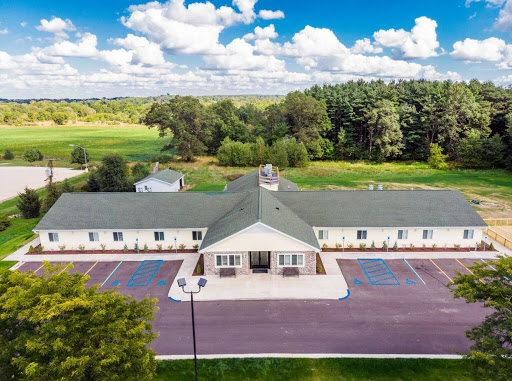
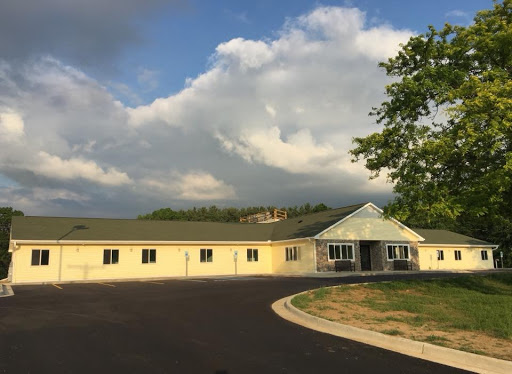
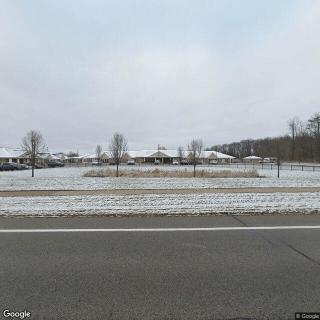
4887 Hull Road, Leslie, MI 49251
For more information about senior living options: (866) 208-4318
Divine Nest Assisted Living Costs & Pricing
At Divine Nest Assisted Living, the monthly cost for a studio apartment is set at $3,700. When comparing this figure to the broader market, it stands slightly above the average for Jackson County, where similar accommodations typically range around $3,195. However, Divine Nest's pricing remains competitive when viewed in the context of state averages across Michigan, which hover around $3,824. This positioning reflects Divine Nest's commitment to providing quality care and amenities that justify its pricing, ensuring residents receive a supportive and enriching environment tailored to their needs.
| Floor plans | Divine Nest Assisted Living | Jackson County | Michigan |
|---|---|---|---|
| Studio | $3,700 | $3,195 | $3,824 |
Memory care communities with a similar price nearby
-
About the same

Legacy Assisted Living and Legacy Alzheimer's
$3,720 to $4,020 / month13.0 miles away -
from -$500 / mo

Safe Haven Assisted Living
$3,200 to $4,200 / month17.0 miles away -
About the same

Summit Park Assisted Living Center
$3,645 to $4,245 / month15.7 miles away -
from +$550 / mo
Sensations Memory Care Residence
$4,250 to $5,000 / month21.2 miles away -
from +$630 / mo

Island City Assisted Living
$4,330 to $6,455 / month11.5 miles away
Overall Review of Divine Nest Assisted Living
Pros
 The staff take excellent care of residents and ensure they are clean and well dressed.
- The food at Divine Nest is wonderful.
- The environment feels like home for the residents.
- Nina, the manager, keeps families informed and on top of residents' medical needs.
- Divine Nest is a blessing for families, providing a safe and nurturing home where residents can socialize.
- The facility is consistently clean and the caregivers are enthusiastic.
- The management is proactive and helpful, making Divine Nest a marvelous place.
- Families highly recommend Divine Nest to others.
Cons
 There were staffing issues at Divine Nest, though a new manager has been improving things.
 - The facility is expensive, there is no medical staff on site, rooms are small, and meals/activities are limited.
- It was seen as not broad enough socially compared to other places toured.
- There are not many activities available, especially due to Covid.
- One resident disliked profanity from staff and had some difficulty with staff on that issue.
Review
Divine Nest Assisted Living in Leslie, Michigan is best suited for couples and individuals who want a distinctly intimate, home-like setting where daily care feels personalized and families stay closely informed. The community’s small size, roughly 20 residents, creates a cadence and attention that many families crave: consistent updates, direct access to leadership, and staffing that can respond without delay. It’s a good fit for residents who value warmth, clean surroundings, and meals that friends and family would happily share, all delivered in a setting that doesn’t feel like a generic institution.
Those weighing alternatives should consider options that emphasize breadth over intimacy. If the priority is a broad social calendar, extensive on-site medical staffing, or a campus with more resources and activities to fill a full day, a larger or more resource-rich community may be a better match. Divine Nest has shown superb strength in caring for residents in a small, manageable environment, but families who want expansive programming, robust on-site clinical services, or a wider array of social opportunities should compare other campuses carefully before deciding.
The strongest argument for Divine Nest rests on the staff’s commitment and the way care is delivered day to day. Families consistently report that caregivers are deeply caring, respectful, and attentive to both residents and family members. The smaller community allows staff to learn individual preferences and routines, which translates into meaningful consistency, clean clothes, well-groomed residents, and a level of reassurance that comes from knowing the caregivers’ names and approaches. The kitchen earns frequent praise as well, with residents enjoying meals that feel satisfying and home-cooked rather than institutional. Families highlight how staff maintain open lines of communication, with managers who stay on top of medical needs and who are accessible when questions arise.
Another compelling pro is the sense of companionship and continuity the setting affords. The ability for spouses or loved ones to stay near each other, rooms placed in proximity or adjacent, helps preserve important emotional connections during transitions into assisted living. Residents tend to form relationships quickly, participate in simple, hands-on activities, and experience a social life that remains intimate rather than overwhelming. The facility’s leadership is described as proactive and personally involved, which translates into a culture where families feel supported not just in care decisions but in emotional and practical aspects of caregiving, including end-of-life moments.
Yet, several caveats deserve emphasis. Staffing is not without bumps; while recent leadership changes have yielded noticeable improvements, families should verify current staffing levels and per-shift coverage. The on-site medical staffing is not as robust as in larger communities, which matters for residents who require more frequent nursing oversight or physician access. Rooms tend to be smaller, a trade-off that comes with the intimate setting but may be limiting for families seeking larger, more private living spaces. Activities, while meaningful and well-structured, can feel limited compared with bigger campuses, potentially reducing opportunities for residents who thrive on a wider social calendar.
In weighing the pros against the cons, Divine Nest delivers a compelling blend of warmth, attentiveness, and family-friendly governance that can offset most drawbacks for the right resident. The small-scale environment, paired with highly involved ownership and a communicative director, often results in a sense of security and belonging that larger facilities struggle to match. For families prioritizing measurable personal attention, a home-like routine, and easy access to leadership, this community can be a near-ideal match. For those who require extensive on-site medical resources, a louder social milieu, or more economical options, alternatives should be explored with a clear sense of what would be sacrificed or gained.
Bottom line: Divine Nest Assisted Living is a standout choice for couples and individuals who value intimate care, ongoing family communication, and a warm, home-like atmosphere in a small-town setting. It is less well-suited for those chasing a broad social scene, extensive medical staffing, or budget-driven affordability. Families should visit with a list of priorities, room size, activity level, medical oversight, and cost, and observe how well the staff respond to questions and concerns in real time. If alignment is found, Divine Nest often earns praise that persists long after the initial move, with families noting the facility as a genuine, trusted partner in caregiving.
 20 resident community capacity
 Assisted Living
 Memory Care
 Cats allowed
 Activities on-site
 Air-conditioning
 Beautician on-site
 Cable or satellite TV
 Dining room
 Fully furnished
 Garden
 Handicap accessible
 Housekeeping services
 Indoor common areas
 Kitchenette
 Move-in coordination
 Outdoor common areas
 Respite or short term stays offered
 Telephone
 Wi-Fi/high-speed internet available
 Capital City (25 miles away)
 24-hour call system
 Assistance with bathing
 Assistance with dressing
 Assistance with transfers
 Diabetes diet
 Diabetic care
 Incontinence care
 Meal preparation and service
 Medication management
 Mental wellness program
 Special dietary restrictions
 Transportation arrangement (medical)
 Transportation to doctors appointments
 Art classes
 BBQs or picnics
 Birthday parties
 Live dance or theater performances
 Live musical performances
 Pet-focused programs
 Visiting chaplain or priest
 Wii bowling


 Comprehensive Insights on the Late Stages of Dementia: What to Expect and How to Provide Care
 Medications Associated with Dementia Risk: A Comprehensive Overview
 Guiding Your Journey: Understanding Power of Attorney for Elderly Parents