For more information about senior living options: (866) 208-4318
4 from 54 reviews
5 stars
29
4 stars
12
3 stars
6
2 stars
0
1 stars
7
Heritage Community of Kalamazoo Costs & Pricing
Heritage Community of Kalamazoo offers a range of living options that reflect competitive pricing within the local and state market. For instance, the monthly cost for a one-bedroom apartment is set at $3,000, which is slightly below the average for Kalamazoo County at $2,890 but remains lower than the statewide average of $3,384. The semi-private room option costs $3,300, positioning it just below the county's average of $3,435 while sitting above Michigan's overall average of $3,191. For those seeking more privacy, the private room option is priced at $3,960 - marginally higher than both county and state averages. Lastly, the studio apartments are offered at $4,290, which is notably below Kalamazoo County's average of $4,565 but exceeds Michigan's typical cost of $3,824. Overall, Heritage Community provides a blend of affordability and quality in its offerings relative to regional and state benchmarks.
Floor plans
Heritage Community of Kalamazoo
Kalamazoo County
Michigan
1 Bedroom
$3,000
$2,890
$3,384
Semi-Private
$3,300
$3,435
$3,189
Private
$3,960
$3,859
$3,674
Studio
$4,290
$4,565
$3,824
Assisted Living communities with a similar price nearby
The community is described as offering multiple care levels in one place.
Multiple reviewers say Heritage supports a progression of care needs without forcing a move to a different facility. One family describes a smooth continuum from assisted living into memory care and then skilled nursing, and another says they chose it specifically because higher levels could be met on campus. Reviews also describe that residents are cared for across independent living, assisted living, Alzheimer’s/dementia units, and skilled nursing as needs change.
common14 reviews mention this
Staff support and follow-through
Residents and families frequently describe staff who are caring and attentive.
A recurring theme is the way staff members show up for residents day to day. Several reviewers highlight professionalism, friendliness, and genuine concern, including feeling comfortable leaving a loved one in their care. At the same time, a smaller set of reviews raise concerns about neglect, rude behavior, and responsiveness gaps, including being short-staffed or taking too long to address issues.
common7 reviews mention this
Activities and social engagement
Activities and social options are a frequent point of praise.
Reviews repeatedly mention social programs, scheduled activities, and the sense that residents have things to do. Families describe book clubs, exercise classes, concerts and games, and a variety that supports different comfort levels. One reviewer also points to the planning role of a life enrichment coordinator and ongoing individualized attention for dementia neighbors.
common6 reviews mention this
Dining is frequently singled out
Food and dining experiences come up often in reviews.
Several reviewers talk positively about meals and dining setup, including food they describe as delicious and satisfying. Some mention restaurant-style dining where residents can eat in the dining room, while another describes room dining options as well. A few reviews still include negative experiences related to food care needs in memory care settings, such as battles over the form of prepared meals.
caveat4 reviews mention this
Cleanliness and maintenance vary
Some reviews praise cleanliness, while others report upkeep issues.
A number of reviewers describe the facility as clean, organized, and well-kept, including avoiding odors and feeling confident about sanitation. Others are disappointed with maintenance and upkeep, describing areas that didn’t look refreshed and screens or outdoor access problems that made things harder for residents. Overall, residents’ and families’ experiences on cleanliness and maintenance appear mixed rather than consistently uniform.
How we summarize
Counts show how many written reviews mention each theme; a review can touch several themes, and only frequently mentioned themes are displayed.
Features
Housing
22 resident community capacity
Types of Care
Assisted Living
Continuing Care Retirement Community (CCRC)
Independent Living
Memory Care
Skilled Nursing Facility
Amenities
Beauty salon
Cable or satellite TV
Fully furnished
Garden
Housekeeping services
Kitchenette
Move-in coordination
Outdoor space
Private bathrooms
Wi-Fi/high-speed internet available
Transportation
Kalamazoo County (2 miles away)
Community operated transportation
Transportation arrangement
Transportation arrangement (non-medical)
Care Services
24-hour call system
24-hour supervision
Activities of daily living assistance
Assistance with bathing
Assistance with dressing
Assistance with transfers
Diabetes diet
Meal preparation and service
Medication management
Special dietary restrictions
Dining
Diabetes diet
Special dietary restrictions
Activities
Community-sponsored activities
Fitness programs
Resident-run activities
Scheduled daily activities
Nearby Places of Interest
Restaurants
Burger King (1 miles)
Jimmy John's (1.1 miles)
Taco Bell (1.1 miles)
McDonald's (1.1 miles)
One Well Brewing (1.4 miles)
Blue Dolphin (1.6 miles)
Root Beer Stand (1.7 miles)
Pharmacies
Walgreens (1 miles)
Midtown Market Pharmac (1.1 miles)
Kalamazoo Long Term Care (1.2 miles)
Meijer Pharmacy (1.9 miles)
Walgreens (2.1 miles)
Park Street Market (2.2 miles)
Park Street Pharmacy (2.2 miles)
Cafes
Brite Eyes Brewing Co. (1.1 miles)
Water Street Coffee Joint (2.2 miles)
Tim Hortons (2.4 miles)
Places of Worship
Milwood United Methodist Church (1.1 miles)
Southern Heights Christian Reformed Church (1.9 miles)
Hospitals
Bronson ProHealth - John St (1.3 miles)
Bronson Hand & Elbow Surgery Specialists (1.4 miles)
Kalamazoo Psychiatric Hospital (1.8 miles)
WellNow Urgent Care (1.9 miles)
Textile Systems (2.3 miles)
Borgess Medical Center (2.8 miles)
Borgess 1 North (2.8 miles)
Physicians
Heard Stephanie L Md Kalamazoo Community Mental Health Kalamazoo (1.3 miles)
Bronson Internal Medicine Hospital Specialists (1.4 miles)
Bronson Advanced Cardiac Healthcare (1.4 miles)
Bronson Neuroscience Center - Kalamazoo (1.4 miles)
Bronson Pediatric Cardiology (1.4 miles)
Bronson Otolaryngology, Head & Neck Surgery Specialists - ENT (1.4 miles)
Bronson Family Medicine Downtown (1.4 miles)
Parks
Bronson Park (1.8 miles)
Transportation
Kalamazoo - Battle Creek International Airport (AZO) (2 miles)
Heritage Community of Kalamazoo offers a range of living options that reflect competitive pricing within the local and state market. For instance, the monthly cost for a one-bedroom apartment is set at $3,000, which is slightly below the average for Kalamazoo County at $2,890 but remains lower than the statewide average of $3,384. The semi-private room option costs $3,300, positioning it just below the county's average of $3,435 while sitting above Michigan's overall average of $3,191. For those seeking more privacy, the private room option is priced at $3,960 - marginally higher than both county and state averages. Lastly, the studio apartments are offered at $4,290, which is notably below Kalamazoo County's average of $4,565 but exceeds Michigan's typical cost of $3,824. Overall, Heritage Community provides a blend of affordability and quality in its offerings relative to regional and state benchmarks.
Heritage Community of Kalamazoo offers a comprehensive range of services tailored to the unique needs of residents experiencing dementia or Alzheimer's disease. Assistance with dressing, bathing, and transfers ensures that residents receive the support they require for personal hygiene and mobility, which can be challenging due to cognitive decline. Medication management helps maintain their health by ensuring that residents take the right medications at the correct times, reducing the risk of complications. Meal preparation and service provide not only nutrition but also a sense of routine and normalcy, which is crucial for emotional well-being. Activities of daily living assistance promotes independence while maintaining safety and dignity, allowing residents to engage more fully in daily routines. The 24-hour supervision guarantees that trained staff are always available to respond promptly to any needs or emergencies, fostering a secure environment where residents can thrive.
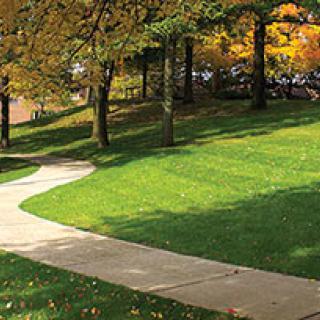
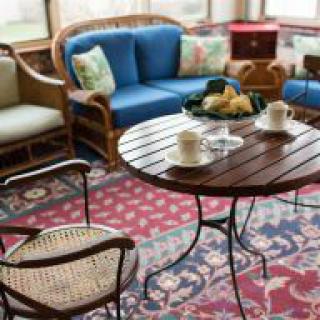
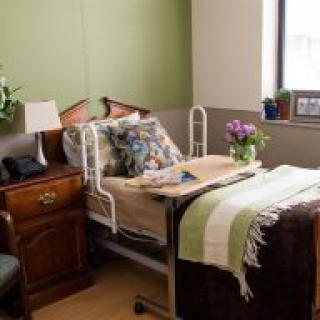
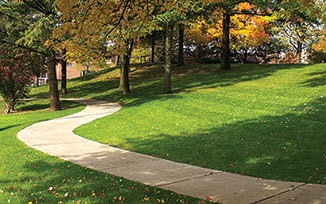
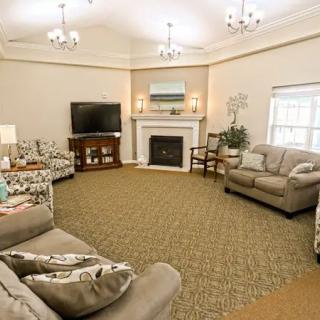
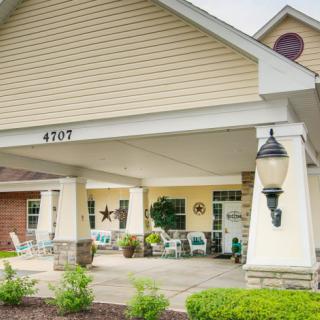
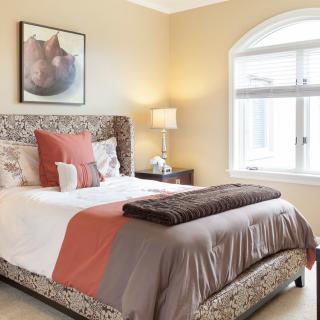
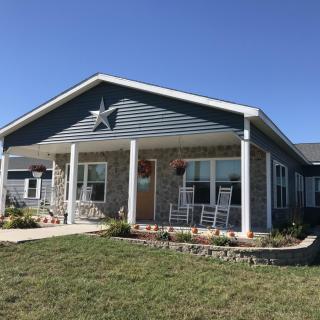
Heritage Community of Kalamazoo on seniors.fyi includes 4 photos including images showing bedroom, windows, library, bookshelves, reading area, living room, rug, park, and more.
Nearby Communities
Wyndham West
Kalamazoo, MI
4.2 from 9 reviews
Caring staff with engaging activities and a strong sense of community.
Amber Way
Kalamazoo, MI
4.3 from 3 reviews
Satisfactory staff interactions and clean, well-maintained facilities.
Bryant House
Kalamazoo, MI
Comprehensive care and amenities (24/7 supervision, ADL assistance, medication management, transportation for medical appointments, diabetes diet, dining, housekeeping).
Leotha Rogers Home
Kalamazoo, MI
Cozy, intimate setting with meals, activities, and comprehensive care services.
Beacon Home At Kobza
Kalamazoo, MI
3.9 from 100 reviews
Small, intimate assisted living with comprehensive care and furnished apartments.
David Dewayne Manor
Kalamazoo, MI
Comprehensive amenities and care services in a well-equipped, connected setting.
Sisters of St Joseph
Kalamazoo, MI
$4,251 / month
Peaceful, nurturing assisted living with strong access to nearby healthcare, dining, and worship options.
Hope Woods
Kalamazoo, MI
4.2 from 87 reviews
$810 to $960 / month
Well-maintained facility with friendly staff, abundant daily activities, and bright, comfortable apartments.
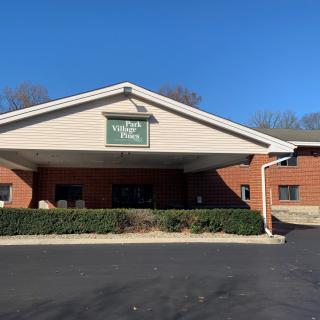
Park Village Pines
Kalamazoo, MI
4.3 from 48 reviews
$3,952 to $5,780 / month
Caring staff in a clean, welcoming environment with on-site activities and a faith-based community.
Delirium is a rapidly onset, reversible cognitive disturbance often caused by acute medical issues, while dementia is a gradual and irreversible decline due to chronic neurodegenerative diseases. Accurate differentiation between the two is essential for appropriate treatment and management in older adults.
Dementia, including Alzheimer’s disease, is often mischaracterized in terms of lethality as it leads to complications that can be fatal rather than being a direct cause of death; it causes a progressive decline in cognitive and physical health, making patients vulnerable to infections and other health crises. Effective management of nutrition, hydration, and communication is crucial in patient care, with palliative care becoming vital in advanced stages to enhance comfort and quality of life while caregivers play a key role amidst the challenges posed by the disease.
Reminiscence therapy helps individuals with dementia recall past memories through structured discussions and meaningful objects, enhancing mood, relationships, and sense of identity while celebrating their lives. It can be practiced in formal settings or at home, requiring sensitivity to personal histories and cultural backgrounds.
Get PricingAsk A QuestionSchedule A TourContact Senior Advisor
By clicking submit, you agree to our Partner's Terms of Use. You
also consent to receive calls and texts, which may be autodialed, from our Partner. Your consent is not a condition to
using our Partner's service. Please visit our Partner's Privacy Policy for information about their privacy practices.




 22 resident community capacity
 Assisted Living
 Continuing Care Retirement Community (CCRC)
 Independent Living
 Memory Care
 Skilled Nursing Facility
 Beauty salon
 Cable or satellite TV
 Fully furnished
 Garden
 Housekeeping services
 Kitchenette
 Move-in coordination
 Outdoor space
 Private bathrooms
 Wi-Fi/high-speed internet available
 Kalamazoo County (2 miles away)
 Community operated transportation
 24-hour call system
 Activities of daily living assistance
 Assistance with bathing
 Assistance with dressing
 Assistance with transfers
 Diabetes diet
 Meal preparation and service
 Medication management
 Special dietary restrictions
 Fitness programs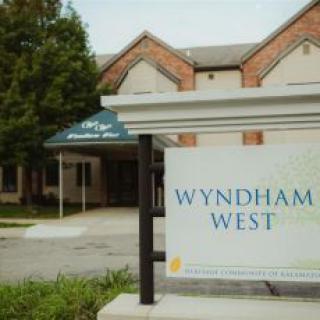
 Caring staff with engaging activities and a strong sense of community.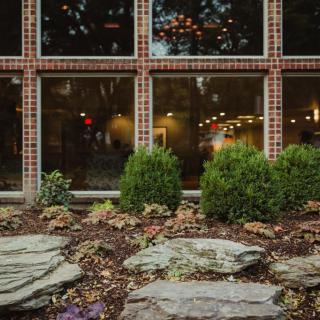
 Delirium and Dementia: Unraveling the Key Differences
 Are Dementia and Alzheimer's Disease Lethal? A Comprehensive Exploration
 Exploring the Power of Reminiscence Therapy for Individuals With Dementia