
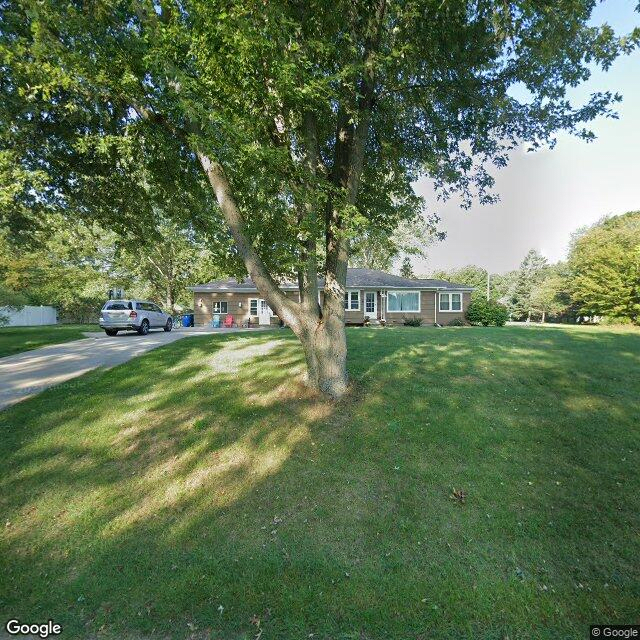
608 Beechwood Street, Holland, MI 49423
For more information about senior living options: (866) 208-4318
Beechwood Hope Care Costs & Pricing
Beechwood Hope Care offers competitive pricing for its services compared to the broader market in Ottawa County and the state of Michigan. For a semi-private room, residents can expect to pay $1,200 monthly, which is significantly lower than the county average of $3,257 and the state average of $3,191. Similarly, for those seeking more privacy, a private room at Beechwood costs $2,000 per month, again offering substantial savings against Ottawa County's average of $3,513 and Michigan's average of $3,675. These cost advantages make Beechwood Hope Care an attractive option for individuals seeking quality care in a comfortable environment without the financial strain often associated with such services.
| Floor plans | Beechwood Hope Care | Ottawa County | Michigan |
|---|---|---|---|
| Semi-Private | $1,200 | $3,257 | $3,189 |
| Private | $2,000 | $3,513 | $3,674 |
Overall Review of Beechwood Hope Care
Pros
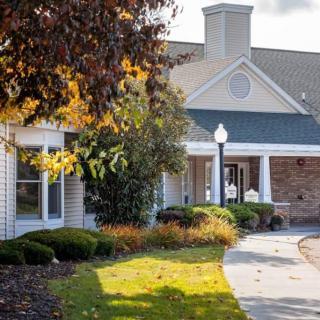
 The ranch home feels homelike and welcoming.
- The owner keeps residents comfortable and oversees their medications.
- The owner prepares all meals, ensuring residents are well cared for.
- The home offers four private rooms for seniors.
- Residents can keep their own food in the refrigerator, with safety oversight by the owner.
Cons
 The review notes that food quality and nutrition are very poor.
- There is no participation, no place to mingle, and no warmth.
- The administrator wants residents to sit in a small shared room or be gone a lot, effectively restricting their freedom.
- Families must supply all fresh, healthy foods themselves, which is described as ridiculous.
- The home is labeled as just another AFC facility that's in it for the money.
- The reviewer couldn’t wait to move their loved one out and felt they had to settle for what was available.
- The manager is described as rude to case workers.
- In the ranch home, residents have no private space; there is only a shared living room and the owner controls access to food.
Review
Beechwood Hope Care in Holland, Michigan is best suited for extremely frail seniors who want a very small, home-like setting and direct, hands-on oversight from a single operator. It appeals to families seeking a low-stimulation, predictable routine where meals and medications are handled on-site with a personal touch. The layout reads as intentionally intimate, limited common space and private rooms, so residents who thrive on quiet, simple routines and stable, one-on-one attention will benefit. Yet this comes with a clear prerequisite: a willingness to supplement nutrition and coordinate care outside the core staff routine if needed.
Those who should consider alternatives are the residents who rely on meaningful activity, social warmth, and consistently high-quality meals as nonnegotiables. Repeated concerns across described experiences highlight limited participation, sparse opportunities to mingle, and a palpable lack of warmth. For families prioritizing robust programming, responsive staff, and ongoing engagement with case managers, a larger, more structured community will typically outperform a tiny, owner-operated setup. In short, a resident who needs stimulating daily activities and dependable, multi-staff communication should look elsewhere.
On the upside, the small, owner-operated model can deliver direct accountability and clear, manageable oversight. Meals are prepared on-site and medications are overseen by the owner, which can mean a steady, predictable routine for someone who benefits from hands-on monitoring. The environment is plainly homelike and straightforward, reducing the chaos that sometimes accompanies bigger campuses. When the resident adapts to a quiet pace and values routine over variety, this setup can feel safe and familiar in a way larger communities rarely do.
The drawbacks are substantial and nontrivial. There is little private space beyond bedrooms, with a shared living room that limits personal privacy and can feel constraining for residents who value autonomy. Food quality and variety emerge as persistent concerns, with families reporting the need to supply fresh items themselves to ensure acceptable nutrition. Social engagement is sparse, meaning daily life can revolve around basic care rather than meaningful interaction or activities. Additionally, tensions with case workers and signs of operating instability, such as turnover in management or questions about who is running the home, create a climate of uncertainty for families seeking reliability.
Do the strengths offset the weaknesses? They do only for families who can embrace a highly intimate, low-stimulation environment and are prepared to act as nutrition advocates outside the facility. The upside, a calm setting with attentive, on-site oversight, can offset the lack of programming if the resident does not require ongoing social stimulation and if the family can consistently provide fresh foods and monitor care closely. Yet for anyone who values predictable meal quality, frequent social engagement, and steady, respectful communication with outside professionals, the balance tips toward alternatives. In short, Beechwood is a niche, not a broad solution.
Bottom line: Beechwood Hope Care works as a niche option for a very specific resident profile. It is most appropriate when a tiny, home-like setting with direct, hands-on oversight is the priority and the family is prepared to compensate for nutrition gaps and limited activity with outside planning and advocacy. Pros are immediate, intimate attention and simple, predictable routines; cons center on restricted privacy, questionable meals, limited social life, and potential management instability. Only when these trade-offs align with the resident’s needs and the family’s capacity to supplement care should this option be pursued. If any of the major cons weigh heavily, or if a resident relies on regular social engagement and high-quality meals, exploring other AFC homes or small communities with stronger programming is strongly advised.
 6 resident community capacity
 Assisted Living
 Board and Care Home
 Cats allowed
 Dogs allowed
 Activities off-site
 Bath tubs
 Cable or satellite TV
 Devotional services off-site
 Dining room
 Fully furnished
 Garden
 Housekeeping services
 Indoor common areas
 Move-in coordination
 Outdoor common areas
 Private
 Respite or short term stays offered
 Telephone
 Wi-Fi/high-speed internet available
 24-hour supervision
 Ambulatory care
 Assistance with bathing
 Assistance with dressing
 Assistance with transfers
 Diabetes diet
 Diabetic care
 High acuity care
 Incontinence care
 Meal preparation and service
 Medication management
 Special dietary restrictions
 Transportation arrangement (medical)
 Transportation to doctors appointments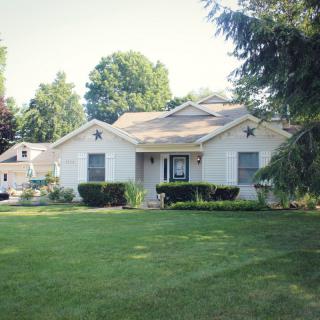



 Senior Transition Services: Understanding Their Role, Cost, and Importance
 Exploring the Path to Senior Living: A Comprehensive Look at Independent Living and Assisted Living
 Is Assisted Living Deductible on Your Taxes? Understanding the Complexities of Assisted Living Expenses and Deductions