Vista Springs Northview Terrace South Costs & Pricing
Vista Springs Northview Terrace South offers a competitive monthly rate for its studio accommodations, priced at $2,580. This is significantly lower than the average costs in Kent County and throughout Michigan, where studio prices typically reach $3,661 and $3,824 respectively. The affordability of Vista Springs Northview Terrace South not only makes it an attractive option for residents seeking quality care and services but also aligns with a commitment to providing value without compromising on comfort or support. This can be particularly appealing for families looking for cost-effective senior living solutions in the region.
Floor plans
Vista Springs Northview Terrace South
Kent County
Michigan
Studio
$2,580
$3,661
$3,824
Memory care communities with a similar price nearby
Overall Review of Vista Springs Northview Terrace South
common10 reviews mention this
Cleanliness and common areas stand out
Residents and visitors repeatedly describe the community as consistently clean.
Multiple reviews mention a clean, well-kept building and common areas, including when touring or returning for follow-up visits. Several also describe rooms as spacious and the overall campus condition as inviting. Reviews noting cleanliness also tend to pair it with positive impressions of how staff interact with residents.
common7 reviews mention this
Activities keep residents engaged
Many residents families say the community keeps busy with day-to-day activities.
A number of reviews describe staff involvement in residents’ daily activities and the sense that residents are engaged throughout the day. Some reviews specifically call out enjoying activities and opportunities to participate, and others mention enrichment-focused leadership. A smaller set of reviews raise concerns about activity quality and note there aren’t outings, so experiences can vary by what’s being offered.
common6 reviews mention this
Food receives consistent praise
Food is repeatedly mentioned as a positive part of daily life.
Several reviews say the food is good, awesome, or appetizing, and one describes the dining area as feeling like home. Others mention meal service as a strength alongside friendliness and cleanliness. While most comments are positive, at least one review includes food-related context while describing overall care concerns, suggesting dining quality doesn’t erase other issues for every family.
caveat10 reviews mention this
Care, meds, and staffing are mixed
Some families report problems with care follow-through and medication distribution.
A recurring concern in the reviews involves care execution, including medication distribution and what families say was missed or not handled promptly. Several reviews also describe safety-related worries, including falls and situations where residents needed help but weren’t receiving it quickly. Even with these concerns, a subset of reviews are more reassuring about care—so it appears experience may depend on the unit and specific caregivers.
caveat4 reviews mention this
Communication with management can be tough
Some reviews describe limited responsiveness from management after concerns are raised.
Some families say they struggle to get calls returned or that communication breaks down after issues come up. There are also reviews stating management didn’t respond to correspondence, even after repeated letters, and others describing being left without updates after signing on. Other reviews point to improvements and responsiveness with specific leaders, but the pattern of unanswered messages shows up in multiple negative accounts.
common2 reviews mention this
Studio pricing may fit the range
At least a couple of reviews say the price range felt reasonable for what they saw.
A few reviews mention price as a factor in choosing the community, with one describing the price range as perfect and another citing a price around the high-$2,600 range. The community is priced lower than the county and state benchmarks provided for studio units, which aligns with why some families found the cost workable. At the same time, there are also negative reviews that reference care/value concerns, so price doesn’t appear to resolve differences in day-to-day experience.
How we summarize
Counts show how many written reviews mention each theme; a review can touch several themes, and only frequently mentioned themes are displayed.
Features
Types of Care
Assisted Living
Memory Care
Amenities
Activities on-site
Devotional services off-site
Indoor common areas
Respite or short term stays offered
Transportation
Kent County International (12 miles away)
Care Services
Ambulatory care
Diabetic care
Dining
Meals provided
Activities
Activities on-site
Devotional activities offsite
Nearby Places of Interest
This part of Grand Rapids, Michigan offers a variety of amenities that may cater to seniors looking for a comfortable and convenient living environment. With several restaurants, pharmacies, cafes, parks, physicians' offices, theaters, places of worship, and hospitals within close proximity, residents have easy access to essential services and leisure activities. The presence of reputable healthcare facilities such as Spectrum Health and Lemmen-Holton Cancer Pavilion ensures that seniors can receive quality medical care when needed. Additionally, the nearby parks provide opportunities for outdoor recreation and relaxation. Overall, this area appears to be a well-rounded community with plenty of resources to support senior living needs.
Restaurants
McDonald's (0.2 miles)
Russ' Restaurant (0.2 miles)
Cheers Good Time Saloons (0.3 miles)
Bud & Stanleys Pub & Grub (0.4 miles)
Charlies Bar & Grill (0.6 miles)
Wendy's (2 miles)
McDonald's (2.2 miles)
Pharmacies
Meijer Pharmacy (0.3 miles)
Walgreens (0.5 miles)
Walgreens (2.5 miles)
Walgreens (2.7 miles)
Family Fare Supermarkets (2.7 miles)
Meijer Pharmacy (2.8 miles)
Family Fare Supermarkets (3.3 miles)
Cafes
Biggby Coffee (0.4 miles)
Starbucks (2.8 miles)
Kitchen 67 (3 miles)
Starbucks (5.2 miles)
Parks
Provin Trails Park (1.3 miles)
Huff Park (2 miles)
Riverside Park (2.7 miles)
Frederik Meijer Gardens & Sculpture Park (4.1 miles)
Belknap Park (4.2 miles)
Wahlfield Park (5.3 miles)
Physicians
Spectrum Health Medical Group (1.8 miles)
Metro Health Comstock Park (2.2 miles)
Decatur Vein Clinic (2.5 miles)
Alpine Oral Surgery (3.3 miles)
Trinity Health OB/GYN East Beltline (3.3 miles)
Eye Plastic And Facial Cosmetic Surgery (3.4 miles)
Maupin, Bernard Orthopaedic Associates of Michigan (3.6 miles)
Theaters
Celebration Cinema Grand Rapids North & IMAX (2.6 miles)
Places of Worship
Grace Fellowship (2.9 miles)
Ada Bible Church (3.4 miles)
Temple Emanuel (4.8 miles)
Hospitals
Spectrum Health (4 miles)
Lemmen-Holton Cancer Pavilion (4.8 miles)
Helen Devos Children Emergency Room (4.8 miles)
Blodgett Hospital (5.4 miles)
Richard J. Lacks Sr. Cancer Center (5.4 miles)
Trinity Health Birth Center - Grand Rapids Hospital (5.5 miles)
Vista Springs Northview Terrace South offers a competitive monthly rate for its studio accommodations, priced at $2,580. This is significantly lower than the average costs in Kent County and throughout Michigan, where studio prices typically reach $3,661 and $3,824 respectively. The affordability of Vista Springs Northview Terrace South not only makes it an attractive option for residents seeking quality care and services but also aligns with a commitment to providing value without compromising on comfort or support. This can be particularly appealing for families looking for cost-effective senior living solutions in the region.
Yes, Vista Springs Northview Terrace South provides memory care services for residents with mild or advanced stages of dementia or Alzheimer's disease.
Nearby Communities
Ivy Home
Grand Rapids, MI
2 from 2 reviews
$3,000 / month
Home-like atmosphere with extensive amenities.
Vista Springs The Lodge
Grand Rapids, MI
Intimate setting with comprehensive care and restaurant-style dining.
Mayfield
Grand Rapids, MI
Extensive care services and furnished apartments with comprehensive amenities and transportation coordination.
Ambrose Ridge Apartments
Grand Rapids, MI
4.4 from 9 reviews
Well-maintained, clean community with engaging activities.
SERENITY HOMES
GRAND RAPIDS, MI
Strong access to healthcare, dining, and social opportunities.
Real Life Living Services
Grand Rapids, MI
4.1 from 37 reviews
Convenient access to parks, healthcare, worship, and cultural amenities.
Medilodge of Grand Rapids
Grand Rapids, MI
3.4 from 101 reviews
$1,600 to $3,090 / month
Friendly staff, supportive community, and multiple care levels in a well-appointed setting.
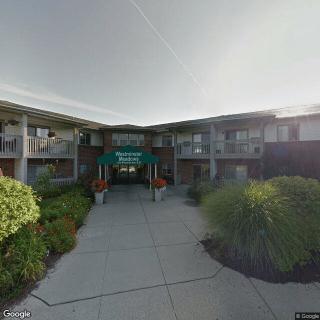
Westminster Meadows
Grand Rapids, MI
4.8 from 14 reviews
$679 to $799 / month
Well-maintained, friendly community with engaging activities and supportive staff.
At-home dementia care expenses vary widely based on care levels, location, and caregiver expertise, with monthly costs for home health aides exceeding $4,500 and specialized care potentially surpassing $100,000 annually. While families favor in-home care for its comfort and personalized attention, they must consider financial planning and the challenges of caregiver fatigue.
The article discusses the late stages of dementia, detailing the progression from mild to severe impairment and highlighting key characteristics such as profound cognitive decline and dependency in daily activities. It emphasizes care strategies focused on comfort and dignity, the importance of advance directives, and the emotional support needed for family caregivers facing this challenging journey.
The article examines the link between certain medications and increased dementia risk, particularly in older adults, emphasizing that long-term or high-dose use of anticholinergics, benzodiazepines, and other drug classes can exacerbate cognitive impairment. It calls for careful medication evaluation and shared decision-making to mitigate these risks while managing treatment efficacy.
Get PricingAsk A QuestionSchedule A TourContact Senior Advisor
By clicking submit, you agree to our Partner's Terms of Use. You
also consent to receive calls and texts, which may be autodialed, from our Partner. Your consent is not a condition to
using our Partner's service. Please visit our Partner's Privacy Policy for information about their privacy practices.


 Assisted Living
 Memory Care
 Activities on-site
 Devotional services off-site
 Indoor common areas
 Respite or short term stays offered
 Kent County International (12 miles away)
 Ambulatory care
 Diabetic care
 Meals provided
 Home-like atmosphere with extensive amenities.

 Estimating the Expenses of At-Home Dementia Care: A Detailed Exploration
 Comprehensive Insights on the Late Stages of Dementia: What to Expect and How to Provide Care
 Medications Associated with Dementia Risk: A Comprehensive Overview