
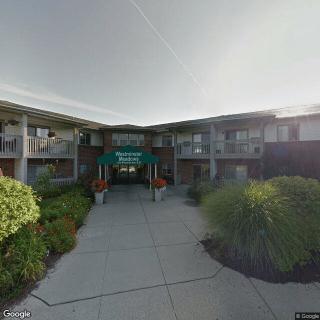
2860 Plainfield NE, Grand Rapids, MI 49505
For more information about senior living options: (866) 208-4318
Plainfield Group Home Costs & Pricing
Plainfield Group Home presents a range of monthly costs for its accommodations that reflect its unique offerings and quality of care. For a semi-private room, residents can expect to pay $4,832, which is noticeably higher than the average in Kent County at $3,939 and significantly surpasses the state average of $3,191. In terms of private rooms, the cost rises to $5,798, compared to $5,194 in Kent County and $3,675 statewide. For those seeking more space with a studio apartment option, Plainfield's rate is $6,281 - again exceeding both county ($3,661) and state averages ($3,824). These figures indicate that while Plainfield Group Home may be on the pricier side relative to local and state prices, it likely provides enhanced services or amenities that justify this investment in care.
| Floor plans | Plainfield Group Home | Kent County | Michigan |
|---|---|---|---|
| Semi-Private | $4,832 | $3,939 | $3,189 |
| Private | $5,798 | $5,194 | $3,674 |
| Studio | $6,281 | $3,661 | $3,824 |
Assisted Living communities with a similar price nearby
-
from -$532 / mo

Royal Atrium Inn
$4,300 / month24.2 miles away -
About the same

Riley's Grove Assisted Living & Memory Care
$4,945 to $5,535 / month19.3 miles away -
from -$912 / mo

StoryPoint Rockford
$3,920 to $6,150 / month7.4 miles away -
About the same

Cascade Trails Senior Living
$4,950 to $6,000 / month7.3 miles away -
About the same
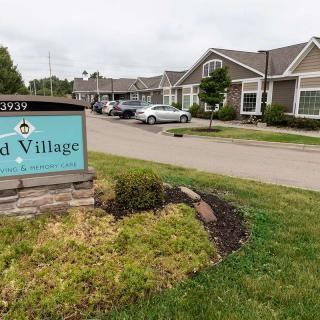
Grand Village
$4,910 to $6,470 / month10.7 miles away
Overall Review of Plainfield Group Home
Pros
 The director is involved, caring, and goes above and beyond.
- The staff are attentive, caring, and consistently provide engaging, stimulating activities.
- The center offers frequent updates and photos, keeping parents in the loop.
- The staff know most of the children by name and treat them like family.
- The programs include diverse activities—sensory play, crafts, field trips, a petting zoo, and even foam parties.
- The meals feature fresh, seasonal fruits and nourishing options.
- The center celebrates children’s successes and helps them work through challenges.
- Families have peace of mind knowing their child is in a safe, structured environment.
- The PFCC community is supportive, with dedicated teachers and a warm, welcoming atmosphere.
Cons
 The staff lack timely response to issues and poor communication.
- The infant room caused the baby to break out in facial rashes, which disappeared after the baby stopped attending.
- A staff member claimed she was breaking out in rashes and showed her arms.
- Staff were constantly coming and going, and the baby was left crying for a long time without adequate intervention beyond a pacifier or toy.
- Most staff appear to be there for pay rather than out of genuine care or passion for their work.
- There were unnotified incidents of babies hurting themselves (e.g., hitting their heads) while in care.
- A staff member reportedly cared for infants while having pneumonia and was not notified to parents.
- Only a few staff are patient enough for the infant room, with the implication that many are not suitable for that age group.
Review
Plainfield Child Care Center in Grand Rapids, MI, is best suited for families who want a nurturing, relationship-driven childcare home where staff are highly accessible, daily updates are the norm, and a busy schedule of developmentally appropriate activities is the expectation. The center’s strength rests in its hands-on leadership, small locally owned feel, and a culture of keeping parents in the loop. Families that thrive here tend to value personal connections, staff who know children by name, frequent photos, and a sense that the center treats kids as family. For parents who prize structure over screen time and who want a menu of enriching activities, PFCC presents a compelling, reliable option with a track record of positive experiences and long-tenured staff relationships.
That said, this community is not the obvious fit for every family. Some reviewers flag concerns specific to infant care, including episodes where rashes developed in the infant room and a perception that supervision slipped when infants cried or needed comforting. Allegations about insufficient notification when a child was hurt, and even a pneumonia exposure among staff, raise legitimate safety questions for families seeking the utmost vigilance in the youngest ages. A recurring theme is inconsistent response times and communication gaps from some staff members, though many others are described as patient and deeply caring. Add in the note about rising costs, and it becomes clear that for families with tight budgets or whose peace of mind hinges on every safety detail being meticulously documented and communicated, alternatives may deserve comparison.
The core advantages of PFCC, director involvement, robust parent communication, and a staff culture that feels like a community, often offset the concerns raised by more episodic incidents. Parents consistently praise the director’s hands-on approach, the practice of knowing the children well across classes, and the willingness to answer questions quickly. The picture-heavy updates, daily activity reports, and a sense of ongoing transparency help parents feel connected even on busy workdays. The center’s commitment to no screen time, a varied menu with fresh fruits, and carefully planned sensory and experiential activities demonstrates a genuine investment in holistic development. For families seeking stability and a sense of partnership with caregivers, these strengths carry substantial weight.
Practical due diligence matters when evaluating PFCC. Prospective families should request a candid tour focused on the infant room and other high-contact areas, and then ask for specific examples of incident reporting and follow-up. Inquire about staff turnover rates, training protocols, and whether the director remains accessible for urgent concerns. Request access to sample daily updates, photo albums, and menus to confirm that communication norms match expectations. It is also wise to discuss allergy management, mealtime supervision, and safety procedures for injuries, so that the level of vigilance aligns with personal standards. While these steps may reveal strong alignment for many, they also help separate comfort with the community from any residual unease about past incidents.
Who should consider alternatives? Families with extraordinary needs for infant safety, ultra-tight risk controls, or highly specialized medical considerations may prefer centers whose incident histories and communication protocols align more consistently with those high standards. Budget-conscious families may want to compare costs against other local centers that offer similar activity levels but with different pricing structures. Those who prioritize a perfectly soothing infant environment with uniform staffing across all shifts might also want to explore options where staff-to-child ratios, turnover, or scheduling policies are more predictable. PFCC’s overall appeal is undeniable, but it resides best with families who can balance the strong, personal, and active culture against the possibility of occasional safety or communication hiccups.
In the final assessment, PFCC stands out for families who crave a hands-on, care-driven environment where children are known by name, activities abound, and parents feel consistently connected through updates and open dialogue. The positives, passionate leadership, a community atmosphere, attentive teachers, and a nourishing, no-screen footprint, provide a powerful offset for most typical childcare concerns. However, for families where infant safety vigilance and flawless, immediate communication are nonnegotiable, it is prudent to rigorously verify current staffing practices, incident-tracking rigor, and the center’s latest safety records before committing. The decision hinges on balancing the proven strengths of a warm, engaged environment against the relatively localized concerns that certain reviewers have flagged. For those aligned with PFCC’s model, the center offers a compelling, well-regarded option; for others, a careful comparison with alternatives will be the prudent path.
 12 resident community capacity
 Assisted Living
 Cable or satellite TV
 Dining room
 Fully furnished
 Garden
 Housekeeping services
 Move-in coordination
 Outdoor space
 Telephone
 Wi-Fi/high-speed internet available
 Kent County International (11 miles away)
 24-hour supervision
 Activities of daily living assistance
 Assistance with bathing
 Assistance with dressing
 Assistance with transfers
 Diabetes diet
 Meal preparation and service
 Medication management
 Special dietary restrictions
 Transportation arrangement (medical)
 Transportation to doctors appointments


 An Extensive Exploration of the VA Aid and Attendance Benefit
 Senior Transition Services: Understanding Their Role, Cost, and Importance
 Exploring the Path to Senior Living: A Comprehensive Look at Independent Living and Assisted Living