
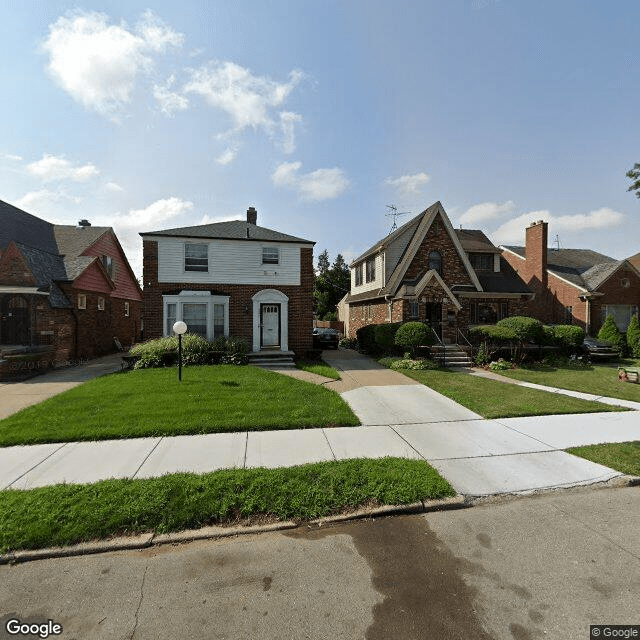
8136 Sirron, Detroit, MI 48234
For more information about senior living options: (866) 208-4318
Kenyata's Adult Foster Care Costs & Pricing
Kenyata's Adult Foster Care offers competitive pricing for their residents, particularly when compared to the broader market in Wayne County and the state of Michigan. For semi-private accommodations, Kenyata's charges $1,275 per month, significantly lower than the county average of $2,860 and the state average of $3,191. When it comes to private rooms, Kenyata's fee of $1,950 is also notably more affordable compared to Wayne County's rate of $3,335 and Michigan's average of $3,675. This pricing structure reflects Kenyata's commitment to providing high-quality care at a value that supports families seeking comfortable and supportive living arrangements for their loved ones.
| Floor plans | Kenyata's Adult Foster Care | Wayne County | Michigan |
|---|---|---|---|
| Semi-Private | $1,275 | $2,860 | $3,189 |
| Private | $1,950 | $3,335 | $3,674 |
Assisted Living communities with a similar price nearby
-
from +$225 / mo
Blue Care Assisted Living
$1,500 to $2,000 / month8.3 miles away -
About the same

Westhaven Manor
$1,275 to $1,697 / month20.0 miles away -
from +$225 / mo

Wish-U-Well Inn
$1,500 to $2,200 / month11.8 miles away -
from +$225 / mo
Jenkins Manor
$1,500 / month15.2 miles away -
from +$225 / mo
American House Southland Senior Living
$1,500 to $2,690 / month21.3 miles away
Overall Review of Kenyata's Adult Foster Care
Pros
 KLH's facility is thoughtful, clean, welcoming, safe, and peaceful.
- The staff are friendly, always smiling, productive, punctual, and extremely helpful.
- The family-owned and operated business offers unmatched customer service and cares about personal development in a healthy, progressive environment.
- The owner is extremely nice, caring, and genuinely committed to others' well-being.
- The staff are friendly and attentive, and the facility is very clean.
- The facility has a welcoming, homey atmosphere; it is clean, well-run, and the staff are attentive and caring.
- The owner is among the nicest people, and the care home is beautiful, spacious, and clean.
- The facility is widely praised for providing excellent care.
- The family-oriented business treats clients like family and is highly recommended for dignified, respectful, and genuine care.
- The staff are awesome; the home is clean, comfortable, and well-maintained; residents are safe, comfortable, and satisfied.
Cons
Review
Kenyata's Adult Foster Care in Detroit is best suited for seniors and adults who want a small, family-style living arrangement where staff know residents by name, and where personal attention, dignity, and a home-like atmosphere take precedence over campus-style amenities. This community thrives when a resident’s daily life centers on warmth, consistency, and genuine connections with an owner who is hands-on and a staff team that treats every resident with respect. It is ideal for families seeking a caregiver who truly feels like part of the extended family, and for those who value clean, orderly surroundings, homemade meals, and a tranquil, homey pace over corporate polish. In short, it serves individuals who prize intimate, person-centered care where“being treated like family” is not mere rhetoric but a lived experience.
Those who may want to consider alternatives are typically individuals with higher acuity needs or specific medical requirements that demand on-site nursing expertise and more formal medical oversight. The Foster Care model, while exceptionally attentive, is best suited for residents who don’t require around-the-clock medical interventions or highly specialized therapies. Families pursuing robust, therapist-led activity calendars, memory-care programming tailored to dementia, or a wide array of independent living services may find the options here more limited than larger assisted-living campuses. For anyone weighing a transition from home, the question becomes whether the intimate, homegrown approach aligns with current and anticipated care needs, or whether a facility with broader medical resources and staffing might be a better match.
On the strength side, the core advantages are unmistakable and deeply reinforcing. The owner’s kindness and genuine investment in residents’ well-being set a tone of trust and stability that permeates every shift. The staff consistently comes across as friendly, punctual, and attentive, delivering a level of consistency that translates into reliable daily support and a sense of safety that residents feel in their bones. Cleanliness and maintenance continually come up as obvious strengths, with a home-like, uncluttered ambiance that reduces anxiety and fosters comfort. The environment is described as welcoming, spacious enough to feel open without sacrificing the intimacy of a small home, and contributions such as homemade meals further reinforce a nourishing, family-oriented experience. Taken together, these factors create a quality of life that centers dignity, respect, and personal development in a way that many families value highly.
This strong set of pros offsets several natural drawbacks inherent in smaller, family-operated settings. The tradeoff for a compact, caretaker-driven model is typically fewer on-site medical resources and a leaner activity program; however, the reviews consistently emphasize that the care team’s accessibility and the owner’s hands-on leadership mitigate these gaps. Residents are not herded into impersonal routines; they are known as individuals with preferences and needs, and the staff seems empowered to adjust routines to honor those preferences. The result is a dependable, low-stress daily rhythm, where subtle adjustments, custom meal options, flexible visit schedules, or tailored daily activities, translate into meaningful improvements in mood, engagement, and overall satisfaction. In this sense, the robust relational benefits effectively counterbalance the limitations that come with a smaller, family-owned operation.
While the experience is compelling, a candid decision-maker will acknowledge who this environment is less likely to serve. Individuals who require constant, on-call nursing oversight, highly specialized memory-care programs, or a wide menu of clinical therapies may need a facility with larger staff and more formal medical infrastructure. For couples where one partner has higher care needs or where mobility and medical management demand deeper resources, alternatives that offer scale, diversified staffing, and scheduled clinical services may provide a better long-term fit. Prospective residents should also consider whether they desire more expansive social programming or greater privacy options, which some larger campuses can more readily supply. These are not flaws so much as practical fit questions that help determine if the home-like foster setting matches current and future needs.
For families weighing a decision, the takeaway is straightforward: Kenyata's Adult Foster Care is a compelling choice for those who prize a warm, respectful, community-centered living arrangement where staff treat residents like family, meals feel like home, and the environment feels safe, clean, and thoughtfully maintained. If these are the pillars of comfort and security sought after in late-life living, the facility delivers with above-average consistency and sincerity. When medical intensity and a broad spectrum of professional therapies are prerequisites, the prudent move is to compare with larger campuses that advertise more comprehensive clinical capabilities. The decision should hinge on care needs, desired pace, and the value placed on intimate, personal connection over institutional breadth. Conduct a visit, observe how staff interact with residents, review daily routines, and speak with current families to confirm that the home atmosphere aligns with expectations for safety, dignity, and ongoing personal growth.
 6 resident community capacity
 Assisted Living
 Board and Care Home
 Cable or satellite TV
 Dining room
 Fully furnished
 Garden
 Housekeeping services
 Move-in coordination
 Outdoor space
 Private
 Telephone
 Wi-Fi/high-speed internet available
 Detroit Metropolitan-Wayne County (23 miles away)
 24-hour supervision
 Activities of daily living assistance
 Assistance with bathing
 Assistance with dressing
 Assistance with transfers
 Diabetes diet
 Meal preparation and service
 Medication management
 Special dietary restrictions
 Transportation arrangement (medical)
 Transportation to doctors appointments
 An Extensive Exploration of the VA Aid and Attendance Benefit
 Senior Transition Services: Understanding Their Role, Cost, and Importance
 Exploring the Path to Senior Living: A Comprehensive Look at Independent Living and Assisted Living